



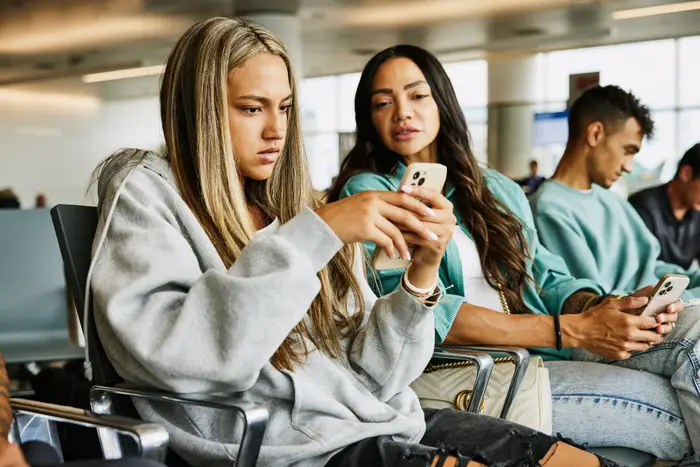
Every frequent flyer has a story. The passenger behind them who drilled a knee into their seatback for three hours. The stranger who slid a duffel bag into the overhead bin directly over their row, when his own seat was twenty rows back. The seatmate who colonized both armrests before the plane left the gate.
Air travel puts roughly 150 to 300 strangers into a sealed metal tube for hours, with limited legroom, limited air, limited storage, and no exit. Add stress, fatigue, and shrinking seats, and ordinary social friction becomes something that sometimes ends in a diverted flight, a viral video, or a heated argument over twelve inches of plastic.
The frustrating part is that there is no single, universal rulebook for airplane etiquette. Airlines publish rules on carry-on dimensions, seatbelt use, and electronics. They do not publish a guide on who owns the armrest or when it is acceptable to recline. So travelers fill the gap with their own assumptions, and those assumptions collide.
This guide settles the nine airplane etiquette debates that cause the most real-world conflict. For each one, you’ll find:
- What the argument is really about
- The strongest case for each side
- What airline policy and common sense actually say
- A clear, practical rule of thumb
- Word-for-word scripts you can use so you don’t sound rude (or sound like you’re starting a fight)
Whether you’re a window-seat loyalist, a perpetual middle-seat survivor, or someone who just wants to land without a confrontation, these rules will help you fly with fewer headaches. They’ll also help you understand the person next to you, who may not be a villain at all.
Quick Reference: The 9 Airplane Etiquette Rules at a Glance
| # | Flashpoint | The Short Answer | Biggest Mistake to Avoid |
| 1 | Reclining your seat | Allowed, but check behind you and recline slowly and modestly | Slamming your seat back without looking |
| 2 | Armrests | Shared in principle; the middle seat usually gets priority | Taking both without asking or acknowledging the other person |
| 3 | Overhead bins | Store your bag over or near your own row; leave room for others | Spreading out a bag and a jacket across prime space |
| 4 | Window shade | The window seat controls it, but with courtesy | Leaving it open or closed for the entire flight regardless of others |
| 5 | Deplaning | Front-to-back order; don’t block or rush the aisle | Standing and hovering before it’s your turn |
| 6 | Food smells | Choose low-odor food and be mindful of neighbors | Opening a strongly scented meal in a full cabin |
| 7 | Noise and screens | Use headphones and keep screens dim at night | Playing audio or video calls out loud |
| 8 | Seat swapping | You may ask, but the other person may say no | Pressuring someone to give up a seat they paid for |
| 9 | Aisle, bathroom, and personal space | Be quick, be aware, and never block the flow | Climbing over seatmates or crowding the aisle |
Why Airplane Etiquette Has Become So Contentious
Before getting into the nine rules, it helps to understand why these arguments feel more intense now than they once did. A few forces are at work.
Shrinking space
Over the past several decades, many airlines have reduced the distance between rows, known as seat pitch, to fit more seats on a plane. Seat pitch on many economy cabins is commonly cited at roughly 30 to 31 inches, while some ultra-low-cost carriers run noticeably tighter. At the same time, newer “slimline” seats may reduce padding to make room for legroom, but they also change how much recline is possible and how much space feels available.
When every inch matters, a three-inch recline from the person in front of you isn’t a minor adjustment. For a passenger in a 30-inch pitch seat, it can mean the difference between being able to open a laptop and not.
Fuller flights
When flights are close to full, there is no spare room anywhere: no empty middle seat, no spare overhead bin, no extra space under the seat. Everything that used to be absorbed by space now becomes a point of conflict.
Unbundled fares and boarding stress
Airlines now commonly charge separately for checked bags, seat selection, and even carry-ons on certain fare types. That pushes many travelers to bring more bags into the cabin, which increases pressure on overhead bin space and speeds up boarding conflicts.
No official guidance
This is the big one. There is no authority that says “the middle seat gets the armrests” or “reclining is fine after the meal service.” These are social conventions, not regulations, and conventions break down when strangers with different expectations share the same cramped space.
Social media amplification
Airplane disputes now get filmed, posted, and debated by millions. That has made etiquette arguments more visible and, arguably, more polarized. People often feel they have to take a side.
The good news: most conflicts can be avoided with awareness, a little empathy, and a few well-chosen words. Let’s go through the nine flashpoints.
1. Reclining Your Seat: Your Right, Their Knees
The argument: Is it rude to recline your seat on a plane?
This is the undisputed heavyweight champion of airplane etiquette debates. Search interest in “is it rude to recline on a plane” is constant, and travelers remain sharply divided.
The case for reclining
Supporters make a simple argument: the seat reclines, and the passenger paid for the seat. Airlines install recline mechanisms on purpose, and most economy seats on most carriers offer at least some recline. Many passengers see it as part of the ticket, especially on long-haul or overnight flights where sleeping upright for eight to twelve hours is miserable and can affect health and next-day functioning.
Reclining advocates also point out that the problem lies with the airline’s tight seat spacing, not with the passenger in front. In their view, blaming the person who recline is blaming the wrong party.
The case against reclining
Opponents argue that reclining pushes the cost of your comfort onto someone else. When you recline three inches into a space that’s already only 30 inches deep, the person behind you loses usable room for their legs, their laptop, their tray table, and sometimes their ability to eat a meal without their drink spilling.
For tall passengers, the effect is more than annoying. A reclined seat can make the already narrow knee space physically painful. For passengers using laptops for work, it can render the device unusable.
What the rules say
Here’s where it gets interesting.
- Airlines generally allow reclining except in specific phases of flight. Passengers are required to have seatbacks upright during taxi, takeoff, and landing, and crew will ask you to raise your seat if you forget.
- Some airlines restrict recline during meal service or in certain rows (exit rows and the row in front of an exit often do not recline).
- Some low-cost carriers use fixed or pre-reclined seats that don’t move at all, which sidesteps the debate entirely.
- Devices like the Knee Defender, a small clip that blocks the seat in front from reclining, are banned or prohibited by most major airlines. A well-publicized 2014 incident saw a United flight from Newark to Denver diverted to Chicago after a dispute connected to a Knee Defender. Using one is likely to get you in trouble with the crew.
The etiquette answer: reclining is acceptable, but how you do it matters
The most reasonable consensus among frequent flyers and flight crews is that reclining isn’t inherently rude, but reclining without awareness is. Use this checklist:
- Look behind you first. Glance back, or at least check whether the passenger is working on a laptop, eating, or unusually tall.
- Recline slowly. A slow recline gives the person behind time to adjust their drink, laptop, or knees. Slamming the seat back is where most conflicts begin.
- Recline partially if the cabin is tight. You don’t have to use the full range. Even a modest recline can provide relief while leaving the person behind some room.
- Don’t recline during meal service. Many passengers consider this a firm rule. Reclining while someone behind you is balancing a tray with hot coffee is a recipe for spills and resentment.
- Skip it on short flights. On a 60- to 90-minute hop, reclining usually benefits you very little while still inconveniencing someone else.
- Use it freely on red-eyes and long-hauls, within reason. On overnight flights, many passengers expect others to recline, and the cabin lights are dimmed so everyone is trying to sleep.
- Return to upright when you’re not sleeping. If you’re awake, watching a movie, or reading, consider sitting upright.
If you’re the person behind a reclined seat
- Don’t kick, jab, or knee the seat. That’s escalation, not communication.
- Politely ask once. “Excuse me, I’m having trouble with my laptop. Would you mind raising your seat just a little?” works better than you’d expect.
- Call a flight attendant if asking doesn’t work. That is their job. Don’t try to solve it with a device or a confrontation.
- Consider using a seat with more space next time. Bulkhead rows, exit rows, and extra-legroom seats are not affected in the same way (though exit row seats often don’t recline).
Script: Asking someone to adjust their seat
“Hi, sorry to bother you. I’m a bit squeezed back here and trying to use my laptop. Would you mind bringing your seat up a little, or maybe just partway? I’d really appreciate it.”
Script: Telling the person behind you before you recline
“Hey, I’d like to recline a bit for a nap. Would that be okay, or would it be too tight for you?”
This tiny gesture of acknowledgment, which takes about four seconds, is probably the single most effective way to prevent a reclining argument. Many people who would be annoyed by a surprise recline are perfectly fine when asked first.
Example: How much space are we really talking about?
Consider an illustrative example. Say your seat pitch is 30 inches, and a typical recline moves the seatback about 2 to 3 inches toward the passenger behind. A 13-inch laptop is roughly 8 to 9 inches deep when open, with screen angle requiring additional clearance. A 3-inch loss of space can mean that the laptop screen is jammed against the seatback in front. For a tall passenger whose knees already touch the seatback, the same recline pushes the seat into their legs.
So both sides are right: the person reclining is using a feature they paid for, and the person behind is genuinely losing functional space. That’s why communication and moderation are better than a hard rule.
2. Armrests: Who Actually Gets Them?
The argument: On a plane with three seats in a row, who has the right to which armrest?
If reclining is the most famous airplane etiquette debate, the armrest is the most personal. It’s the one that plays out for hours in silent, elbow-by-elbow competition.
The setup
On a standard narrow-body aircraft with a 3-3 layout, each row has two aisles and two sets of three seats. In each set:
- The window seat has one armrest (shared with the middle seat) and the cabin wall on the other side.
- The aisle seat has one armrest (shared with the middle seat) and the open aisle on the other side.
- The middle seat has two armrests, each shared with a neighbor.
On wide-body aircraft with different layouts (2-4-2, 3-3-3, 3-4-3), the center seats may share armrests in different configurations.
The conventional wisdom: the middle seat gets priority
Frequent flyers and travel writers follow the “middle seat gets both armrests” convention, with this reasoning:
- The window passenger has the wall to lean against.
- The aisle passenger has the aisle to extend into (within reason).
- The middle passenger has nothing but two neighbors.
It’s a “consolation prize” argument: you got the worst seat, so you get the extra armrest space.
The counterargument: armrests are shared, not assigned
Others argue that no seat is entitled to an armrest. Each armrest sits between two seats, and the person on either side has an equal claim. Some travelers feel that the “middle gets both” rule is just a folk custom with no official basis, and that they paid for the same seat width as everyone else.
There’s also the “who got there first” philosophy. If the window passenger settles in with an elbow on the armrest, is it rude for the middle passenger to move it?
What the rules say
Nothing. No airline has an official armrest policy. Flight attendants generally don’t enforce armrest etiquette unless it escalates into a complaint about space or harassment.
The etiquette answer: share, acknowledge, and compromise
Here is a fair way to handle it:
- Default to giving the middle seat the benefit of the doubt. If you have the window or aisle seat, consider leaving the armrest between you and the middle seat to them, or at least sharing it generously. You have another boundary (a wall or the aisle), and they don’t.
- If you’re in the middle, don’t take advantage. Taking both armrests and spreading your elbows wide for the entire flight is not what the convention intends. Use them, but share when your neighbors seem uncomfortable.
- Use the “half-and-half” method. A simple split, with one person’s elbow forward and the other’s back, can allow both people to use the same armrest in alternation.
- Take turns on long flights. On a long-haul, shifting position or switching arm usage every hour or so can keep everyone comfortable.
- Mind your shoulders and elbows. Armrest disputes often aren’t really about the armrest; they’re about overall space. Sitting with your elbows tucked, your bag out of the way, and your legs in your own space helps a lot.
- Be aware of body size differences. Passengers who are larger, or those with broad shoulders, may physically encroach on neighboring space without meaning to. That’s not malicious. A calm conversation or a flight attendant can sometimes help find a solution, such as moving seats.
- Never “claim” the armrest aggressively. Physically shoving someone’s elbow or staring them down escalates a tiny issue into a hostile one.
A quick comparison: Who has what?
| Seat Position | Armrests Available | Natural Space Advantage | Natural Disadvantage |
| Window | 1 shared (inner) | Wall to lean on, control of shade | Trapped if neighbors sleep; must climb past them to exit |
| Middle | 2 shared (both sides) | Often gets the most armrest use by convention | No wall or aisle; squeezed on both sides |
| Aisle | 1 shared (inner) | Easy access to bathroom and aisle | Bumped by carts and passersby; limited lean space |
Script: Politely sharing the armrest
“Mind if we share this one? I’ll take the front half, and you take the back, or we can switch off. Whatever works for you.”
Script: If your neighbor has taken both
“Hi, I’m sorry, would it be okay if I used this armrest for a bit? I’m trying to get comfortable.”
Most people respond well to a polite and friendly tone. If they don’t, you can decide whether it’s worth pursuing or whether to ask a flight attendant about options.
Special note: the armrest between you and a stranger is not a relationship test
Many passengers feel awkward about touching an unknown person, even through a shared armrest. If you accidentally bump elbows, a quick smile and a “sorry” go a long way. This is one of those tiny courtesy moments that makes a difference.
3. Overhead Bins: Who Gets the Space, and How Much?
The argument: Who is entitled to overhead bin space, and where should you store your bag?
Overhead bins cause some of the most stressful moments in the whole boarding process. If you’ve ever been at row 24 with a roller bag while all the bins are full, you know the feeling.
The reality of bin space
On a typical narrow-body aircraft, overhead bin capacity is limited, and on a full flight it isn’t enough for every passenger’s carry-on. Airlines generally assume that not everyone will bring a full-size roller bag, but with checked bag fees, many more passengers do.
An illustrative example: imagine a flight with 180 passengers. If even half of them bring a standard roller bag, that’s 90 bags competing for bin space that may only comfortably hold a smaller number. When the bins fill, the last boarders are asked to gate-check bags, often at no charge, which causes delays and frustration.
The core arguments
Argument 1: “I paid for the seat, so I should get bin space above it.”
Many travelers believe the bin directly above their seat is theirs. In practice, bins are first-come, first-served, and airlines don’t guarantee space above your row.
Argument 2: “Boarding group order determines bin access.”
This is the practical reality, which is why passengers in the last boarding groups often find the bins full. That’s also why many airlines push travelers to board at their assigned time, and why some passengers ignore their assigned group.
Argument 3: “A jacket or small bag counts as a personal item and doesn’t need bin space.”
The correct answer depends on your airline. A coat or small bag can often go under the seat or on your lap, but many passengers throw them in bins, wasting space.
What the rules say
- Airlines publish carry-on size limits, commonly in the range of 22 x 14 x 9 inches for standard carry-on bags on many U.S. carriers, though dimensions and rules vary.
- Personal items (small backpacks, purses, laptop bags) are generally supposed to fit under the seat in front of you, with common size guidelines around 18 x 14 x 8 inches on many airlines.
- Some fare types, such as certain basic economy fares, do not include a full-size carry-on on some airlines. Passengers on those fares who bring one anyway may be charged a fee at the gate.
- Crew can ask you to move or gate-check bags to make room for other passengers or to ensure safe closure of bins.
- Always check your specific airline’s current policy, as these rules change often.
The etiquette answer: be a good bin neighbor
- Put your bag over your own seat or near your row. Placing your bag in a bin many rows ahead of yours might feel convenient, but it’s actually the most disliked bin behavior among frequent flyers. It blocks space for passengers sitting in that row and makes you fight against the flow of boarding when you try to get it back. Exception: if bins near your seat are full, using a nearby bin ahead of you is understandable, but try to stay close.
- Place your bag wheels-first or in the orientation the crew suggests. Many airlines request roller bags be placed in a specific direction (often wheels first, or sideways, depending on bin design) to maximize capacity. Crews often announce this.
- Don’t take two spots for one passenger. A roller bag, a backpack, and a coat in the bin might take space that two other passengers need. Move smaller items under the seat.
- Keep your jacket out of the bin if the flight is full. Jackets can usually go on your lap or in your seat pocket, or be folded on top of your bag. Laying a coat across prime bin space is a common source of resentment.
- Don’t rearrange other people’s bags unless necessary. If you must move someone’s item to fit yours, be gentle and polite. If you can ask first, do.
- Don’t use the bin as storage for fragile items others might crush. If your bag contains something delicate, keep it under the seat.
- Be quick. Don’t stand in the aisle rearranging your bag for several minutes while the line backs up behind you. If it doesn’t fit, step aside and let the crew help.
- Consider gate-checking. If you’re in a late boarding group on a full flight, voluntarily gate-checking a bag when it’s offered can save you stress and help the boarding process.
- Take only what you need from the bin during the flight. Don’t open the bin and rummage through your bag in the middle of a flight when the aisle is crowded.
Table: Bin behaviors, ranked from respectful to annoying
| Behavior | Annoyance Level | Why It Matters |
| Placing your bag in the bin over your own row | Low (ideal) | Keeps space fair and easy to retrieve |
| Placing a small bag under the seat to free bin space | Very low | Actively helps others |
| Placing your bag in a nearby row when your row is full | Low to moderate | Sometimes unavoidable |
| Placing your bag far ahead of your seat | High | Blocks others and slows deplaning |
| Using bin space for a jacket or small items | Moderate to high | Wastes valuable room |
| Moving other people’s bags without asking | High | Risk of damage and conflict |
| Forcing a bag that doesn’t fit | High | Delays boarding, damages bags |
Script: Asking someone to make room
“Excuse me, is it okay if I move your jacket to make a little room for my bag? I’ll put it right back on top.”
Script: Offering to help
“Do you want me to lift that for you? I’m happy to help.”
Offering help builds goodwill, and it sometimes leads to a person voluntarily rearranging their own items.
Special note: the bin is not a lost-and-found for ego
If a bag was placed in front of yours or in the wrong place, resist the urge to angrily toss it. Politely let the crew know. They manage bin space as part of their job.
4. The Window Shade: Who Controls the Light?
The argument: Who decides whether the window shade is up or down?
This one sneaks up on people, especially on daytime flights, long-hauls, and red-eyes.
The window passenger’s perspective
The most common convention: the person in the window seat controls the window shade. After all, it’s their window. They may want to look outside, take photos, avoid glare, sleep, or manage temperature, since sunlight through the window can warm the seat area.
The other passengers’ perspective
For the middle and aisle seat passengers, the shade can be a constant irritant:
- A fully open shade in daylight can create glare on screens and make napping hard for the whole row.
- A fully closed shade can make the cabin feel stuffy, and some passengers experience motion sickness or claustrophobia without an outside view.
- On overnight flights, one open shade can flood a dark cabin with light when others are trying to sleep, and sometimes the aircraft is flying toward sunrise.
What the rules say
- During takeoff and landing, crew members often ask passengers to open window shades. This helps passengers and crew see conditions outside during critical phases and supports emergency evacuation readiness. Following this request is expected, and it’s not optional.
- On aircraft with electronically dimmable windows (such as some newer wide-body models), passengers can adjust the tint, but the crew may be able to control or override settings across the cabin, especially for takeoff, landing, or sleep periods.
- Outside of those moments, there’s no formal rule about who controls the shade; it’s a courtesy matter.
The etiquette answer: the window seat decides, but be considerate
- The window seat passenger usually controls the shade, but should consider others. If you’re in the window seat, think about the effect on the other two people in your row.
- On a daytime flight, consider leaving it open at least partway. Many people enjoy the view, and keeping the shade partly open or lowering it halfway can reduce glare while still letting some light in.
- If you need to block the sun, ask first. If someone else wants to look outside or work with natural light, a quick question helps.
- On a red-eye or overnight flight, keep it closed once the cabin is dark. Other passengers are trying to sleep, and the cabin lights are dimmed for that reason.
- If you’re not in the window seat, ask rather than reach over. Leaning across to lower someone’s shade, or reaching into their space, is an etiquette violation.
- Respect crew instructions about shades. They exist for safety reasons.
- Consider the whole cabin on long-haul flights. On a flight crossing time zones, many passengers are trying to sleep at the same time, and a few open shades can undermine everyone’s rest. Crew often announce shade requests for this reason.
- If light is bothering you, bring an eye mask. An inexpensive sleep mask solves most window shade conflicts without involving anyone else.
Script: If you want the shade lowered
“Hi, would you mind lowering the shade a little? The glare is hitting my screen. If you’d rather keep it open, no problem.”
Script: If you’re the window passenger and want to keep it open
“I’d love to keep it open for the view during the day, but I’m happy to close it when people want to sleep. Just let me know.”
Quick tip: the “half-shade” compromise
Many window shades can be raised halfway or lowered to a small slit. A partially open shade is often an easy middle ground: it lets in some light for the person who wants it and cuts glare for the person who doesn’t.
5. Deplaning: The Great Standing-Up Debate
The argument: When the plane lands, who gets to get off first, and when is it okay to stand up?
Almost every traveler has experienced it. The plane has barely stopped, the seatbelt sign pings, and half the cabin leaps to their feet, hunching under the overhead bins and jamming the aisle.
Why people rush
There are legitimate reasons:
- Tight connections. Someone with a 35-minute layover really does need to get off quickly.
- Time pressure. Drivers, flights, pickups, or appointments are waiting.
- Discomfort. After hours in a cramped seat, people want to stand.
- Habit and anxiety. Some people simply feel the need to be first.
Why it’s contentious
When one row stands early, they block the aisle for others, and often they simply stand and wait, because the door hasn’t even opened. Standing in the aisle doesn’t actually make the line move faster. It just means everyone is standing and no one is moving.
What the rules say
- Crew typically ask passengers to remain seated with seatbelts fastened until the plane has parked and the seatbelt sign is turned off. That request is for safety, and compliance is expected.
- There’s no official deplaning order other than airline practices such as letting certain connecting passengers or those needing assistance go first in some cases, and some airlines announce priority for tight connections.
- Once the door opens, the general convention is front-to-back, row by row.
The etiquette answer: stand when it’s your turn, and don’t block others
- Wait for the seatbelt sign to go off. Standing earlier is unsafe and against crew instructions.
- Stay in your row until the rows ahead of you have started moving. The convention is that each row exits in turn, from front to back, with each row stepping out when the row in front has cleared.
- Don’t reach for your bag early. If you grab your bag from the overhead bin before the aisle is moving, you’re standing in the way.
- Don’t cut in front of people who are waiting their turn. If you have a tight connection, ask politely and explain.
- Let others out of their row. If a passenger in the row ahead is waiting for a gap, gesture to them to go. This keeps the flow moving smoothly.
- If you have a tight connection, speak up early. Tell a flight attendant before landing, or in the cabin as the plane taxis. Many crews will make an announcement asking others to allow connecting passengers off first.
- Be patient with people who need extra time. Passengers with mobility issues, parents managing children and gear, and older travelers may move slowly. They aren’t doing it on purpose.
- Don’t shove, push, or reach over. Even if you are frustrated, physical contact creates conflict.
- Help if you can. Lifting someone’s bag from the overhead bin when they ask is a small kindness that speeds things up for everyone.
The math of rushing
Here’s a simple illustrative example. Suppose a plane has 30 rows and a deplaning rate of about one row every 10 to 15 seconds once the aisle is flowing. If you’re in row 25, you’re looking at several minutes of waiting regardless of when you stand. Standing early might save you a few seconds at the cost of making everyone around you uncomfortable. In practice, the line moves at the speed of the people at the front, not the people at the back.
Table: Deplaning behaviors and their effects
| Behavior | Effect on Flow | Etiquette Rating |
| Waiting seated until your turn | Smooth flow | Excellent |
| Letting the row ahead merge in | Maintains order | Excellent |
| Standing and hovering before the aisle clears | Creates blockage | Poor |
| Reaching for bags early | Adds delays | Poor |
| Pushing ahead without a reason | Conflict risk | Very poor |
| Politely asking to go first for a tight connection | Little to no impact | Acceptable |
Script: Asking to pass for a tight connection
“Excuse me, I have a tight connection, and I’m worried about making it. Would it be possible for me to go ahead? I’d really appreciate it.”
Most people will say yes if asked politely. Few will if you simply barrel through.
Script: Letting someone out
“Go ahead, please. I can wait.”
A little generosity here often leads to a more pleasant flight experience for everyone.
6. Food Smells: The Cabin Is Not Your Kitchen
The argument: How much should you consider your seatmates when choosing and eating food on a plane?
Plane cabins are small, enclosed, and recirculate air. Odors don’t disperse the way they would in a restaurant or a train car. That makes in-flight food a prime source of conflict.
The usual suspects
Frequent flyers and flight crews often mention a familiar list of problem foods:
- Tuna or fish dishes
- Hard-boiled eggs
- Fried or heavily spiced fast food
- Strong cheeses
- Onion- or garlic-heavy meals
- Heavily perfumed snacks or very strong coffee
None of these is forbidden, but each can make a cabin unpleasant for people nearby.
The counterargument: people need to eat
Not every passenger can plan perfectly. Long flights, delays, dietary needs, and medical conditions mean some people need to eat what they have. Food is also a form of comfort, and many people feel it’s unfair to be judged for eating a normal meal.
In addition, some foods that smell strongly to one person are barely noticeable to another, and cultural differences play a role. A dish that is a daily staple in one culture may smell unusual to someone from another. Etiquette here is about consideration, not judgment.
What the rules say
- Airlines generally allow passengers to bring their own food through security and onto the plane, subject to security rules for liquids and gels.
- There’s no official restriction on specific food types, though crew may sometimes ask passengers to be mindful.
- On flights with severe allergy concerns, some airlines make announcements or offer buffer zones around passengers with documented allergies, but policies vary by airline, and no universal rule exists. If you have a serious allergy, contact the airline well before your flight.
The etiquette answer: eat smart and be quick
- Choose lower-odor foods when you can. Sandwiches without strong cheese or onion, fruit, nuts (be mindful of allergy announcements), granola bars, wraps, and similar items are considerate choices.
- Save the strongest foods for the airport. If you want that curry or fried chicken, eat it before boarding.
- Eat promptly. A meal that takes forty minutes of slow, aromatic eating is harder on neighbors than one that’s finished quickly.
- Dispose of trash properly. Don’t leave food wrappers in the seat pocket or stuff them into the bin. Give them to the crew during trash collection, or take them with you.
- Be mindful of crumbs and spills. Sticky messes on armrests, the tray table, or the floor affect the next passenger.
- Skip the strong perfume or cologne. Heavy fragrances are also an odor concern. Many people have sensitivities or migraines triggered by scent. Consider applying less than usual on flight days.
- Be aware of nut allergies. If the crew announces a nut-free request, take it seriously, even though it’s not strictly legally required on every flight. It’s a matter of safety for someone else.
- Don’t eat from other people’s sightlines when you can avoid it. Plenty of passengers are hungry and uncomfortable too. Common sense and a little discretion go a long way.
- Bring a small sealable bag for leftovers. It contains smells and prevents mess.
- Don’t judge other people’s food. Making faces or comments about what someone else is eating is rude, even if the smell is strong.
Table: Airplane food etiquette by category
| Food Type | Considerate? | Tip |
| Fresh fruit, apple slices | Yes | Low odor, easy cleanup |
| Granola bars, crackers | Yes | Minimal smell |
| Plain sandwich | Yes | Skip strong cheese, onion, or fish fillings |
| Nuts | Depends | Check for allergy announcements |
| Hard-boiled eggs | Often no | Strong, lingering smell |
| Tuna or fish dishes | Often no | Smell can fill the cabin |
| Hot fast food | Often no | Heavy grease and spice smell |
| Strongly spiced leftovers | Often no | Save for after landing |
Script: If a smell is bothering you
“Excuse me, I hope this isn’t awkward, but the smell is a little strong for me. Would you mind finishing up soon, or putting it away when you can? Thank you.”
If you feel uncomfortable approaching a stranger, it’s perfectly acceptable to quietly mention it to a flight attendant, who can handle the situation diplomatically.
7. Noise and Screens: Sharing Sound and Light
The argument: What are the unwritten rules around volume, devices, and screen brightness?
Few things make a cabin feel smaller than a stranger’s audio playing through a phone speaker. In a space where you can’t walk away, sound and light are unavoidable.
The three flashpoints
1. Audio without headphones.
Watching a video, playing a game, or taking a call on speaker without headphones is widely considered one of the rudest behaviors on a plane. It’s also against the policy of most major airlines, which require passengers to use headphones for personal audio.
2. Loud conversation.
Carrying on a boisterous conversation across the aisle, or telling a long story at full volume, can wear on seatmates, particularly on early morning or overnight flights.
3. Bright screens in a dark cabin.
On overnight flights, when the cabin lights are dimmed, a screen at full brightness can feel like a flashlight to the passenger beside you.
The counterargument: people are allowed to be people
Passengers have a right to talk, to watch what they like, and to use their devices. Children and babies cry. Some people are naturally louder than others. And on a flight, passengers can’t completely avoid every noise.
There’s also the other side of the noise problem: some people get irritated by simple friendly conversation. Etiquette goes both ways.
What the rules say
- Many airlines require headphones for personal audio and may ask passengers to turn off devices that disturb others.
- Phone use rules vary. Voice calls over in-flight Wi-Fi are discouraged or restricted on many carriers, and some prohibit them entirely.
- Airlines offer in-flight entertainment with screens and headphone jacks (or wireless options), which are intended to be used with headphones.
- Cabin lights are controlled by the crew, and during night flights they are dimmed to encourage rest.
The etiquette answer: keep it in your bubble
- Always use headphones. If you forgot yours, most airlines sell inexpensive pairs, or you can watch with subtitles.
- Keep the volume at a level only you can hear. If your neighbor can hear your music through your headphones, it’s too loud. Noise-canceling headphones can cause people to turn up the volume unintentionally, so check periodically.
- Avoid speakerphone and video calls. If you must take a call (where permitted), keep it short and quiet, or step away. Better yet, use text.
- Keep conversation at a reasonable volume. Friendly chats with a seatmate are fine, but pay attention to cues. If they put in headphones or open a book, they’re signaling they’d like quiet.
- Dim your screen on night flights. Lower the brightness, use dark mode, and angle the screen away from neighbors if possible.
- Consider a screen privacy filter. This helps with both privacy and light spill.
- Be a considerate parent. If you’re traveling with young children, have toys, books, tablets with headphones, and snacks ready. If your child cries, a calm and apologetic attitude goes a long way with other passengers. Babies and young children cry; most travelers understand that, particularly when parents are visibly trying.
- Be a considerate passenger near children. Patience helps. Crying babies are often as miserable as everyone else.
- Don’t kick or tap the seat in front. Fidgeting, tapping, or repeatedly bumping the seatback is a surprisingly common complaint. If you’re traveling with a child who does this, gently redirect them.
- Be careful with games and alerts. Turn off notification sounds, keyboard clicks, and in-game audio.
Quick guide: Noise etiquette by flight type
| Flight Type | Expectation |
| Short daytime hop | Normal conversation is fine; headphones for media |
| Long-haul daytime | Moderate quiet; breaks for rest are common |
| Overnight or red-eye | Keep conversation minimal and screens dim |
| Early morning departures | Many passengers are tired; keep noise low |
Script: Asking someone to turn down their audio
“Excuse me, I can hear your video pretty clearly. Would you mind using headphones or turning the volume down a bit? Thank you.”
Script: If you’re the one being asked
“Oh, I’m so sorry. I didn’t realize. I’ll put my headphones on.”
No explanations, no defensiveness. This is how most conflicts end.
8. Seat Swapping: When Is It OK to Ask, and When Is It OK to Say No?
The argument: If someone asks you to switch seats, are you obligated to say yes?
Seat-swap requests are common, usually friendly, and occasionally explosive. Families want to sit together. Couples want to share a row. Friends who booked late end up scattered across the cabin. Meanwhile, someone else may have carefully chosen, and in many cases paid extra for, their seat.
The requester’s perspective
Parents of young children, couples, and travelers with companions who need assistance may have genuinely important reasons to sit together. For them, a seat swap isn’t a luxury; it’s essential for safety, comfort, or caregiving.
They often feel that a small act of kindness from a stranger costs very little and would make a big difference.
The seat holder’s perspective
On the other side, the passenger asked to move may have:
- Paid extra for a window, aisle, or extra-legroom seat
- Chosen a seat for medical reasons, such as needing easy bathroom access
- Selected the seat deliberately to avoid motion sickness, claustrophobia, or discomfort
- Simply wanted the seat they selected and don’t feel they owe anyone a swap
Many travelers resent being pressured into giving up a seat they paid for, particularly when the offered replacement is clearly worse (a middle seat in place of an aisle, for instance).
What the rules say
- Airlines generally treat seat assignments as the passenger’s entitlement, particularly for paid seats.
- Crew can help facilitate seat changes and may try to accommodate families, but they cannot force a passenger to give up a seat in most cases.
- Policies around seating young children next to a parent or guardian vary by airline, and regulations in this area have been evolving, so check current rules. Many airlines encourage families to contact them or check in early to arrange seating together, and some will do so at no extra charge.
- If a passenger is asked to move to accommodate someone with a disability or a specific need, the crew may become involved. Follow their instructions.
The etiquette answer: ask kindly, accept graciously, decline politely
If you’re asking:
- Plan. Check in early, contact the airline about seating for children, and consider paying for seat selection if you need to sit together. Don’t rely on a stranger to fix a problem you could have solved in advance.
- Ask the crew to help. Often, a flight attendant can ask on your behalf, which takes the pressure off the passenger and lets them say no without confrontation.
- Ask at the right time. The best moment is during boarding, before people have settled in, but not while the aisle is jammed.
- Offer something comparable or better. Don’t ask a window-seat passenger to swap for a middle seat. Offer a similar seat, or an upgrade if you can.
- Be specific and honest. “I’m traveling with my seven-year-old, and we’re in different rows. Would you be willing to swap with me for an aisle seat a few rows back?” is much better than a vague request.
- Accept “no” gracefully. Say thank you and move on. Never guilt, argue with, or complain loudly about someone who says no.
- Thank anyone who says yes. A genuine thanks, and maybe a snack or small gesture, is appreciated.
If you’re being asked:
- You’re not obligated to say yes. It’s your seat, and your choice.
- If the request is reasonable, consider saying yes. If you’re comfortable, an equal or better seat, and a parent trying to sit with a child, many people choose to help.
- Ask for details. Where is the new seat? Is it a window, aisle, or middle? Is it near the front or back? Don’t agree blindly.
- Say no politely and without a lecture. “I’m sorry, I picked this seat on purpose, so I’d prefer to stay. I hope you find a solution.” is enough.
- Don’t make the other person feel guilty. If you say no, there’s no need to be harsh. The requester may be stressed already.
- Know when to say yes anyway. If a small child is being separated from a parent, or if someone needs help due to a disability, most travelers feel a swap is the right thing to do if it’s feasible.
Table: Seat swap decision guide
| Situation | Reasonable to Ask? | Reasonable to Accept? |
| Parent and young child separated | Yes | Often yes, if the new seat is comparable |
| Couple wants to sit together | Yes, but be gracious | Optional, depends on the offered seat |
| Friends traveling together | Yes, with realistic expectations | Entirely optional |
| Swap from aisle or window to middle | Poor request | Reasonable to decline |
| Swap from a paid seat to a free seat | Poor request | Reasonable to decline |
| Passenger with a disability needs a specific seat | Yes | Often yes, crew may help |
Script: Asking for a swap
“Hi, I’m so sorry to bother you. My daughter and I are in separate rows, and she’s nervous about flying. Would you be willing to switch with me? I’d be happy to give you my aisle seat a couple of rows ahead. No worries at all if it doesn’t work.”
Script: Declining a swap
“I appreciate you asking, but I picked this seat on purpose, and I’d rather keep it. I hope you’re able to sort something out.”
Kind, clear, and done.
9. Aisle, Bathroom, and Personal Space: The Constant Flow Problem
The argument: How should passengers handle the aisle, the bathroom, and the physical space around their seats?
This final category covers a cluster of everyday behaviors that don’t get their own headlines but cause plenty of day-to-day irritation: aisle traffic, bathroom lines, climbing over seatmates, bare feet, and personal belongings that creep into shared space.
Flashpoint A: Climbing over (or waking) seatmates
If you’re in the window seat and need the bathroom, you have to get past the middle and aisle passengers. If they’re asleep, awkwardness follows.
The etiquette answer:
- Plan. Use the restroom before boarding, and again before settling in for a long stretch. If you’re the window passenger, consider timing your trips for when others are awake or moving.
- Ask, don’t climb. A gentle “excuse me” is better than awkward maneuvering. Never step on someone’s armrest or crawl over a sleeping person.
- Aisle passengers: be gracious. It’s part of the aisle seat bargain. If someone needs to get out, stand up and let them through. Don’t make a show of being inconvenienced.
- Don’t hold it for hours out of politeness. Most passengers would rather be woken for a quick “excuse me” than have you suffer.
- Gently wake; don’t tap aggressively. A soft “excuse me” works. Don’t shake or startle people.
Flashpoint B: The bathroom line
On a long-haul flight, bathroom lines form quickly, particularly after meals and before landing.
The etiquette answer:
- Don’t hover in the aisle directly over seated passengers. Lingering over someone’s seat while waiting makes them uncomfortable. Wait near the galley or in a designated area if available.
- Keep your bathroom time reasonable. Brush your teeth and change in a few minutes, not twenty.
- Leave the lavatory clean. Wipe the sink, put your trash in the bin, and don’t leave a mess.
- Respect the seatbelt sign. If the sign is lit, the crew will usually ask you to return to your seat. It’s a safety matter.
- Don’t use the lavatory as a hangout. Chatting or lingering in the galley slows down the crew and blocks others.
- Don’t go barefoot. This is a hygiene matter, and one the crew and passengers consistently mention.
Flashpoint C: The aisle itself
The aisle is a shared public space, and it narrows fast when the beverage cart is rolling.
The etiquette answer:
- Keep your feet, elbows, bags, and belongings out of the aisle. Bumping into a passerby is unpleasant for both people, and tripping hazards matter for safety.
- Pull your arm in when the cart goes by. It’s common for aisle passengers to be bumped by carts, and a quick adjustment helps everyone.
- Don’t block the aisle when retrieving items. Step into your row or step aside when digging into the overhead bin.
- Stay seated when the cart is coming through. Standing up to stretch or visit the lavatory while the cart is in the aisle forces crew to stop and wait.
- Be careful when handing things across the aisle. Passing items across other passengers or pushing an arm into someone’s seat space is invasive.
Flashpoint D: Shoes, socks, and feet
Taking your shoes off on a plane is a common and often reasonable choice, especially on long flights, since feet can swell at altitude. But it comes with conditions.
The etiquette answer:
- Keep shoes on during taxi, takeoff, and landing if you can. In an emergency, you’ll want to be able to evacuate quickly.
- Wear socks. Bare feet are widely considered the most egregious violation.
- Keep your feet in your own space. Don’t prop them on the seat in front, the armrest, or the wall.
- Be hygiene-conscious. If your feet smell, putting your shoes back on is considerate.
- Never walk barefoot in the aisle or lavatory. Floors are not clean.
Flashpoint E: Your belongings
- Keep bags under the seat in front of you, not on the floor in someone else’s space. Your legroom is yours, but so is their footwell.
- Don’t spread your things across the shared armrest or tray. Keep your items contained.
- Don’t hang bags from the seat in front. That intrudes on the space of the person ahead.
- Keep your seatback pocket tidy. Don’t stuff it with trash or wet items.
Flashpoint F: Personal hygiene and presentation
Brief mention here: a plane is a high-contact environment, so basic hygiene matters. Showering before the flight, using deodorant, and keeping clothes reasonably fresh makes a difference to everyone around you. At the same time, avoid heavy perfume, as noted earlier.
Script: Asking to get out
“Excuse me, sorry to disturb you. I need to get out for a moment. Take your time.”
Script: If someone is blocking the aisle
“Excuse me, could I squeeze by when you have a second? Thank you.”
Small words, big difference.
Honorable Mentions: Other Etiquette Flashpoints Worth Knowing
These didn’t make the top nine but come up often:
- Seat kicking. Repeated kicking or poking of the seat in front is one of the most common complaints. Parents should gently correct children, and adults should be mindful of leg movement.
- Leaning into the middle seat. Sleeping with your head or shoulder on a neighbor is awkward. Use a neck pillow or lean toward the wall.
- Unwanted conversation. Some people love to chat; some don’t. Read social cues, and don’t push a conversation on someone who’s put on headphones.
- Overusing the call button. Flight attendants have many passengers to care for. Use the button for real needs.
- Disrespect toward crew. Being polite to flight attendants is basic decency, and it also makes the flight smoother for everyone.
- Ignoring safety instructions. Seatbelts, device rules, and seat position requirements are for everyone’s safety.
- Drinking too much. Alcohol affects people differently at altitude, and intoxicated behavior is a common source of in-flight incidents.
- Hogging the shared tray or seat-back space. Keep your belongings contained.
Etiquette Cheat Sheet by Seat Position
Each seat type comes with its own set of responsibilities and rewards.
If you’re in the window seat
- You control the shade, but check with your row.
- Plan bathroom trips so you don’t have to wake seatmates repeatedly.
- Thank neighbors who let you out.
- Don’t lean against the middle passenger while sleeping.
If you’re in the middle seat
- You typically get the armrest benefit, but don’t abuse it.
- Keep your elbows and legs in your own space.
- Offer to let others out gracefully.
- Take the shorter end of the stick with grace, and remember you’re not the villain just for taking the least popular seat.
If you’re in the aisle seat
- Be ready to stand and let others out.
- Pull in your arms and legs when carts and people pass.
- Don’t treat the aisle as an extension of your seat.
- Help with bags when others struggle.
How to Handle Etiquette Conflicts Without Making Them Worse
Even if you follow every rule, someone else won’t. Here’s how to handle conflicts calmly.
A simple four-step approach
- Assume good intent. Many etiquette violations are unintentional. The person may not realize the effect of what they’re doing.
- Ask politely and directly. A calm request, with a smile and a “please,” resolves most issues.
- Make it easy to say yes. Offer a reason or a compromise: “Would you mind raising your seat a bit while I eat?”
- Involve a flight attendant if needed. If a polite request doesn’t work, ask a crew member to help. Don’t escalate on your own.
What not to do
- Don’t use physical devices or tactics. Seat-blocking gadgets, kicking, and shoving all escalate the situation and can get you in trouble.
- Don’t film or shame someone publicly in the moment. It rarely helps, and it often makes things worse.
- Don’t argue loudly. Raised voices in a confined cabin are stressful for everyone and can draw crew intervention against you.
- Don’t ignore crew instructions. Federal regulations and airline policies require passengers to follow crew directions, and disputes that don’t resolve can lead to diverted flights or serious consequences.
Why scripts work
Most conflicts on airplanes happen not because someone is a bad person, but because of surprise, assumption, and lack of communication. A friendly, clear script often takes a potential argument and turns it into a two-sentence conversation.
Putting It All Together: The 9 Rules in One Sentence Each
- Reclining: Check behind you, recline slowly and modestly, and skip it during meals and short flights.
- Armrests: The middle seat gets priority by convention, but sharing and acknowledgment keep the peace.
- Overhead bins: Store your bag over your own row, share the space, and don’t take more than you need.
- Window shade: The window seat decides, but should consider the whole row and follow crew instructions.
- Deplaning: Stay seated until it’s your turn, and don’t block the aisle.
- Food smells: Choose low-odor foods and eat promptly.
- Noise and screens: Use headphones, keep volume low, and dim your screen at night.
- Seat swapping: Asking is fine, saying no is fine, and kindness matters either way.
- Aisle, bathroom, and personal space: Keep the flow moving and your belongings contained.
Frequently Asked Questions About Airplane Etiquette
Is it rude to recline your seat on a plane?
It isn’t inherently rude, since the seat is designed to recline and airlines permit it outside of taxiing, takeoff, and landing. But reclining without checking behind you, doing it suddenly, or reclining during meal service is widely seen as inconsiderate. The best practice is to recline slowly and modestly, ask the passenger behind you if you can, and avoid it on short flights or during meals.
Who gets the armrest on a plane?
There’s no official rule. By common convention, the middle seat passenger gets priority for both armrests, because they don’t have a wall or an aisle to lean on. In practice, sharing and communicating work better than rigid rules.
Can you ask someone to switch seats on a plane?
Yes, you can ask, but the other passenger is under no obligation to agree. If you do ask, offer a comparable or better seat, be polite, and accept “no” gracefully. A flight attendant can often help facilitate requests, especially for families traveling with young children.
Do I have to give up my seat to a family?
No. You aren’t required to give up a seat you selected or paid for. Many passengers choose to help when the situation is reasonable, such as a young child being separated from a parent, and when the replacement seat is comparable. Saying no politely is entirely acceptable.
Is it rude to take your shoes off on a plane?
It depends. Many travelers remove their shoes during flight for comfort, and that is generally tolerated if you’re wearing clean socks and your feet don’t smell. It’s wise to keep shoes on during takeoff and landing in case of an emergency, and never walk barefoot in the aisle or lavatory.
Where should I put my bag on an airplane?
Ideally in the overhead bin above your own row or close to it, or under the seat in front of you if it fits. Avoid putting your bag far ahead of your seat, and don’t use bin space for a jacket or small items if the flight is full.
Who controls the window shade on a plane?
The window seat passenger usually controls it, but should be mindful of others in the row. Crew often ask for shades to be open during takeoff and landing, and on overnight flights, keeping them closed helps other passengers sleep.
Is it rude to stand up early when the plane lands?
Standing before the seatbelt sign goes off is against crew instructions, and standing and hovering in the aisle before it’s your turn creates a blockage. If you have a tight connection, politely ask the people in front of you or tell a flight attendant. Otherwise, wait for your row’s turn.
What foods are rude to eat on a plane?
Foods with strong, lingering smells, such as tuna, hard-boiled eggs, fried fast food, and heavily spiced meals, tend to bother neighbors the most. Choose lower-odor options when possible and eat promptly, especially on full flights.
Can I use the Knee Defender or a seat-blocking device?
Most major airlines prohibit these devices, and using one can lead to conflict with the crew. If someone reclines into your space, politely ask them to adjust, or ask a flight attendant to help.
What should I do if someone is breaking etiquette and won’t stop?
Start with a polite, direct request. If that doesn’t work, ask a flight attendant to step in. Avoid arguing, filming the other passenger, or taking matters into your own hands.
Do flight attendants enforce etiquette rules?
Crew enforces safety rules and airline policies. They don’t generally enforce social etiquette, but they can mediate disputes, offer alternatives, move passengers if seats are available, and ask passengers to follow policy. Asking them for help is always better than escalating on your own.
Final Thoughts: Etiquette Is Really About Empathy
Strip away the details, and almost every airplane etiquette debate comes down to the same thing: two strangers in a space too small for comfort, each trying to meet their own needs. Neither is necessarily wrong. The person who reclines is using a feature they paid for. The person behind them is losing space they also paid for. The armrest is shared. The bin is limited. The aisle is narrow.
What turns these small inconveniences into conflicts is rarely the situation itself. It’s surprise, silence, and assumption. We assume the other person knows what we’re experiencing. We assume they’re being deliberately rude. We stay quiet until frustration builds, and then we say something sharper than we meant.
The fix is surprisingly simple:
- Notice the people around you. A glance behind before reclining, a look at your seatmate before reaching for the armrest.
- Communicate early and kindly. A friendly sentence at the right moment prevents hours of silent resentment.
- Give people the benefit of the doubt. Most “rude” behavior is thoughtless, not malicious.
- Know when to ask for help. Flight attendants are there to manage the cabin. Let them.
- Prepare for the flight you’re about to have. Eye masks, headphones, a bit of planning, and sensible seat choices solve many problems before they start.
Air travel will probably never be spacious. But with a little awareness and a few well-chosen words, it can be considerably more civil. The next time you board, remember that the person in the seat next to you is probably just trying to get where they’re going, like you.
Safe travels.