



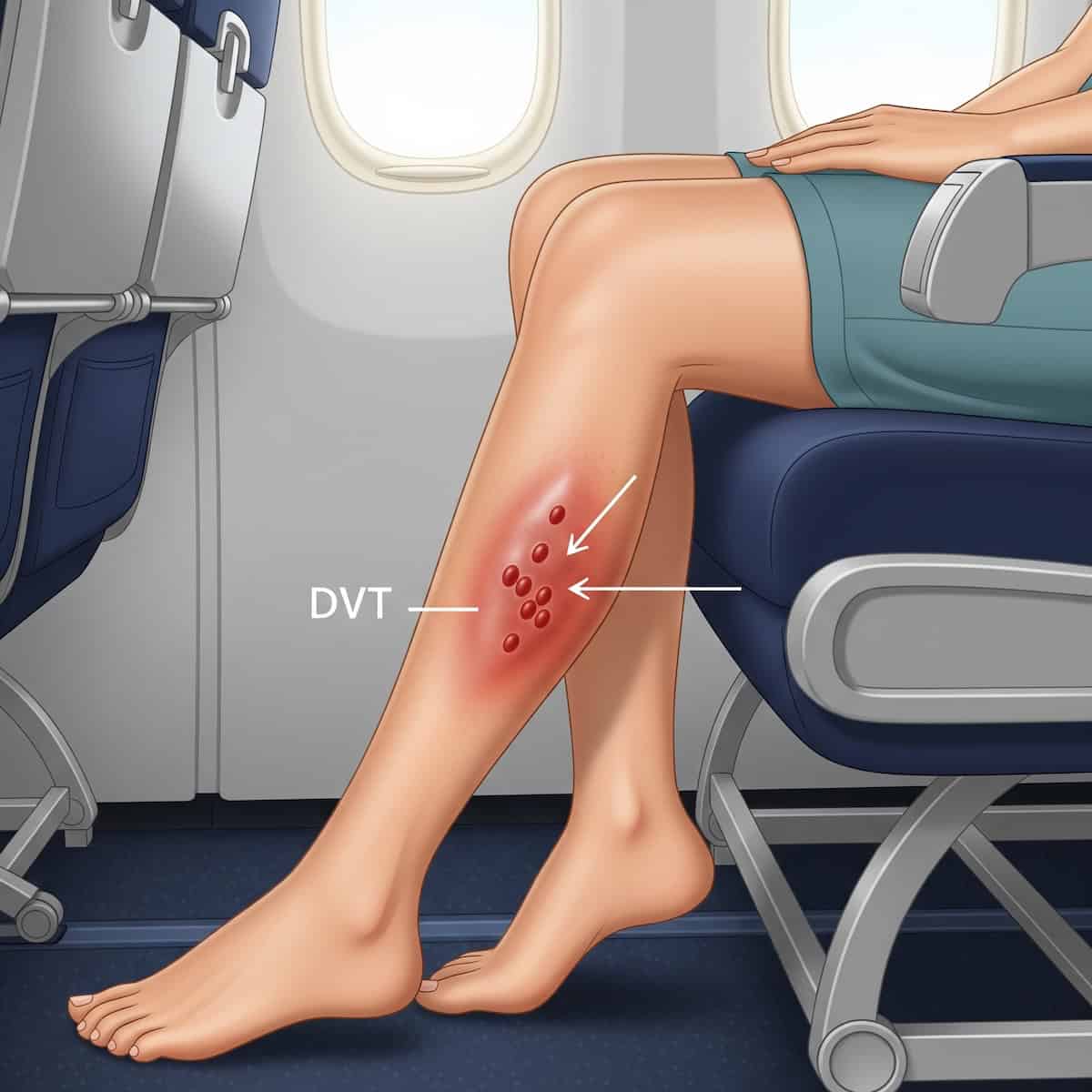
Everything Air Travellers Need to Know to Stay Safe at 35,000 Feet
Every year, millions of passengers board long-haul flights without giving a second thought to what is happening inside their bodies during hours of prolonged sitting. Deep Vein Thrombosis — commonly known as DVT — is one of the most underdiagnosed and underappreciated risks associated with air travel. It is silent, it can be serious, and in rare cases, it can be fatal. Yet with the right knowledge and simple preventative habits, it is almost entirely avoidable.
This comprehensive guide explains exactly what DVT is, why flying increases your risk, who is most vulnerable, what symptoms to watch for, and — most importantly — what you can do before, during, and after your flight to protect yourself. Whether you’re a frequent business traveller, a holidaymaker planning a long-haul trip, or someone caring for an elderly or high-risk passenger, this article is essential reading.
What Is Deep Vein Thrombosis (DVT)?
Deep Vein Thrombosis is a medical condition in which a blood clot — medically referred to as a thrombus — forms in one or more of the deep veins of the body. While DVT can occur in any deep vein, it most commonly develops in the deep veins of the legs, particularly in the calf, thigh, or pelvis.
Under normal circumstances, blood flows continuously and freely through your veins, returning from the extremities back to the heart and lungs. When this flow is disrupted — by prolonged immobility, dehydration, or certain medical conditions — blood can pool and begin to clot in the deep veins. Once a clot forms, it can partially or fully block blood flow in the affected vein, causing swelling, pain, and inflammation.
The most serious complication of DVT is a pulmonary embolism (PE) — a life-threatening condition that occurs when a blood clot breaks free from the deep vein, travels through the bloodstream, and lodges in the arteries of the lungs. Pulmonary embolism can cause sudden shortness of breath, chest pain, and in severe cases, cardiac arrest and death.
Together, DVT and pulmonary embolism are grouped under the medical umbrella term venous thromboembolism (VTE), which affects an estimated 10 million people worldwide each year and is responsible for more deaths annually than breast cancer, AIDS, and road traffic accidents combined.
The Connection Between Flying and DVT: Why Air Travel Raises Your Risk
The relationship between long-haul air travel and DVT is well established in medical literature. In fact, DVT related to flying is so commonly documented that it has earned its own informal name: “Economy Class Syndrome.” While this term is somewhat misleading — DVT can affect business and first class passengers too — it reflects the reality that cramped seating, restricted legroom, and prolonged immobility are central to the risk.
So why exactly does flying increase your DVT risk? There are several interconnected reasons:
1. Prolonged Immobility
The most significant contributing factor is simply sitting still for an extended period. When you are seated with your knees bent and your legs hanging down, the muscles in your calves — which normally act as a pump to push blood back up toward the heart — become inactive. Blood begins to pool in the deep veins of the legs. The longer you sit without moving, the more pronounced this pooling becomes.
Medical research consistently identifies four hours of continuous sitting as a threshold beyond which DVT risk begins to rise meaningfully. On long-haul flights of 8, 12, or even 18 hours, passengers may sit in the same position for hours at a stretch — particularly when sleeping — creating ideal conditions for clot formation.
2. Cramped Seating and Reduced Legroom
The average economy class seat pitch — the distance between your seat and the one in front — has shrunk significantly over the past two decades as airlines pack more passengers into aircraft. In 2026, many budget and mainstream carriers operate with seat pitches as low as 28–29 inches, making it physically difficult to extend the legs, stand up easily, or shift position meaningfully. This chronic compression of the legs worsens blood circulation.
3. Cabin Pressure and Low Humidity
Aircraft cabins are pressurised to the equivalent of roughly 6,000–8,000 feet above sea level — lower than sea level pressure but significantly lower than the outside atmosphere at cruising altitude. This reduced cabin pressure causes mild physiological stress on the cardiovascular system and is associated with slight increases in clotting tendency in susceptible individuals.
Additionally, cabin air humidity is extremely low — typically between 10% and 20%, compared to a comfortable indoor humidity of 30–60%. This low humidity accelerates dehydration, and dehydration thickens the blood, making clot formation more likely.
4. Alcohol and Caffeine Consumption
Many passengers enjoy alcoholic beverages or coffee during flights, both of which are diuretics that promote fluid loss. Combined with the already dehydrating cabin environment, alcohol and excessive caffeine consumption can significantly worsen blood viscosity and increase DVT risk.
5. Compression from Seat Edge
The edge of an airline seat presses against the back of the thighs and behind the knees, physically compressing the popliteal vein — one of the major deep veins in the leg. This compression restricts blood flow and is a direct mechanical contributor to pooling in the calf veins below.
Who Is Most at Risk? Identifying High-Risk Passengers
While DVT can technically affect any traveller on a sufficiently long flight, certain individuals face substantially higher risk and should take extra precautions. Understanding your personal risk profile is the first step toward effective prevention.
High-Risk Groups Include:
People with a personal or family history of DVT or PE. If you have previously had a blood clot, or if a close blood relative has, your risk is significantly elevated. A clotting disorder may be hereditary.
Pregnant women and recent postpartum women. Pregnancy increases blood coagulability — the tendency of blood to clot — as a natural protective mechanism against haemorrhage during childbirth. This elevated clotting tendency persists for up to 6 weeks after delivery, making postpartum women particularly vulnerable.
People taking hormonal contraceptives or hormone replacement therapy (HRT). Oestrogen-containing medications including the combined oral contraceptive pill and certain forms of HRT are well-established risk factors for DVT. The risk is further amplified in combination with air travel.
Older travellers. Vein wall elasticity decreases with age, venous valves become less efficient, and overall mobility tends to decline. Travellers over 60 face meaningfully higher DVT risk than younger passengers.
Obese or overweight individuals. Excess body weight compresses veins, increases venous pressure, and is associated with chronic low-grade inflammation — all of which elevate clotting risk.
Recent surgery or major trauma patients. Surgical procedures — particularly orthopaedic operations like hip or knee replacement — dramatically increase DVT risk for weeks to months afterward. Flying soon after surgery without medical clearance can be extremely dangerous.
People with active cancer or recent cancer treatment. Many cancers and chemotherapy agents promote a hypercoagulable state — an increased tendency of the blood to clot. Cancer patients should consult their oncologist before any long-haul travel.
Travellers with limited mobility. Anyone with a condition that restricts leg movement — whether from injury, neurological conditions, or physical disability — faces higher risk due to reduced muscle pump activity in the calves.
Very tall people. While not immediately obvious, very tall individuals — particularly those over 6 feet 2 inches — face greater difficulty fitting into economy seats and are more likely to experience chronic leg compression during flight.
Smokers. Smoking damages blood vessel walls and promotes platelet aggregation, both of which contribute to clot formation.
Recognising the Symptoms of DVT
One of the challenges of DVT is that it can be entirely symptom-free — particularly in its early stages. In fact, it is estimated that up to half of all DVT cases produce no symptoms at all, making awareness and prevention all the more important.
When symptoms do occur, they typically appear in one leg rather than both and may include:
- Swelling in the affected leg, ankle, or foot — often appearing gradually
- Pain or tenderness in the calf, thigh, or behind the knee, sometimes described as cramping or soreness
- Warmth in the affected area — the skin over the clot may feel noticeably warm to the touch
- Redness or discolouration of the skin — the skin may appear red, bluish, or darker than the surrounding area
- A heavy or aching sensation in the leg, particularly when standing or walking
Symptoms of pulmonary embolism — which require immediate emergency medical attention — include:
- Sudden shortness of breath, especially at rest
- Sharp or stabbing chest pain that worsens with deep breathing or coughing
- Rapid heart rate (palpitations)
- Coughing up blood
- Dizziness, lightheadedness, or fainting
- A feeling of extreme anxiety or doom
If you or a fellow passenger experience any symptoms of pulmonary embolism during or after a flight, seek emergency medical care immediately. This is a life-threatening emergency.
DVT Prevention Tips: Before Your Flight
Preparation before you board is just as important as what you do in the air. Smart pre-flight habits can significantly reduce your baseline risk.
1. Consult Your Doctor If You Are High-Risk
If you fall into any of the high-risk categories described above — particularly if you have a history of DVT, are pregnant, have recently had surgery, or are undergoing cancer treatment — speak with your doctor before travelling. They may recommend preventive anticoagulant medication (blood thinners) such as low molecular weight heparin (LMWH) injected before long-haul flights, or advise against flying entirely depending on your specific circumstances.
Do not attempt to self-prescribe blood thinners. These medications carry their own risks, including bleeding complications, and must be used under medical supervision.
2. Get Fitted for Compression Stockings
Graduated compression stockings — also called flight socks or travel socks — are one of the single most evidence-supported measures for reducing DVT risk during air travel. Multiple clinical studies, including a large Cochrane Review, have confirmed that compression stockings significantly reduce the incidence of DVT in long-haul air travellers.
These stockings work by applying gentle, graduated pressure to the legs — tightest at the ankle and progressively looser toward the knee — which mechanically assists blood return from the lower legs back toward the heart, counteracting the pooling effect of prolonged sitting.
For best results, get fitted by a pharmacist or medical professional rather than buying a generic size. Poorly fitted stockings can actually worsen circulation. Aim for stockings with a compression level of 15–30 mmHg for travel purposes. Put them on before boarding — ideally while your legs are still at their smallest, before any swelling has begun.
3. Choose Your Seat Wisely
Where you sit on the aircraft has a meaningful impact on your DVT risk. An aisle seat is strongly preferable to a window or middle seat for high-risk travellers, for one simple reason: it makes it dramatically easier to get up, stretch, and walk the aisle regularly without disturbing fellow passengers or needing to climb over anyone. The psychological and practical barrier to movement from a window seat is real and significant.
If possible on longer flights, consider upgrading to a seat with more legroom — premium economy, bulkhead rows, or exit row seats all provide more space to extend and move the legs. On ultra-long-haul routes, business class lie-flat seats virtually eliminate DVT risk from positional immobility, though hydration and movement remain important.
4. Hydrate Aggressively Before Departure
Begin hydrating in the hours before your flight, not just on board. Aim to drink at least 500ml of water in the two hours before departure. Avoid alcohol and excessive caffeine in the airport — the diuretic effects will work against you once you’re in the dry cabin air.
5. Avoid Tight Clothing
Wear loose, comfortable clothing on travel days. Tight waistbands, restrictive trousers, and tight boots or shoes can all contribute to venous compression and should be avoided. Comfortable, loose-fitting travel clothing combined with compression stockings is the ideal combination.
DVT Prevention Tips: During Your Flight
What you do in the air is where the greatest preventive impact lies. Adopt these habits as non-negotiable parts of your in-flight routine.
1. Get Up and Walk Every 1–2 Hours
This is the most effective single action you can take. Standing up from your seat and walking to the back of the aircraft or to the lavatory and back activates the calf muscle pump, immediately improving blood return from the legs. Aim to walk for at least 2–3 minutes every 1–2 hours throughout your flight.
Set a reminder on your watch or phone if needed, and don’t let sleep override this habit on very long flights — if you naturally wake up after several hours, use that opportunity to take a walk.
2. Perform In-Seat Leg Exercises Regularly
Walking is ideal, but not always possible — during turbulence, meal service, or when the seatbelt sign is on. In-seat exercises are your next best tool:
Ankle circles: Lift both feet off the floor and rotate your ankles in large circles, first clockwise, then counter-clockwise. Do 10 rotations in each direction. This directly activates the muscles that assist venous return.
Heel raises: With your feet flat on the floor, raise both heels as high as possible while keeping your toes down. Hold for a second, then lower slowly. Repeat 20 times. This mimics the action of walking and powerfully activates the calf pump.
Toe raises: The reverse of heel raises — keep your heels on the floor and raise your toes as high as possible. This stretches the anterior tibial muscles and encourages circulation in the foot and lower leg.
Knee lifts: Alternately lift each knee toward your chest, holding for 3–5 seconds. This engages the hip flexors and femoral veins in the thigh.
Leg extensions: Extend one leg forward and hold it straight for 10 seconds, flexing the foot. Alternate legs. This engages the quadriceps and promotes circulation in the femoral vein.
Aim to run through this full routine every 30–45 minutes while seated, especially during long overnight flights when walking is less practical.
3. Stay Hydrated Throughout the Flight
Drink water consistently throughout the flight — aim for at least 250ml (one cup) of water per hour of flight time. Accept every offer of water from cabin crew and supplement with a personal water bottle. Many airlines allow passengers to ask for extra water between service rounds — don’t hesitate to do so.
Strictly limit alcohol during long flights. While one drink may be socially enjoyable, multiple drinks significantly worsen dehydration and impair your body’s natural clotting regulation. If you do drink alcohol, match it with an equal volume of water.
4. Avoid Crossing Your Legs
Crossing one leg over the other while seated is a habit many travellers unconsciously fall into, especially while reading or watching a film. This position compresses the veins behind the knee (the popliteal vein) and significantly worsens blood pooling in the calves. Make a conscious effort to keep both feet flat on the floor or on a footrest at all times.
5. Use a Footrest or Travel Pillow for Leg Support
Keeping your feet slightly elevated — even by a few centimetres — reduces pressure on the back of the thighs where they rest against the seat edge. A small travel footrest, a folded jacket placed under your feet, or a travel pillow positioned under the ankles can make a meaningful difference on very long flights.
6. Keep Warm
Cold temperatures cause blood vessels to constrict and can impair circulation. Aircraft cabins can become quite cold, especially on overnight flights. Keep a blanket over your legs and wear warm socks. Don’t let the cold encourage you to curl up in a foetal position — keep your legs as extended and active as possible even when resting.
7. Consider Aspirin Only Under Medical Advice
Some travellers ask about taking aspirin before long flights as a blood-thinning measure. The medical evidence on aspirin’s effectiveness in preventing travel-related DVT is mixed, and aspirin carries its own risks including gastrointestinal irritation and bleeding. Do not self-medicate with aspirin for DVT prevention without first discussing it with your doctor. For truly high-risk travellers, prescription anticoagulants are far more effective.
DVT Prevention Tips: After Your Flight
The risk of DVT does not end the moment you leave the aircraft. Blood clots can form during the flight but may not produce symptoms until hours or even days later. Post-flight habits matter.
1. Keep Moving After Landing
Resist the temptation to sit and wait at baggage claim or in an airport transfer. Walk briskly through the terminal, take the stairs instead of the escalator, and keep your legs moving. The calf muscle pump needs to get back to its normal rhythm after hours of suppression.
2. Monitor Your Legs for Symptoms
In the 24–72 hours following a long-haul flight, pay attention to your legs. Any unexplained swelling, persistent calf pain, warmth, or skin discolouration in one leg should be evaluated by a doctor promptly. Early DVT is very treatable — delayed diagnosis is what leads to serious complications.
3. Continue Hydration
Continue drinking plenty of water for several hours after your flight to fully rehydrate your body and restore normal blood viscosity.
4. Seek Emergency Care for PE Symptoms
If you develop any symptoms of pulmonary embolism — sudden shortness of breath, chest pain, rapid heart rate, coughing up blood, or dizziness — in the hours or days following a long flight, go to an emergency department immediately. Tell the medical team that you have recently completed a long-haul flight, as this is important clinical information.
DVT Prevention: Special Circumstances
Pregnant Travellers
Most airlines permit pregnant passengers to fly up to 36 weeks of pregnancy (28–32 weeks for some carriers on long-haul routes). Pregnant travellers should wear graduated compression stockings, stay extremely well hydrated, walk the aisle frequently, and discuss anticoagulation options with their obstetrician before travel. Avoid restrictive seatbelts over the abdomen — the lap belt should sit below the bump.
Post-Surgical Travellers
If you have had major surgery within the past 4–6 weeks, consult your surgeon before flying. Many surgeons recommend waiting a minimum of four to six weeks after major lower limb surgery before undertaking long-haul air travel. If travel is unavoidable, anticoagulant prophylaxis is often prescribed.
Travellers with Clotting Disorders
Genetic clotting disorders such as Factor V Leiden mutation, prothrombin gene mutation, or antiphospholipid syndrome dramatically increase DVT risk. If you know you carry one of these conditions, comprehensive medical guidance before any long-haul travel is essential, not optional.
The Role of Technology and Wearables in DVT Prevention (2026)
In 2026, a growing range of wearable technologies are being used to support DVT prevention during travel. Smartwatches and fitness trackers from companies like Apple, Garmin, and Fitbit now include features that detect prolonged inactivity and prompt users to move. Some devices include heart rate variability monitoring that can flag early cardiovascular stress.
Dedicated travel wellness apps now send customised reminders to walk and perform exercises at programmable intervals, and some integrate with smart compression devices — electronically activated compression sleeves that apply dynamic pressure sequences to the legs, mimicking the effect of walking. While these premium devices remain expensive, they represent the cutting edge of in-flight DVT prevention technology.
Frequently Asked Questions About DVT and Flying
How long does a flight have to be to increase DVT risk? Most research points to flights of four hours or more as the threshold where risk begins to rise. However, individuals with multiple risk factors may be vulnerable on shorter flights as well.
Can DVT develop during the flight or only afterward? Both. Clots can begin forming during the flight itself, but may not produce symptoms until hours or days after landing. This is why post-flight monitoring is just as important as in-flight prevention.
Are compression stockings really effective? Yes. The clinical evidence is strong. In one landmark study, symptom-free DVT was detected in 10% of long-haul travellers not wearing compression stockings, compared to 0% of those who did. They are among the most evidence-supported interventions available to travellers.
Does flying in business or first class eliminate DVT risk? It significantly reduces it, primarily because lie-flat seats eliminate the positional immobility and leg compression associated with economy seating. However, dehydration and other risk factors still apply, so hydration and movement remain important.
Is DVT the same as a blood clot? DVT is a specific type of blood clot — one that forms in a deep vein, most commonly in the leg. Not all blood clots are DVTs, but all DVTs are blood clots.
Final Thoughts: Your Health Is Worth Prioritising at 35,000 Feet
Deep Vein Thrombosis is a genuine and underappreciated risk of long-haul air travel — but it is far from inevitable. The vast majority of cases can be prevented through a combination of awareness, simple in-flight habits, and appropriate precautions for high-risk individuals.
The core message is straightforward: move regularly, hydrate consistently, wear compression stockings, and know your personal risk level. These four principles, consistently applied, will protect the overwhelming majority of travellers from this serious but preventable condition.
Don’t let the excitement of travel cause you to neglect the basics of in-flight health. Your legs are working hard to keep your blood moving while you sit still at 35,000 feet — give them the support they need, and you’ll arrive at your destination feeling well, refreshed, and ready to enjoy every moment of your journey.
In another related article, Carry-On vs Checked Baggage: Which Is Better in 2026?