



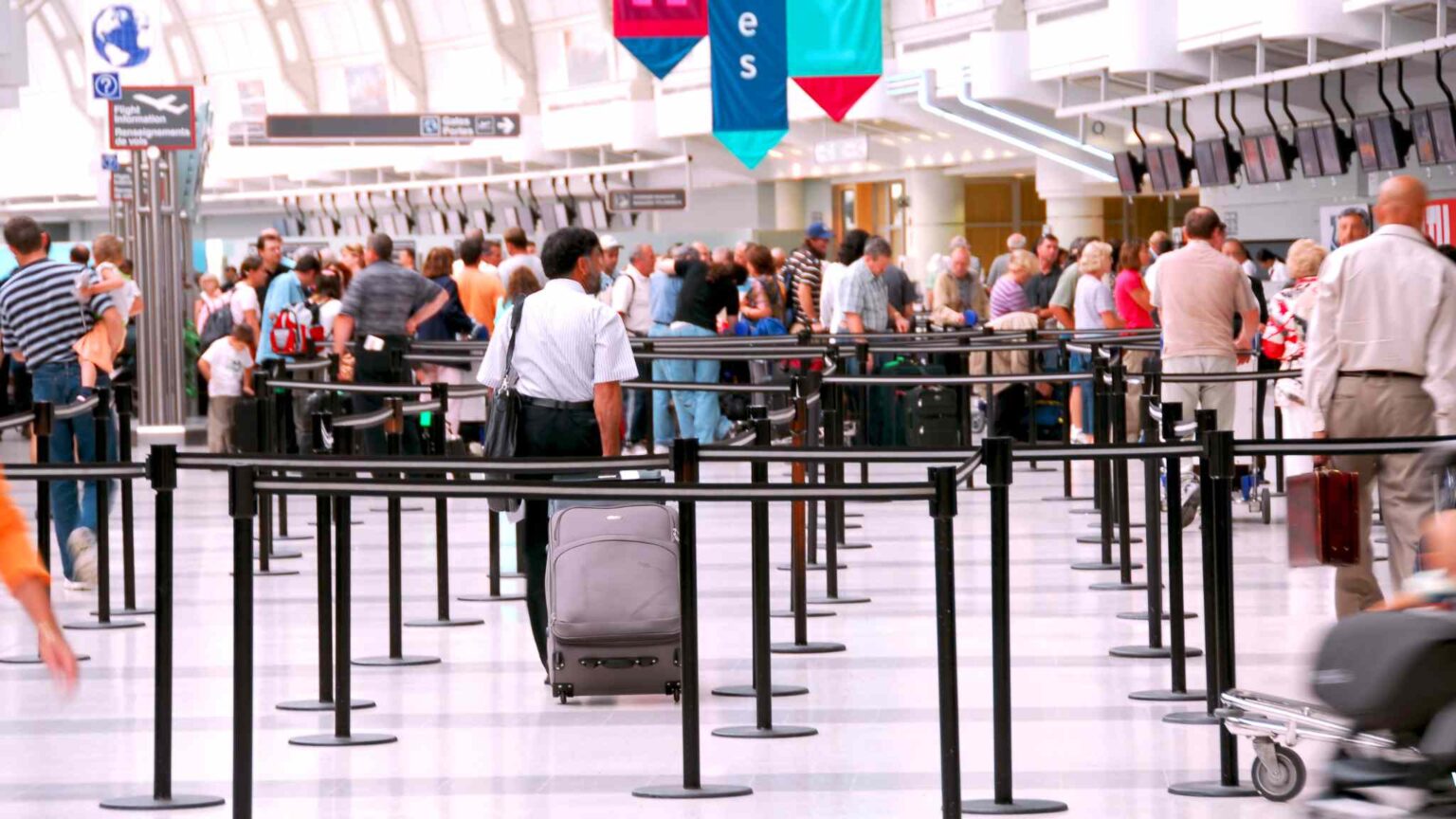
The security line doesn’t have to be the most stressful part of your trip. With the right knowledge, the right preparation, and the right mindset, you can move through TSA like a seasoned traveler every single time.
Introduction: Why Airport Security Feels So Overwhelming — And Why It Doesn’t Have To
Picture this scene. You’re at the airport, running slightly behind schedule. The security line stretches back farther than you expected. The person ahead of you didn’t remove their laptop. The bins are piling up. A TSA officer is calling out instructions that half the line isn’t following. Someone’s shoes triggered the alarm. A child is crying. Your flight boards in 45 minutes.
This is the airport security experience that millions of travelers dread — and millions more actually live through regularly. For many people, the TSA checkpoint is the single most anxiety-inducing part of air travel. More stressful than turbulence. More frustrating than a middle seat. More unpredictable than a weather delay.
And yet — here is the truth that experienced travelers know, and first-timers haven’t yet discovered — airport security is almost entirely manageable when you know what you’re doing. The chaos at the checkpoint is not random. It follows predictable patterns. The delays have identifiable causes. The rules, while sometimes confusing, are consistent. And the difference between a traveler who breezes through in five minutes and one who holds up the entire line for ten is almost always preparation, knowledge, and a calm, organized approach.
This guide is your complete education in airport security. We’ll cover everything: how the TSA checkpoint works, what the rules actually say, how to pack your bags so they sail through the X-ray machine, how to dress for efficiency, which trusted traveler programs can transform your airport experience, how to handle special circumstances like medical devices and traveling with children, and the most common mistakes that slow people down — so you can avoid every single one of them.
By the time you finish reading this article, the TSA checkpoint will never feel overwhelming again. Let’s get started.
Understanding the TSA: What It Is and What It’s Actually Trying to Do
Before you can navigate the system efficiently, it helps to understand the system itself. The Transportation Security Administration was created in the immediate aftermath of the September 11, 2001, terrorist attacks, established by the Aviation and Transportation Security Act signed into law in November 2001. Before TSA existed, airport security was managed by individual airlines and private contractors — a fragmented, inconsistent system that the 9/11 Commission found to be deeply inadequate.
Today, the TSA employs approximately 50,000 Transportation Security Officers (TSOs) across more than 400 airports nationwide, screening roughly 2.5 million passengers every single day. That’s an enormous logistical operation, and understanding its scale helps explain both its efficiency at its best and its frustrations at its worst.
The TSA’s mission is singular and serious: to prevent dangerous people and dangerous items from boarding commercial aircraft. Every rule, every procedure, every scan, every pat-down exists in service of that mission. When you understand this — when you internalize that the process is designed around threat prevention rather than passenger inconvenience — the checkpoint begins to make a different kind of sense. The rules aren’t arbitrary. The questions aren’t performative. The procedures have a purpose.
That said, the TSA is also a bureaucratic institution with standardized procedures that must be applied consistently across millions of daily interactions. Efficiency and consistency sometimes tension with each other — and the traveler who suffers most from that tension is almost always the one who arrives unprepared.
The Anatomy of a TSA Checkpoint: What Happens at Every Step
For first-time flyers especially, understanding exactly what happens at a TSA checkpoint — in sequence — removes a significant portion of the anxiety. When you know what’s coming, nothing surprises you.
Step 1: The Document Check
The first TSA officer you encounter is the Document Checker. Their job is to verify that you are who you say you are and that your travel documents are in order. You will need to present:
A valid government-issued photo ID. For domestic travel within the United States, acceptable forms of ID include a driver’s license or state ID that is REAL ID compliant (indicated by a star in the upper corner), a U.S. passport or passport card, a Department of Defense ID, a permanent resident card, a trusted traveler card (Global Entry, NEXUS, SENTRI), or several other government-issued documents. Beginning May 7, 2025, the TSA requires REAL ID-compliant identification for all domestic air travel — a driver’s license without the star marking will no longer be accepted. If your state ID is not yet REAL ID-compliant, obtain a passport or REAL ID before your travel date.
Your boarding pass. This can be a printed boarding pass or a digital one displayed on your smartphone. The document checker will scan or visually verify the barcode and confirm your flight details. Make sure your boarding pass is pulled up and ready before you reach the podium — fumbling with your phone or digging through your bag at this moment delays everyone, including yourself.
After the document check, you’ll receive a physical mark or stamp on your boarding pass (in most airports) and proceed to the screening lanes.
Step 2: Choosing Your Lane
In many larger airports, the TSA checkpoint is divided into multiple lanes, which may include standard lanes, TSA PreCheck lanes, and sometimes CLEAR lanes. Choosing the correct lane for your situation is important — entering a PreCheck lane without PreCheck eligibility will result in being redirected, wasting time for everyone.
In standard lanes, you will be required to follow the full security screening protocol. In TSA PreCheck lanes — marked with a PreCheck logo — eligible passengers move through an expedited process with significantly fewer requirements. We’ll cover PreCheck in detail in a later section.
Step 3: Divesting and Binning Your Items
This is the step where most delays occur, and where preparation pays the biggest dividends. Before walking through the screening equipment, you must place certain items in the plastic bins provided and send them through the X-ray machine.
In standard lanes, you are required to remove and bin the following:
- Your laptop computer (must be removed from its case and placed in its own bin)
- Liquids bag (the quart-sized, clear zip-lock bag containing all liquids, aerosols, and gels)
- Shoes (most passengers are required to remove shoes in standard lanes)
- Outerwear (jackets, coats, blazers, and vests)
- Belts
- Bulky jewelry and metal items
- Any other large electronic devices (tablets, e-readers, and portable gaming devices may need to be removed — policies vary by checkpoint)
The key to moving through this step smoothly is to be ready before you reach the conveyor belt. Don’t wait until you’re at the front of the line to start digging through your bag for your laptop. The most efficient travelers have already identified where everything is, have their liquids bag at the top of their carry-on, and can divert through the binning process in under 60 seconds.
Step 4: The Body Scanner
After your bins and bags are sent through the X-ray machine, you walk through the body scanner. Most modern TSA checkpoints use Advanced Imaging Technology (AIT) millimeter-wave scanners rather than the older metal detectors. These scanners detect both metallic and non-metallic items by producing a generic, cartoon-like image of the body, not a photographic image of the traveler.
You’ll be directed to step into the scanner, stand with your feet on the marked footprints, and raise your arms over your head in a specific position. The scan takes approximately two seconds. If no anomalies are detected, a green indicator typically lights up, and you’re waved through. If an anomaly is detected — even a benign one like a tissue in your pocket — you’ll be directed to secondary screening.
Some passengers may opt out of the body scanner and request a pat-down instead. This is your right as a traveler, but it adds time to your screening process, as a same-gender TSA officer must conduct the pat-down, which is more thorough and time-consuming than the scan.
Step 5: Collecting Your Items and Reassembling
After clearing the scanner, collect your bins and bags from the end of the conveyor. This step sounds simple, but it is another common source of delay and frustration. Travelers who try to reassemble entirely at the conveyor — putting on shoes, replacing their belt, repacking their bag — create a bottleneck for everyone behind them.
The correct approach: grab your bins and bags efficiently, move to the reassembly area (most checkpoints have one set back from the conveyor), and get yourself organized there. Only then put your shoes back on, your jacket back on, your belt back through the loops, and your laptop back in its bag.
The 3-1-1 Rule: Mastering the Liquids Requirement
No aspect of airport security causes more confusion, more delays, and more confiscated items than the TSA’s liquids rule. Officially known as the 3-1-1 rule, it is one of the most important things to understand before you pack.
What the 3-1-1 Rule Says
- 3.4 ounces (100 milliliters) or less per container. Any liquid, aerosol, gel, cream, or paste must be in a container of 3.4 ounces or less. It doesn’t matter if the container is only half full — if the container itself holds more than 3.4 ounces, it is not permitted in your carry-on.
- 1 quart-sized, clear, zip-top bag per passenger. All of your compliant liquid containers must fit comfortably inside a single, clear, quart-sized resealable bag. The bag must be able to close completely.
- 1 bag per passenger. Each traveler is limited to one such bag, which must be removed from your carry-on and placed in its own bin for X-ray screening.
What Counts as a Liquid?
This is where many travelers get tripped up. The TSA’s definition of “liquid” is broader than the everyday sense of the word. It includes:
Obvious liquids: Water, juice, coffee, alcohol, perfume, cologne, mouthwash, contact lens solution.
Gels: Hair gel, toothpaste, lip gloss, mascara, gel deodorant, peanut butter, jam, honey, Nutella.
Aerosols: Hairspray, dry shampoo, spray deodorant, sunscreen spray, insect repellent spray.
Creams and pastes: Face creams, lotions, sunscreen, body butter, and shoe polish.
Other surprises: Snow globes, yogurt, hummus, salsa, soft cheeses, pudding, and even peanut butter are all considered liquids or gels by TSA standards.
Solid items — a stick of deodorant, a solid shampoo bar, a bar of soap, a powder — are generally not subject to the 3-1-1 rule.
Exceptions to the Liquids Rule
Medications: Prescription and over-the-counter medications in liquid form are permitted in reasonable quantities exceeding 3.4 ounces. They must be declared to TSA officers at the checkpoint and may be subject to additional screening.
Baby formula, breast milk, and juice for infants: These are permitted in quantities that are “reasonable for the flight” and do not need to fit in the quart-sized bag. Notify TSA officers when you present these items.
Ice packs and gel cooling packs for medications: Permitted when accompanying medication that requires temperature control.
Duty-free liquids purchased beyond security: Items purchased in the sterile area of the airport or on an international connection in a sealed, tamper-evident bag may be brought aboard even if they exceed 3.4 ounces.
The Pro Traveler Liquids Strategy
Experienced travelers minimize the liquids challenge in several ways. First, they switch to solid or powder versions of toiletries wherever possible — solid shampoo bars, solid conditioner bars, solid face wash, and powder sunscreen all bypass the liquids rule entirely. Second, they pack full-size toiletries in their checked baggage and keep only minimal items in the carry-on liquids bag. Third, they prepare their liquids bag the night before travel, ensuring it’s organized, fully accessible, and at the very top of their carry-on for easy removal at the checkpoint.
How to Dress for Security Success
What you wear to the airport has a direct and quantifiable impact on how quickly and smoothly you move through TSA screening. This is a dimension of airport preparation that many travelers overlook entirely — until the TSA officer asks them to remove their bulky belt buckle, their knee-high lace-up boots, and their layered metal jewelry, and they realize they’ve turned a two-minute process into a ten-minute one.
Shoes: Your Single Most Important Clothing Decision
In standard TSA lanes, shoes must be removed and placed in a bin. This means the shoes you choose to wear to the airport have real consequences for your security experience. The ideal airport shoe is:
- Slip-on: Loafers, slip-on sneakers, and low boots that can be removed and replaced in seconds. Lace-up shoes that require significant time to unlace and re-lace are the enemy of a smooth security experience.
- Low-cut: High boots — particularly knee-high or thigh-high styles — take considerably longer to remove and replace. Save them for your destination.
- Clean and odor-neutral: You will be removing your shoes in a public setting. This is not the day for socks with holes or particularly fragrant footwear.
If you have TSA PreCheck (discussed in the next section), you don’t need to remove your shoes — making shoe choice less critical, though still worth considering for overall comfort.
Clothing: Keep Metal Minimal
The body scanner detects metal. Everything from belt buckles and underwire bras to metal buttons, heavy zippers, and decorative hardware on clothing can flag anomalies and trigger additional screening. The ideal airport outfit:
- No belt, or a belt with a simple, slim buckle that can be easily removed and replaced. Even better, wear pants that fit without a belt — eliminating the item.
- Minimal or no metal jewelry. Heavy necklaces, chunky bracelets, multiple rings, and large earrings can all trigger alarms. Either wear minimal jewelry or be prepared to remove and store it before the scanner.
- Avoid overly layered outerwear. Multiple jackets and heavy coats all need to come off and go in bins. One outer layer that you’re willing to remove and carry is the optimal approach.
- Avoid shoes with significant metal hardware. Heavily buckled boots or shoes with metal toe caps are consistently flagged by the body scanner.
Pockets: Empty Them Before You Reach the Bin
Everything in your pockets — coins, keys, receipts, phone, wallet, chapstick — must be removed before the body scanner. The most efficient travelers empty their pockets into a designated compartment of their bag before even reaching the checkpoint, so there’s nothing left to remove at the bin station. This eliminates one entire step from the process and removes the risk of forgetting something in a pocket that later triggers the alarm.
TSA PreCheck: The Single Best Investment for Frequent Travelers
If there is one piece of advice in this entire article that has the potential to transform your airport experience more than any other, it is this: enroll in TSA PreCheck.
TSA PreCheck is a trusted traveler program administered by the TSA that allows pre-approved, low-risk travelers to use dedicated expedited screening lanes at over 200 U.S. airports. In PreCheck lanes, the screening process is dramatically simplified compared to standard lanes.
What PreCheck Allows You to Skip
In a TSA PreCheck lane, you do not need to:
- Remove your shoes
- Remove your laptop from its bag
- Remove your liquids bag from your carry-on
- Remove your light jacket or outerwear
- Remove your belt
You walk through a standard metal detector (not the full-body AIT scanner) with your bag, going through the X-ray machine as packed. For most PreCheck passengers, the entire checkpoint experience — from entering the lane to being fully through — takes under five minutes, and often under two.
How to Enroll in TSA PreCheck
Step 1 — Apply online. Complete the online pre-enrollment application at the TSA PreCheck website, providing basic personal information.
Step 2 — Schedule an in-person appointment. You’ll visit one of over 500 enrollment centers nationwide — many located at airports or in stores like pharmacies and office supply retailers. The appointment takes approximately 10 minutes and includes fingerprinting and identity verification.
Step 3 — Pay the fee. The TSA PreCheck enrollment fee is $78 for a five-year membership — approximately $15.60 per year, or about $1.30 per month. This is one of the best value propositions in all of travel.
Step 4 — Receive your Known Traveler Number (KTN). Within approximately three to five days of your appointment, you’ll receive your KTN. Enter this number into your airline profile and on every flight booking going forward. When your boarding pass prints with “TSA PRE” in the designated field, you’re cleared for PreCheck lanes.
Other Trusted Traveler Programs
Global Entry: Administered by U.S. Customs and Border Protection, Global Entry provides expedited customs processing when returning to the United States from international travel — and it automatically includes TSA PreCheck. The cost is $100 for five years, making it an excellent value for international travelers. The application process is more rigorous, including a background check and an interview at a CBP enrollment center or Global Entry kiosk.
CLEAR: CLEAR is a private biometric identity verification service available at over 50 airports. CLEAR uses your fingerprints or iris scan to verify your identity, allowing you to bypass the standard document check line and go straight to the security lanes. CLEAR does not replace TSA screening — it only accelerates the identity verification step — but when combined with TSA PreCheck, it creates an extraordinarily fast security experience. CLEAR costs approximately $189 per year, though discounts are available through many credit cards and airline loyalty programs.
NEXUS and SENTRI: These CBP programs are primarily designed for frequent travelers between the U.S. and Canada (NEXUS) or the U.S. and Mexico (SENTRI), and both include TSA PreCheck benefits. They are more affordable than standard Global Entry ($50 for NEXUS) and are worth considering for travelers who frequently cross those borders.
What You Can and Cannot Bring Through Security
One of the most common causes of checkpoint delays — for the traveler experiencing them and everyone behind them in line — is carrying a prohibited item that must be confiscated, or that requires extensive additional screening. Knowing what’s allowed and what isn’t before you pack eliminates this problem.
Prohibited Items: Never in Your Carry-On
The following items are never permitted in carry-on baggage under any circumstances:
Weapons and weapon components: Firearms (unless unloaded, properly stored in checked baggage with appropriate declaration), ammunition, BB guns, pellet guns, realistic firearm replicas, switchblades, daggers, swords, and stun guns.
Explosive and incendiary items: Fireworks, flares, blasting caps, dynamite, and any item that could be used as an explosive.
Self-defense sprays: Mace, pepper spray, and similar sprays are not permitted in carry-ons. Small canisters of pepper spray may be checked under specific conditions.
Sharp objects: Box cutters (even with blades removed), razor blades not in a cartridge, and utility knives. Note that scissors with blades shorter than 4 inches from the pivot point are permitted, as are disposable razors with the blade encased.
Flammable items: Lighter fluid, strike-anywhere matches (one book of regular safety matches is permitted), and aerosols that are not personal care items.
Tools over 7 inches: Drills, crowbars, hammers, and similar tools longer than 7 inches must be checked.
Common Items That Surprise Travelers
These items frequently catch travelers off guard because they seem innocuous but are either prohibited outright or require special handling:
Lithium batteries and power banks: Loose lithium batteries and power banks must be in carry-on baggage — not checked bags. Devices with lithium batteries installed (laptops, phones, cameras) may be checked, but spare batteries cannot. This is a fire safety measure related to the thermal runaway risk of lithium batteries in the cargo hold.
Firearms in checked baggage: Legally owned, unloaded firearms may be transported in checked baggage if they are in a hard-sided, locked container and declared to the airline at check-in. This process is separate from TSA screening but worth knowing.
Medical devices and implants: Pacemakers, insulin pumps, prosthetic limbs, and implanted metal devices may trigger alarms or require alternative screening procedures. Notify the TSA officer before screening if you have a medical device or implant, and carry documentation from your physician when possible.
Sporting equipment: Baseball bats, golf clubs, hockey sticks, ski poles, and pool cues must be checked. Baseballs, footballs, and similar sports balls are typically permitted in carry-ons if deflated or at normal inflation levels — check TSA’s “What Can I Bring?” tool online for specific items.
The TSA “What Can I Bring?” Tool
The TSA maintains an extraordinarily useful online tool at tsa.gov called “What Can I Bring?” that allows travelers to search any specific item and receive an immediate, authoritative answer about whether it’s permitted in carry-on luggage, checked luggage, or neither. Before your next trip, use this tool for any item you’re uncertain about. It takes seconds and eliminates the guesswork that leads to confiscations at the checkpoint.
Special Circumstances: Navigating Security with Medical Needs, Disabilities, and Children
The standard TSA screening process was designed around an average traveler — but many travelers don’t fit that description. Understanding how TSA accommodates special circumstances removes anxiety and prevents unpleasant surprises.
Traveling with Medical Conditions and Disabilities
The TSA is required by law to screen all passengers, but it is also required to work with passengers who have disabilities or medical conditions to ensure the screening process is conducted in a respectful and accommodating manner.
Medical devices and equipment: If you travel with CPAP machines, nebulizers, portable oxygen concentrators, or similar medical equipment, notify the TSA officer before screening. These items go through X-ray but may require additional inspection. CPAP machines should be removed from their bags for X-ray, just like laptops.
Insulin pumps and CGMs: Continuous glucose monitors and insulin pumps can be damaged by X-ray machines and AIT scanners in some cases. Notify TSA officers of the device and inform them that you prefer not to have it go through the X-ray. Alternative screening — typically a visual inspection and/or pat-down — is available.
Wheelchairs and mobility aids: Wheelchairs, scooters, and mobility aids go through security too — typically via a visual inspection and swipe test for explosive trace detection. You will not need to give up your mobility device. If you use a wheelchair and cannot stand for the body scanner, a thorough pat-down will be conducted instead.
Prosthetic limbs: Prosthetics may trigger the body scanner. Notify the TSA officer in advance. You will not be required to remove a prosthetic limb, but it may be subject to additional screening, including a pat-down and explosive trace detection swab.
The TSA Cares Helpline: The TSA operates a dedicated helpline at 1-855-787-2227 (TSA CARES) that travelers with disabilities or medical conditions can call before their trip to get information about the screening process and, in some cases, arrange for a Passenger Support Specialist to assist them at the checkpoint. This service is free and worth using if you have any concerns about the screening process.
Traveling with Children
Flying with children — particularly young children and infants — adds complexity to the checkpoint experience. Here’s what you need to know:
Children 12 and under: Children 12 years of age and younger may keep their shoes on through the TSA checkpoint, even in standard lanes. They may also go through the metal detector multiple times if needed without additional screening requirements.
Children 13 and over: Teenagers 13 and older are screened using the same procedures as adults.
Strollers and car seats: Strollers and car seats must go through the X-ray machine — they are placed on the conveyor belt and sent through. Fold the stroller before reaching the checkpoint to streamline this step. Baby carriers worn on the body may require additional screening.
Baby formula, breast milk, and food: As noted earlier, these items are exempt from the 3-1-1 rule in reasonable quantities. They may be subject to additional screening, including testing for liquid explosives, but they will not be confiscated simply because they exceed 3.4 ounces.
Formula canisters and baby food: Solid baby food, formula powder, and similar items are generally exempt from liquids rules. Pureed baby food in pouches, however, is considered a gel/liquid and must follow 3-1-1 rules if in quantities exceeding 3.4 ounces — unless it’s “medically necessary” for the child.
Practical tip for families: Request a family lane when available — many checkpoints have them. And assign one adult the role of managing the checkpoint logistics while another manages the children. Trying to handle bins, bags, and a toddler simultaneously is a recipe for chaos.
Common Mistakes That Slow Everyone Down
Understanding what not to do at a TSA checkpoint is as valuable as knowing what to do. These are the most common mistakes that cause delays for the traveler, making them and everyone waiting behind them.
Mistake #1: Not Having Your ID and Boarding Pass Ready
The document check is the entry point to the entire process, and arriving at the podium still searching for your phone or digging through your bag for your passport is one of the most avoidable delays in the checkpoint experience. Have your ID and boarding pass — digital or physical — in hand before you reach the document checker. Not almost ready. In hand, unlocked, and visible.
Mistake #2: Forgetting to Remove Your Laptop
Laptops must come out of their bags in standard lanes. It seems like a simple rule, but it’s consistently one of the leading causes of bag re-screening. The X-ray operator sees a dense electronic device obscured by the contents of a bag and sends the bag back for a re-run or manual inspection. Pack your laptop in an easily accessible sleeve or outer pocket specifically so it can be extracted in seconds.
Mistake #3: Over-Packing Your Carry-On
A densely packed carry-on bag is much harder for X-ray operators to read clearly. Items stacked on top of each other, bags stuffed to capacity, and disorganized contents all make it harder to identify individual items on screen — and more likely that your bag will be flagged for manual inspection. A well-organized, not-overstuffed bag clears screening faster every time.
Mistake #4: Wearing Heavy Metal or Forgetting Coins
Coins, keys, and metal items left in pockets are one of the most common reasons body scanner alarms are triggered. The few seconds it takes to clear a pocket alarm — directing you to secondary screening for a pat-down of the pocket area — adds meaningful delay. Empty your pockets before you reach the checkpoint. All of it. Every time.
Mistake #5: Reassembling at the Belt
Putting your shoes on, rebuckling your belt, and reorganizing your bag at the end of the X-ray conveyor creates a bottleneck that backs up the entire lane. Grab your items, move to the designated reassembly area away from the conveyor, and get organized there. This single behavioral change, applied consistently, makes a meaningful difference to checkpoint flow.
Mistake #6: Bringing Prohibited Liquids
Water bottles filled with water, large shampoo bottles, full-size perfume, and jumbo-size sunscreen are among the most commonly confiscated items at TSA checkpoints. These confiscations take time — the officer must remove the item, show it to the traveler, allow the traveler to check it, and process the disposal or voluntary surrender. Pack your liquids correctly, or be prepared to lose them at the checkpoint.
Mistake #7: Arriving Too Late
The most elegant strategy in the world can’t save you if you haven’t left enough time. For domestic flights, plan to arrive at the airport at least 90 minutes before departure — two hours if you’re traveling on a busy day, during peak seasons, or through a major hub airport. For international flights, arrive at least three hours before departure. The TSA checkpoint is just one component of the pre-departure process — checking baggage, printing boarding passes, finding your gate, and boarding all require time.
How to Handle Secondary Screening Calmly and Efficiently
Despite perfect preparation, sometimes the body scanner flags an anomaly, or your bag is pulled for additional inspection. Secondary screening is a normal, relatively common occurrence — and how you respond to it determines whether it takes two additional minutes or twenty.
Stay calm. A security alarm does not mean you’ve done something wrong. It means the scanner detected something it wants a human to look at more closely. Remain calm, follow the officer’s instructions, and the process will be completed as quickly as possible.
Identify the likely cause. If you know you have a medical device, a metal implant, or some item in your bag that might have caused the flag, proactively inform the officer. This helps them direct the screening efficiently.
Cooperate fully. A pat-down, when requested, should be conducted by a same-gender officer. You may request that it be done in a private area. Children under 13 will not be subjected to a pat-down without parental involvement.
Don’t leave your belongings unattended. If you’re directed to secondary screening while your bags have cleared the X-ray, keep your bags in sight. If necessary, ask the officer to retrieve them for you.
Know your rights. You have the right to request a supervisor if you believe a screening procedure is being conducted improperly. You have the right to request that a pat-down be conducted in private. You do not have the right to refuse screening and board the aircraft.
Practical Pre-Travel Checklist: Everything to Do Before You Leave Home
Here is your complete pre-travel security preparation checklist:
The night before your flight:
- Pack your liquids bag and place it at the top of your carry-on
- Remove your laptop and place it in an easily accessible slot or outer pocket
- Empty your everyday carry (wallet, keys, coins) from your travel bag and identify where they’ll go
- Lay out your airport outfit — slip-on shoes, belt-free or easy-belt pants, minimal metal jewelry, one removable outer layer
- Confirm your ID is valid and REAL ID compliant (or that you have your passport)
- Pull up your boarding pass in your airline app and ensure it’s easily accessible
- Verify that no prohibited items have found their way into your carry-on
Morning of your flight:
- Leave with enough time for a realistic worst-case security scenario
- Double-check your pockets are empty of coins, keys, and loose items
- Confirm your boarding pass is ready on your phone — and that your phone is charged
- If you have PreCheck, confirm the “TSA PRE” marking appears on your boarding pass
Conclusion: Stress-Free Security Is a Skill — And You Now Have It
Airport security is not a lottery. It is not random. It is not designed to frustrate you, though it can certainly feel that way when you arrive unprepared, underdressed for efficiency, or behind the clock. It is a structured, rule-governed process that rewards preparation with speed and punishes carelessness with delay.
The travelers who move through TSA with ease are not lucky. They are not special. They are simply prepared. They know the rules. They’ve packed strategically. They’re dressed for efficiency. Their documents are in hand before they reach the podium. Their bins are loaded in seconds because they’ve thought through the process before they arrive at the belt. And increasingly, they’ve invested in TSA PreCheck or Global Entry — because the $15 annual cost of PreCheck is one of the single best travel investments available.
You now have everything those travelers know. The rules around liquids. The importance of shoe choice and metal minimization. The step-by-step anatomy of the checkpoint. The most common mistakes and how to avoid them. How to handle special circumstances — medical needs, children, secondary screening — without losing your composure or your place in line.
Apply this knowledge on your next trip. Arrive early. Stay calm. Move with intention. And discover, perhaps for the first time, that the TSA checkpoint can be just another smooth, unremarkable step on the way to wherever you’re going.
In another related article, Navigating Airport Crowds During the Holidays