



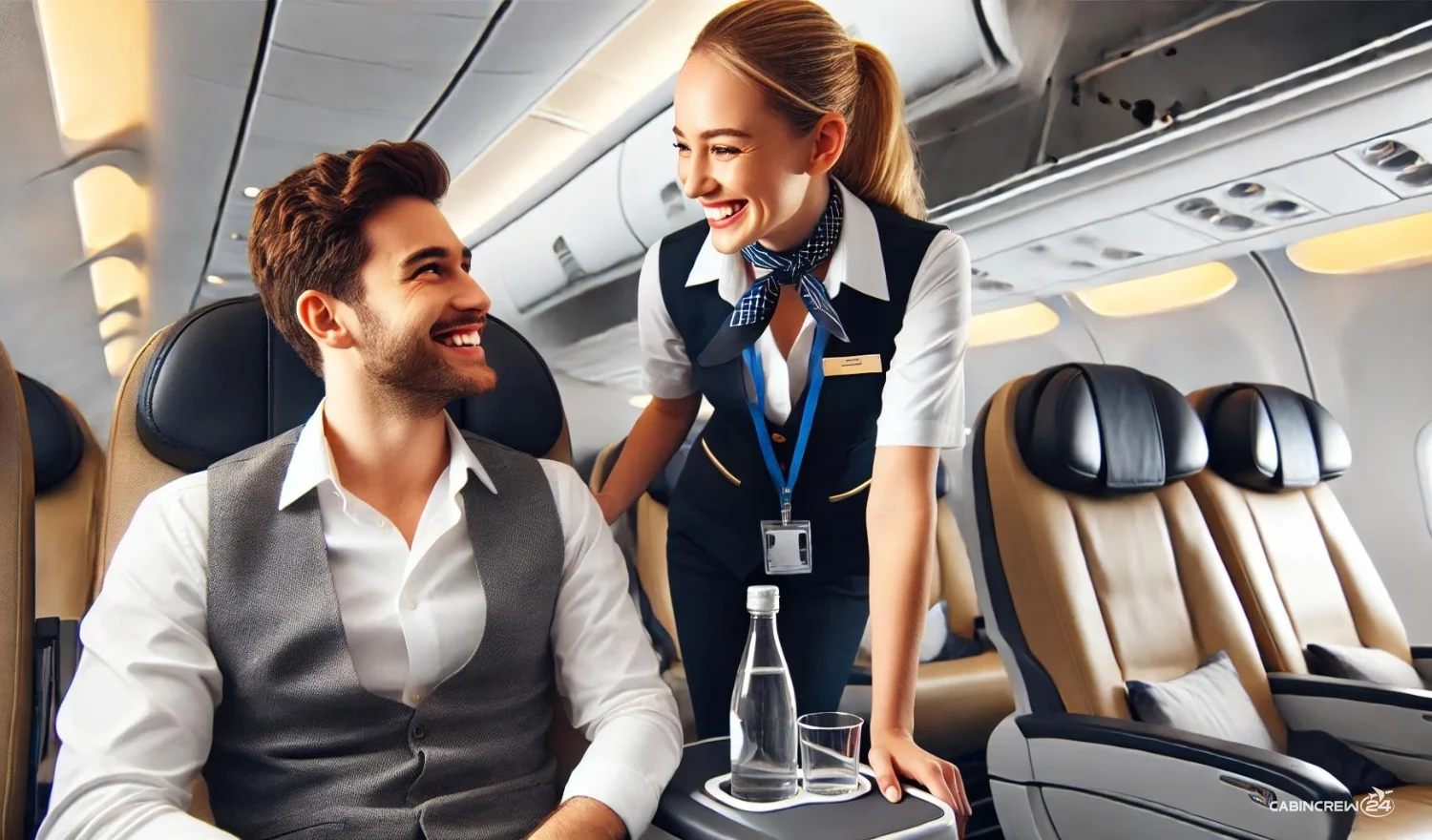
Introduction: The Human Element at 35,000 Feet
In an era dominated by algorithms, automated check-ins, and AI-driven customer service, the airline industry still relies on one irreplaceable asset — human connection. When a passenger steps onto an aircraft, they enter a confined, pressurized environment where they will spend anywhere from one hour to more than sixteen hours. During this time, the cabin crew becomes the face, the voice, and the soul of the airline.
No amount of in-flight entertainment upgrades, wider seats, or gourmet meal offerings can fully compensate for a cold, dismissive, or inattentive flight attendant. Conversely, a warm smile, a remembered name, or a thoughtful gesture at 35,000 feet can transform an otherwise ordinary flight into a memorable experience that earns lifelong loyalty.
This article explores in comprehensive detail how cabin crew interactions shape passenger satisfaction — covering the psychology of service, the key behaviors that matter most, the role of emotional intelligence, the impact of cultural awareness, and how airlines worldwide are training their crews to deliver consistent, world-class experiences.
The Psychology Behind In-Flight Passenger Satisfaction
Understanding why cabin crew interactions matter so profoundly begins with understanding passenger psychology. Air travel is, for many people, inherently stressful. Research consistently shows that a significant portion of the flying public experiences some degree of flight anxiety, ranging from mild discomfort to clinical aviophobia.
Beyond anxiety, passengers enter aircraft in a state of psychological vulnerability. They have surrendered a degree of personal control — they cannot leave, cannot walk far, and must rely entirely on the aircraft crew for their safety, comfort, and well-being. This dependency elevates the emotional significance of every interaction.
Psychologists refer to this phenomenon as the “service encounter effect” — the principle that interactions in high-stakes or constrained environments carry disproportionate emotional weight. A kind word in a hospital waiting room or a reassuring tone during turbulence means far more to a person than the same interaction in a casual, low-stakes setting.
Furthermore, aviation sits at an intersection of comfort, safety, and status. Passengers form opinions about their overall flight experience within the first few minutes of boarding, a tendency known as the “peak-end rule,” developed by Nobel Prize-winning psychologist Daniel Kahneman. This rule suggests that people judge an experience based on how they felt at its emotional peak and at its end — not on the average of every moment. This means cabin crew interactions at the beginning and end of a flight carry an outsized influence over a passenger’s overall satisfaction rating.
First Impressions: The Boarding Experience Sets the Tone
The moment a passenger walks through the aircraft door, the cabin crew has an opportunity — and a responsibility — to set the emotional tone for the entire flight. Research from airline satisfaction surveys, including those conducted annually by J.D. Power and Skytrax, consistently shows that the boarding experience is among the top predictors of overall passenger satisfaction.
Greeting passengers personally is more powerful than many airlines realize. Airlines like Emirates, Singapore Airlines, and ANA are trained to make eye contact, smile genuinely, and, where possible, address frequent flyers by name. This seemingly small act communicates respect and signals that the passenger is seen as an individual, not simply a seat number.
Body language and approachability during boarding are equally critical. A cabin crew member who stands rigidly, avoids eye contact, or appears distracted sends nonverbal cues that can trigger passenger anxiety or discomfort before the flight even begins. In contrast, open posture, engaged eye contact, and a calm, confident presence immediately reassure passengers that they are in good hands.
Airlines that invest in boarding experience training often see measurable improvements in their Net Promoter Scores (NPS) — the metric used to gauge how likely a customer is to recommend the airline to others. The boarding phase accounts for a small fraction of the total flight time, yet it disproportionately influences the passenger’s lasting impression.
Emotional Intelligence: The Core Competency of Exceptional Cabin Crew
If there is one single skill that separates outstanding cabin crew from average ones, it is emotional intelligence (EQ). Coined by psychologists Peter Salovey and John Mayer and popularized by author Daniel Goleman, emotional intelligence refers to the ability to recognize, understand, manage, and effectively respond to one’s own emotions and the emotions of others.
In the context of cabin crew service, emotional intelligence manifests in several critical ways:
Reading Passenger Emotions Without Being Told
Highly skilled flight attendants develop an intuitive ability to read the emotional state of passengers without those passengers having to explicitly communicate their needs. A passenger gripping the armrest tightly may be experiencing turbulence anxiety. A quiet child may be uncomfortable rather than well-behaved. A businessperson scrolling through their phone rapidly may be stressed about a meeting.
Proactively addressing these unspoken needs — offering a calming reassurance during turbulence, providing a blanket to a cold passenger before they ask, or simply leaving a focused traveler undisturbed — demonstrates a level of care that passengers remember long after the flight is over.
Managing Difficult Passenger Interactions
Not all in-flight interactions are pleasant. Cabin crew regularly encounter frustrated, intoxicated, anxious, or confrontational passengers. How they manage these encounters is a defining test of emotional intelligence. The ability to remain calm, de-escalate tension without becoming defensive or dismissive, and redirect negative energy toward a constructive resolution requires both professional training and innate emotional maturity.
Airlines like Lufthansa and Cathay Pacific have long incorporated conflict resolution and emotional regulation training into their cabin crew programs precisely because these skills cannot be improvised in a pressurized cabin at cruising altitude.
Empathy as a Service Tool
Empathy — the ability to genuinely understand and share the feelings of another person — is perhaps the most powerful tool in a cabin crew member’s service arsenal. An empathetic response to a passenger who has missed a connection, is traveling for a bereavement, or is managing a frightened child creates a moment of genuine human connection that no loyalty program point system can replicate.
Studies in service quality management consistently find that passengers rate empathy as the most emotionally impactful dimension of service encounters, even above tangible factors like seat comfort or meal quality on shorter flights.
Communication Style: The Power of Words and Tone
What cabin crew say to passengers matters enormously — but how they say it matters even more. Communication researchers estimate that in face-to-face interactions, approximately 55% of a message’s impact comes from body language, 38% from tone of voice, and only 7% from the actual words spoken. This principle, often attributed to psychologist Albert Mehrabian, has significant implications for in-flight service.
Positive Language Framing
The choice between positive and negative framing in service communication can fundamentally alter a passenger’s emotional response. Consider the difference between telling a passenger “I cannot bring you a second meal because we are running low” versus “Let me check what I can do to make sure you have enough to eat.” Both responses convey the same operational reality, but only one communicates genuine effort and care.
Leading airlines train their cabin crew in what is often called “positive language protocol” — a systematic approach to replacing restrictive or negative phrasings with solution-oriented, empathetic alternatives. This seemingly simple shift in communication style has been shown to significantly reduce passenger complaints and increase satisfaction scores.
Tone Calibration Across Different Passenger Segments
Exceptional cabin crew also modulate their communication style based on the type of passenger they are addressing. Business-class travelers in a work mindset often appreciate a more formal, efficient style of communication with minimal interruption. Families traveling with children respond better to a warmer, more conversational tone. Elderly passengers or those with visible anxiety benefit from a slower, clearer, more reassuring style of address.
This ability to code-switch — to adjust communication style fluidly and naturally based on context — is a hallmark of truly excellent service professionals in any industry, but it is especially vital in aviation, where the passenger mix is extraordinarily diverse.
Cultural Sensitivity and Global Passenger Expectations
Airlines operate across cultural boundaries in a way that few other industries must navigate. A single long-haul flight can carry passengers from twenty or more different nationalities, each bringing their own cultural expectations, communication norms, and definitions of quality service.
High-Context vs. Low-Context Communication Cultures
Cultural anthropologist Edward T. Hall’s framework of high-context and low-context cultures is enormously relevant to cabin crew service. In high-context cultures (such as Japan, China, and many Arab nations), much of communication is implied, indirect, and contextual. Passengers from these cultures may feel uncomfortable making explicit requests and expect cabin crew to anticipate their needs proactively.
In contrast, passengers from low-context cultures (such as the United States, Germany, or Australia) tend to communicate more directly and explicitly. They are comfortable making clear requests and may interpret proactive service as intrusive if not delivered with sensitivity.
Airlines with strong global reputations — particularly Singapore Airlines, Emirates, and ANA — invest heavily in cultural sensitivity training, equipping their cabin crew to recognize and adapt to these different cultural communication styles without bias or stereotype.
Religious and Dietary Considerations
Cultural awareness in cabin crew interactions extends well beyond communication style. Handling dietary restrictions with visible care and discretion is a significant contributor to passenger satisfaction among culturally diverse flying populations. A cabin crew member who handles a Halal or Kosher meal request with knowledge, respect, and attentiveness signals to that passenger that the airline values and respects their identity.
Mishandling cultural or religious considerations — through ignorance, impatience, or dismissiveness — can generate some of the most damaging passenger complaints and social media backlash that airlines face. The cultural competence of cabin crew is therefore not merely a courtesy — it is a reputational imperative.
Consistency and Reliability: Building Trust Through Predictable Excellence
Passenger satisfaction is not built on isolated moments of exceptional service. It is built on consistent, reliable, predictable quality across every interaction, every flight, and every crew member. Inconsistency is one of the most powerful destroyers of customer trust in any service industry.
Airlines that struggle with inconsistent service — where the experience varies dramatically depending on which crew is on duty — find it nearly impossible to build strong brand loyalty. A passenger who has one extraordinary flight and one dismissive, inattentive experience quickly concludes that the exceptional flight was luck rather than standard.
This is why the world’s best airlines invest not only in initial cabin crew training but in continuous service quality monitoring, regular recurrent training, and strong internal service cultures that make excellence the norm rather than the exception.
Standardization Without Robotic Uniformity
There is an important distinction, however, between service standardization and robotic uniformity. The most admired airlines in the world deliver consistent quality while still allowing for genuine personality and human warmth to shine through. Singapore Airlines’ “Singapore Girl” service philosophy, for example, emphasizes warmth, graciousness, and personal attention as non-negotiable standards — but within those standards, individual flight attendants are encouraged to bring their own warmth and personality to service encounters.
The goal of standardization should be to set a floor for service quality, not a ceiling for human connection.
Handling Complaints and Service Recovery
How cabin crew handles complaints in the moment is one of the most revealing tests of service quality. Research in service recovery theory shows a fascinating phenomenon known as the “service recovery paradox” — the finding that customers who experience a problem and have it resolved effectively often end up with higher satisfaction scores than customers who experienced no problem at all.
This paradox holds significant implications for cabin crew training. A flight attendant who responds to a complaint with genuine acknowledgment, a sincere apology, and a swift, creative solution can actually strengthen a passenger’s loyalty in ways that a problem-free flight cannot.
The key elements of effective in-flight service recovery include:
Active Acknowledgment: Passengers who complain want to feel genuinely heard, not managed. A cabin crew member who listens attentively, maintains eye contact, and acknowledges the passenger’s frustration before offering a solution dramatically increases the likelihood of a positive outcome.
Ownership Without Defensiveness: Exceptional service recovery requires the cabin crew member to take personal ownership of the problem without becoming defensive about airline policy, crew limitations, or external factors. The passenger is not interested in why the problem happened — they are interested in whether the person in front of them cares enough to help.
Creative Problem-Solving Within Authority: Airlines that empower their cabin crew with reasonable discretionary authority — the ability to offer a complimentary drink, upgrade a meal, or make a small gesture of goodwill — see dramatically better complaint resolution outcomes than those that force crew members to rigidly follow scripts with no latitude to personalize their response.
The Role of Technology in Supporting Cabin Crew Service
In the modern aviation environment, technology is increasingly being deployed to support and enhance cabin crew interactions rather than replace them. Several leading airlines have equipped their crew with tablets or handheld devices that provide real-time passenger data, including meal preferences, special assistance requirements, frequent flyer status, and even notes from previous flights.
When a Singapore Airlines flight attendant greets a returning business-class passenger by name and references their preferred drink before the passenger has a chance to order, it is not a coincidence — it is the result of sophisticated passenger data systems integrated into the crew’s service workflow.
This technology-assisted personalization represents a new frontier in passenger satisfaction, one that combines the efficiency of data with the warmth of human delivery. However, the best airlines are careful to ensure that technology supports but never overshadows the fundamental human quality of crew interactions. Data is meaningless without the emotional intelligence to translate it into genuine, felt service.
Cabin Crew Wellbeing and Its Impact on Service Quality
A factor that is often underappreciated in discussions of passenger satisfaction is the direct connection between cabin crew well-being and the quality of service they deliver. Cabin crew operate in a uniquely demanding professional environment — irregular schedules, time zone disruptions, physical confinement, and the emotional labor of maintaining consistent positivity across long shifts.
Research in organizational psychology consistently demonstrates that employee well-being is a primary driver of service quality. Employees who feel valued, supported, and mentally healthy deliver dramatically better customer experiences than those who are burned out, underappreciated, or emotionally depleted.
Airlines that invest in crew wellness programs, recognize emotional labor, provide meaningful psychological support, and cultivate a positive internal service culture almost invariably produce better passenger satisfaction outcomes than those that treat crew welfare as a secondary concern.
The message for airline leaders is clear: passenger satisfaction begins with crew satisfaction. The emotional state of the person delivering the service is inextricably linked to the emotional experience of the person receiving it.
Lessons from the World’s Top-Rated Airlines
Singapore Airlines
Consistently rated among the world’s best airlines for in-flight service, Singapore Airlines’ cabin crew philosophy is built on the concept of “anticipatory service” — the practice of identifying and meeting passenger needs before those needs are voiced. Their rigorous training program, which spans four months, places heavy emphasis on emotional intelligence, cultural sensitivity, and personal grooming as an extension of the brand’s commitment to excellence.
Emirates
Emirates invests heavily in multilingual cabin crew, with flight attendants often speaking three or more languages. This commitment to linguistic accessibility demonstrates respect for passenger diversity and significantly enhances service quality on international routes where passengers often feel more comfortable in their native tongue.
ANA (All Nippon Airways)
ANA’s service philosophy is deeply rooted in the Japanese concept of omotenashi — a form of hospitality that anticipates every possible guest need without expecting anything in return. ANA cabin crew are trained to go beyond the transactional dimensions of in-flight service to create genuine moments of care and thoughtfulness that leave lasting positive impressions.
Measuring the Impact: How Passenger Satisfaction Data Reflects Crew Performance
The airline industry uses several standardized metrics to quantify passenger satisfaction, most of which are heavily influenced by cabin crew interactions:
Net Promoter Score (NPS): Measures the likelihood of passengers recommending the airline to others. Cabin crew behavior is consistently identified as among the top factors influencing NPS in airline research.
CSAT (Customer Satisfaction Score): Direct ratings of specific service encounters, including the in-flight service experience. Post-flight surveys almost universally ask passengers to rate their interaction with cabin crew.
Skytrax World Airline Awards: The most prestigious ranking system in commercial aviation, in which cabin crew service is a heavily weighted evaluation criterion. Airlines like Singapore Airlines, Qatar Airways, and ANA regularly dominate these rankings in large part due to the quality of their crew interactions.
Social Media Sentiment Analysis: In the digital age, passenger experiences — both positive and negative — spread rapidly across social platforms. Viral stories of exceptional cabin crew kindness have generated enormous goodwill for airlines, while stories of rudeness or inattention have caused significant reputational damage.
Conclusion: The Irreplaceable Human Touch in Aviation
As the airline industry navigates a future increasingly defined by automation, artificial intelligence, and digital self-service, the human interaction between cabin crew and passengers remains one of the last truly differentiating dimensions of the flying experience. No chatbot can recognize a frightened child’s need for reassurance. No algorithm can deliver a genuinely warm smile to a grieving passenger. No automated system can transform a complaint into a moment of loyalty-building connection.
The cabin crew interaction is not a supplementary feature of air travel — it is its emotional core. Airlines that understand this invest accordingly, building crews of emotionally intelligent, culturally aware, technically proficient service professionals who understand that their role is not simply to serve meals and demonstrate safety procedures, but to be the human face of an industry that, at its best, brings the world together.
For passengers, the quality of those human interactions is ultimately what determines whether a flight is merely a means of transport — or a genuinely positive experience worth sharing, recommending, and returning to.