



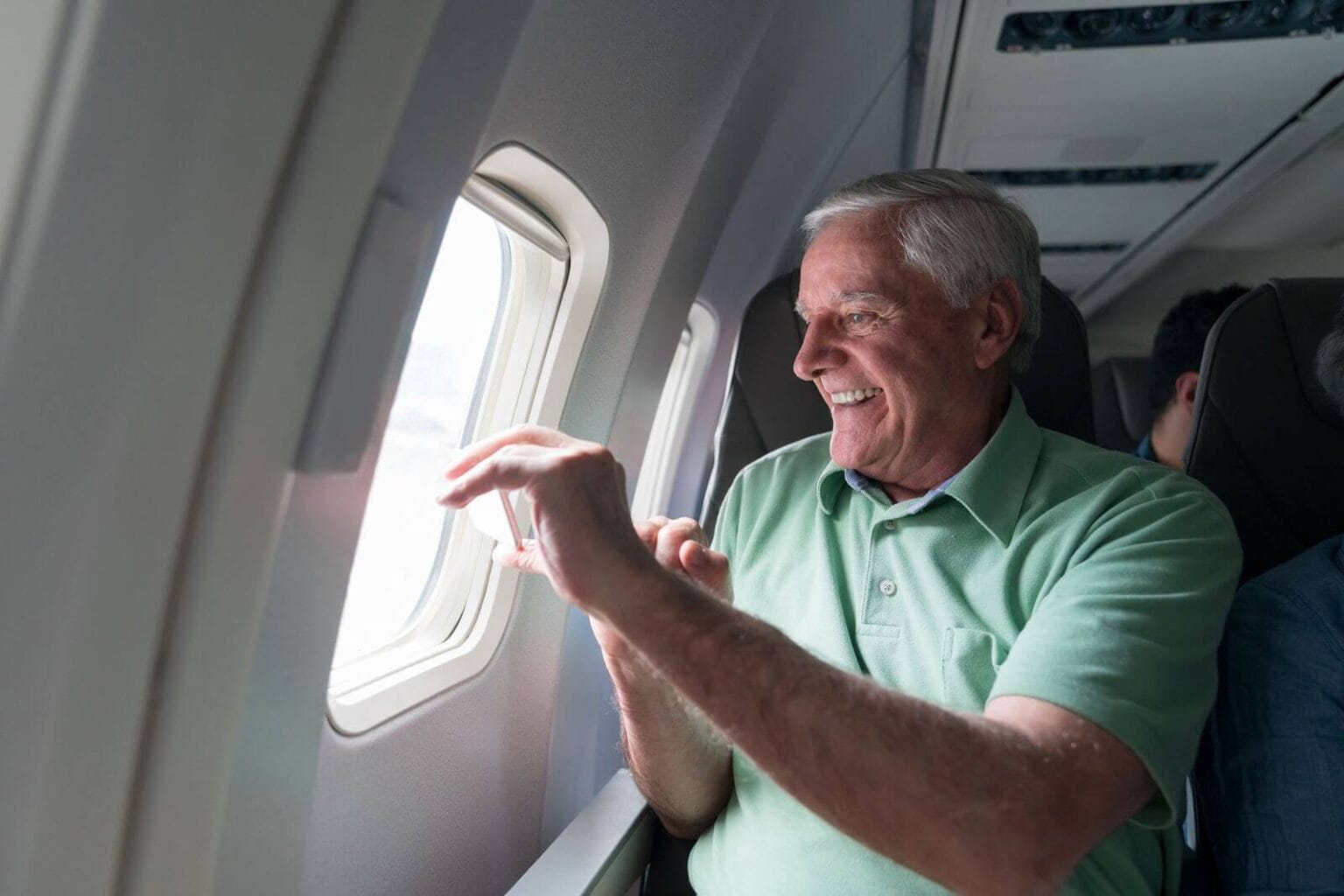
Introduction: The Silver Passenger Revolution
The global aviation industry is in the midst of a demographic transformation that many airlines are only beginning to fully appreciate. While much of the industry’s marketing attention has historically been focused on millennials, business travelers, and digital-native frequent flyers, a quieter revolution is unfolding at airport check-in counters, departure gates, and aircraft cabins around the world — the rise of the senior air traveler.
People aged 60 and above now represent one of the fastest-growing segments of the global flying public. According to the United Nations World Population Prospects report, the number of people aged 65 and older worldwide is projected to double by 2050, reaching approximately 1.6 billion. As this population grows, so too does its appetite for travel. Retirement brings freedom — freedom from rigid work schedules, freedom to explore long-deferred destinations, and freedom to visit family spread across continents.
For airlines and aviation stakeholders, senior air travelers represent both a significant market opportunity and a complex service challenge. Understanding who these travelers are, what they need, what barriers they face, and how the industry is responding is no longer optional — it is a strategic imperative.
This comprehensive guide examines every dimension of the senior air traveler experience: the demographic realities driving growth, the physical and psychological needs unique to older passengers, the systemic challenges that persist across the aviation ecosystem, and the emerging best practices that are reshaping how airlines serve this vital and underserved population.
Who Are Senior Air Travelers? Defining the Demographic
Before examining needs and challenges, it is important to establish a clear picture of who senior air travelers actually are. The term “senior” is often loosely applied to anyone over 60 or 65, but the reality is far more nuanced. Aviation researchers and industry analysts typically segment older travelers into three broad groups:
Young Seniors (Ages 60–70): This group includes recently retired individuals who are often in good health, digitally literate, and financially comfortable. They are typically experienced travelers who fly frequently and have high expectations of service quality. Many in this group are what the travel industry calls “young elders” — active, adventurous, and willing to spend on premium experiences.
Middle Seniors (Ages 71–80): Travelers in this range begin to present more varied needs. While many remain highly active and capable, a growing proportion experience mobility limitations, chronic health conditions, or sensory impairments that require additional airline support. This group often travels with spouses or companions and prioritizes comfort, convenience, and reliability over price.
Older Seniors (Ages 81 and above): The oldest segment of the senior travel market often requires significant assistance throughout the airport and in-flight experience. Mobility aids, medical equipment, cognitive considerations, and the patient’s needs, attentive service becomes most pronounced in this group. Despite being the smallest segment by volume, they generate some of the highest operational service demands.
Understanding this internal diversity is crucial for airlines designing senior-inclusive service programs. A blanket approach to “elderly passengers” that fails to account for the very different needs of a healthy, independent 63-year-old and a mobility-impaired 84-year-old traveling alone will satisfy neither group effectively.
The Scale of the Opportunity: Why Senior Travel Is Booming
Global Demographic Trends Driving Growth
The population aging phenomenon is not a distant projection — it is an accelerating present reality. In the United States alone, the baby boomer generation (those born between 1946 and 1964) has been entering retirement at a rate of roughly 10,000 people per day since 2011. In Western Europe, Japan, South Korea, and Australia, similar demographic waves are unfolding.
The AARP (American Association of Retired Persons) has consistently reported in its annual travel surveys that travelers aged 50 and above account for a disproportionately large share of total leisure travel spending, often representing 40% or more of total travel expenditure despite being a smaller share of the overall population. This spending power is reflected in airline booking data, hotel occupancy rates, and cruise passenger manifests worldwide.
The Financial Power of the Senior Traveler
Senior travelers are not merely a large demographic — they are among the most financially powerful travelers in the world. Decades of accumulated wealth, home equity, pension income, and, in many cases, reduced day-to-day living expenses mean that many seniors in the 60-75 age bracket have more discretionary income available for travel than at any previous point in their lives.
Research from IATA (International Air Transport Association) shows that premium cabin bookings — business class and first class — skew significantly toward travelers over 55. This means that airlines serving senior travelers well are not merely capturing the budget economy segment of the market, but the high-margin premium segment that disproportionately drives profitability on long-haul international routes.
Post-Retirement Travel as a Life Priority
Travel has become a defining feature of the modern retirement lifestyle in wealthy nations. Where previous generations of retirees may have viewed travel as an occasional indulgence, today’s seniors increasingly treat international travel as a central pillar of their retirement plans. Travel bucket lists — collections of destinations and experiences to be accomplished after retirement — have become a cultural phenomenon, and the aviation industry is the primary enabler of these aspirations.
This attitudinal shift represents a structural, long-term driver of senior aviation demand that will persist and grow regardless of short-term economic fluctuations.
The Unique Physical Needs of Senior Air Travelers
Age brings a range of physiological changes that directly affect the air travel experience. Airlines that design their service delivery around the needs of younger, physically capable passengers fail to serve a growing portion of their customer base adequately. Understanding the specific physical needs of senior travelers is the foundation of effective service design.
Mobility Limitations and Physical Assistance
Mobility impairment is among the most common challenges faced by senior air travelers. Conditions such as arthritis, hip and knee replacements, osteoporosis, and general muscle weakness can make the physical demands of air travel — navigating large airports, carrying luggage, boarding aircraft stairs, and sitting in confined spaces for extended periods — genuinely painful or impossible without assistance.
International aviation regulations require airlines to provide wheelchair assistance and other mobility support services to passengers who need them, but the quality, speed, and availability of these services vary enormously across airlines and airports. Passengers in wheelchairs often face challenges at transfer points, jet bridges, and narrow aircraft aisles that standard wheelchairs cannot navigate.
The industry-standard aisle wheelchair — a narrow, specialized chair used to transport mobility-impaired passengers to and from their aircraft seats — is a critical but often poorly managed service. Delays in aisle wheelchair provision, insufficiently trained ground handlers, and a lack of consistent protocols across carriers create frequent friction points for senior travelers with mobility needs.
Circulatory Health and Deep Vein Thrombosis Risk
Long periods of immobility in pressurized aircraft cabins pose a known cardiovascular risk, particularly for older passengers. Deep Vein Thrombosis (DVT) — the formation of blood clots in deep veins, most commonly in the legs — is more prevalent among older adults due to age-related changes in blood coagulation, reduced cardiovascular efficiency, and the higher likelihood of pre-existing conditions such as varicose veins or a history of clotting disorders.
Senior travelers on long-haul flights need access to clear, accurate health information about DVT prevention — including the importance of regular movement, compression socks, and adequate hydration. Airlines that proactively provide this information as part of their senior passenger communications, rather than relying on passengers to seek it themselves, demonstrate genuine care for the physical well-being of their older customers.
Hearing and Vision Impairment
Sensory impairments become increasingly common with advancing age. Presbycusis — age-related hearing loss — affects approximately one-third of adults over 65 and can make it difficult for senior passengers to clearly understand in-flight announcements, cabin crew instructions, or safety briefings. Similarly, age-related vision changes, including cataracts, glaucoma, and macular degeneration, can make reading menus, safety cards, in-flight entertainment interfaces, and boarding passes challenging.
Airlines that rely primarily on audio announcements without visual reinforcement, provide safety cards in small print, or design in-flight entertainment interfaces with small icons and low-contrast displays, inadvertently exclude a significant portion of their senior passenger base from full engagement with the service experience.
Chronic Health Conditions and Medication Management
The majority of adults over 70 live with at least one chronic health condition, and a significant proportion manage multiple conditions simultaneously. Diabetes, hypertension, heart disease, chronic obstructive pulmonary disease (COPD), and various forms of cancer treatment create specific in-flight management requirements — including the need to carry and access medications, manage dietary restrictions, monitor blood glucose levels, or use supplemental oxygen.
Air travel with medical conditions requires careful pre-flight coordination between passengers, their physicians, and the airline’s medical desk. However, the process for obtaining medical clearance and arranging in-flight medical support varies widely across carriers, and many seniors find it confusingly bureaucratic, creating a deterrent to travel for those who most need clear guidance.
Cognitive and Psychological Challenges for Senior Air Travelers
Physical considerations, while significant, are only one dimension of the senior air travel experience. Cognitive and psychological factors present equally important challenges that are far less frequently addressed by airlines and airport operators.
Navigating Complex Airport Environments
Modern international airports are extraordinary feats of architectural and logistical complexity — but that complexity is often deeply hostile to older travelers, particularly those experiencing early-stage cognitive decline or simply the natural cognitive slowing that comes with age. Multi-terminal facilities, long transfer walks, complicated wayfinding signage, digital-first check-in processes, and rapid process changes (such as gate changes or flight delays communicated only through electronic boards) can be genuinely disorienting for senior travelers.
Studies in environmental gerontology — the study of how environments affect older people — consistently show that cluttered, noisy, high-stimulus environments cause greater cognitive stress for older adults than for younger ones. The typical international hub airport scores poorly on virtually every dimension relevant to older traveler cognitive accessibility.
Airlines and airports that take senior navigation needs seriously invest in human assistance programs, clear and simple wayfinding systems, and dedicated senior passenger facilitation points where older travelers can receive personalized orientation assistance.
Travel Anxiety and Bereavement Travel
Air travel anxiety is not unique to older passengers, but it takes on particular characteristics among seniors. For many older travelers, a long-haul flight may be associated with visiting an ill family member, attending a funeral, traveling alone for the first time after the death of a spouse, or undertaking a trip they have deferred for decades, and worry they may no longer be physically capable of. These emotional contexts layer additional psychological weight onto the travel experience.
Cabin crew trained to recognize signs of anxiety or distress in older passengers — and to respond with calm, patient, age-appropriate empathy — can make an enormous difference to the emotional quality of the travel experience for this group.
Early-Stage Dementia and Cognitive Impairment
One of the most sensitive and challenging dimensions of senior air travel is the management of passengers with early-stage dementia or other cognitive impairments. As the global prevalence of Alzheimer’s disease and related dementias continues to grow — with the World Health Organization projecting 139 million people living with dementia by 2050 — airlines will encounter an increasing number of passengers who present with visible cognitive confusion, disorientation, or behavioral unpredictability.
Handling these passengers with dignity, patience, and genuine understanding requires specialized training that most airline cabin crew programs do not currently provide. Several advocacy organizations representing dementia patients and their caregivers have called on aviation authorities to develop dementia-inclusive travel standards — a conversation that is gaining momentum but has yet to produce industry-wide policy changes.
Systemic Barriers in the Aviation Ecosystem
Beyond the individual physical and cognitive challenges of aging, senior air travelers face a range of systemic barriers embedded in how the modern aviation industry operates. These structural issues require industry-wide solutions, not merely individual airline initiatives.
Digital Exclusion in an Increasingly Digital Industry
The aviation industry has undergone a rapid digital transformation over the past decade. Online check-in, mobile boarding passes, app-based seat selection, digital baggage drop, and self-service security lanes have dramatically streamlined the travel experience — for digitally literate passengers. For a significant portion of the senior traveler population, however, this digital revolution has been experienced not as convenience but as exclusion.
While digital literacy among older adults is improving — particularly among the younger senior cohort — a meaningful gap remains between the industry’s digital-first service assumptions and the actual technological capabilities of a large proportion of senior travelers. Airlines that have eliminated or drastically reduced human-staffed check-in counters, telephone booking lines, and in-person service desks in favor of digital self-service have inadvertently raised barriers for their older customers.
The commercial impact of this exclusion is not trivial. A senior traveler who finds the booking or check-in process too complex may simply choose not to fly, or may select an airline that still provides accessible human service alternatives.
Airport Infrastructure and Accessibility Gaps
Despite significant progress under frameworks like the Americans with Disabilities Act (ADA) in the United States and the European Union’s Regulation 1107/2006 on the rights of disabled persons in air transport, significant accessibility gaps remain in airport infrastructure globally.
Long walking distances between gates, insufficient seating in terminal areas, inadequate availability of motorized carts for elderly passengers, poorly maintained elevators and escalators, and inaccessible restroom facilities continue to create significant hardship for older travelers at airports around the world. In developing aviation markets — including rapidly expanding hubs across Africa, South Asia, and Southeast Asia — accessibility infrastructure often lags significantly behind the physical scale of new terminal development.
Ticket Pricing and Hidden Cost Complexity
The pricing complexity of modern airfare — with base fares supplemented by a dizzying array of ancillary fees for checked baggage, seat selection, meals, and priority boarding — creates particular challenges for senior travelers who may struggle to navigate this complexity online and risk incurring unexpected costs.
For seniors traveling with mobility aids such as wheelchairs or with bulky medical equipment, unclear airline policies around fees and procedures for these items add additional stress and financial uncertainty to the booking process.
How Airlines Are Responding: Best Practices and Emerging Trends
The aviation industry’s response to the needs of senior travelers is uneven but evolving. Several airlines and airports have emerged as leaders in senior-inclusive service design, offering models that others would do well to study and emulate.
Japan Airlines and ANA: Senior Service as Cultural Priority
Japanese airlines occupy a unique position in senior air traveler service, shaped in part by Japan’s status as the world’s most rapidly aging society. Japan Airlines (JAL) and All Nippon Airways (ANA) have both developed extensive programs specifically designed for older passengers, reflecting the deep cultural value of respect for elders embedded in Japanese society.
These programs include dedicated telephone booking lines staffed by patient, senior-specialist agents; proactive wheelchair and mobility assistance booking integrated into the initial reservation process; simplified in-flight entertainment interfaces optimized for older users; and cabin crew training that specifically addresses the communication needs of elderly passengers, including those with hearing loss.
Emirates and the Role of Premium Service in Senior Satisfaction
Emirates has recognized that senior travelers are disproportionately likely to book premium economy, business, and first-class seats. Their senior-inclusive service approach is therefore embedded within a broader premium service ethos that emphasizes physical comfort, personal attention, and unhurried service delivery — all characteristics that align naturally with the needs of older travelers.
The airline’s investment in lie-flat beds in business class, spacious seating configurations, and high staff-to-passenger ratios in premium cabins addresses many of the physical comfort challenges that make long-haul travel difficult for older passengers.
Dedicated Airport Assistance Programs
Airports, including Singapore’s Changi Airport, Amsterdam’s Schiphol, and Tokyo’s Haneda, have invested significantly in comprehensive passenger assistance programs that specifically benefit senior travelers. These programs typically include dedicated senior passenger facilitation desks, enhanced availability of motorized buggies for long terminal transfers, expedited security screening lanes for elderly or mobility-impaired passengers, and airport ambassador programs where trained volunteers assist confused or disoriented travelers.
Changi Airport’s “Special Assistance” program, for example, provides door-to-door passenger escort services from check-in through boarding, with specially trained staff available around the clock — a model that has earned widespread praise from senior traveler advocacy groups.
Technology Designed for Older Users
A growing number of airlines are beginning to reconsider the design of their digital touchpoints with older users specifically in mind. Principles of universal design — designing systems that are accessible to people of all ages and abilities — are increasingly being applied to airline mobile apps, self-service kiosks, and in-flight entertainment systems.
Larger text options, simplified navigation menus, voice-assisted interfaces, and the ability to save preferences across journeys are all features that benefit older digital users while improving usability for the broader passenger population as well.
The Role of Travel Insurance and Medical Preparedness
One of the most important practical considerations for senior air travelers — and for the airlines and insurers that serve them — is the intersection of aging, health, and travel insurance.
Travel insurance for seniors is significantly more complex and expensive than for younger travelers, reflecting the higher statistical likelihood of medical incidents, trip cancellations due to health events, and emergency medical evacuation needs. For travelers over 80, comprehensive travel insurance with adequate medical coverage can cost several times the price of the underlying flight ticket.
Airlines can play a valuable role in the medical preparedness ecosystem by providing clear pre-flight medical information, maintaining well-stocked onboard medical kits, ensuring that cabin crew are trained in the use of automated external defibrillators (AEDs) and basic geriatric first aid, and establishing clear protocols for in-flight medical emergencies involving elderly passengers.
Some airlines have also begun partnering with travel health specialists to provide pre-trip health assessment services for senior passengers, helping older travelers identify and address potential health risks before departure rather than encountering them mid-flight.
The Economic Case for Senior-Inclusive Aviation
For airline executives still weighing the business case for investment in senior passenger service programs, the economics are increasingly compelling.
Senior travelers, as noted, account for a disproportionate share of premium cabin revenue. They also tend to be more loyal customers — less likely than younger travelers to switch airlines purely for price and more likely to return to carriers that have treated them well. The word-of-mouth marketing power of satisfied senior travelers, communicated through family networks, retirement communities, and senior travel clubs, is substantial and largely unrecognized in traditional airline marketing analyses.
Additionally, regulatory pressure is increasing. Aviation authorities in the European Union, the United States, Canada, Australia, and the United Kingdom have all strengthened or are in the process of strengthening regulations governing the treatment of elderly and disabled passengers. Airlines that proactively develop senior-inclusive service programs will be better positioned to meet these regulatory requirements without costly reactive compliance investments.
Finally, the social license argument is increasingly important in an era of heightened corporate social responsibility expectations. Airlines that are seen to be genuinely inclusive and supportive of their most vulnerable passengers earn a reputational premium that translates into positive media coverage, brand differentiation, and customer goodwill.
Future Outlook: Senior Aviation in 2030 and Beyond
Looking ahead to the next decade and beyond, several trends will shape the evolution of senior air travel:
Aircraft Design Innovation: Aircraft manufacturers, including Boeing and Airbus, are increasingly factoring aging passenger needs into new aircraft designs. Wider aisles, lower floor access, improved cabin air quality, and enhanced lighting systems in next-generation aircraft will disproportionately benefit older travelers.
Biometric and AI-Assisted Facilitation: Advances in biometric technology — facial recognition check-in, automated security clearance, and AI-powered wayfinding assistance — will reduce many of the process complexity challenges that create friction for senior travelers today.
Personalized Health Monitoring: Wearable health technology integration with airline service systems may eventually allow cabin crew to receive real-time health alerts about passengers with cardiac conditions or diabetic emergencies, enabling faster, more effective in-flight medical response.
Senior-Specific Travel Products: The emergence of senior-specific travel products — including escorted group tours designed exclusively for older travelers, health-focused travel insurance bundles integrated into airline booking flows, and premium “senior comfort” cabin configurations — will create new revenue opportunities for carriers willing to invest in this space.
Volunteer and Family Travel Growth: As more seniors travel in multigenerational family groups — combining grandparent-grandchild bonding travel with the reassurance of family support — airlines will need to develop service models that address the needs of mixed-age travel parties while ensuring the comfort and dignity of older family members.
Conclusion: An Aging World Demands an Accessible Sky
The story of senior air travelers is ultimately the story of an industry confronting its own assumptions about who its customers are and what they need. For too long, the aviation industry has designed its airports, aircraft, services, and digital systems around the implicit model of a physically capable, digitally fluent, independently mobile adult traveler — a model that excludes an enormous and growing proportion of the flying public.
The silver generation is not a niche market or a compliance obligation. They are frequent flyers with significant financial power, deep travel aspirations, and a lifetime of loyalty to offer the airlines that earn their trust. They are grandparents flying across oceans to meet newborn grandchildren. They are retired professionals finally taking the journeys they deferred for decades. They are adventurers, explorers, and memory-makers who simply need the industry that connects the world to ensure that the world remains accessible to them.
The airlines, airports, and aviation regulators that rise to meet this challenge — with genuine investment in accessibility, empathy-driven service design, and inclusive technology — will not only serve a growing demographic more effectively. They will build a more humane, more dignified, and ultimately more successful aviation industry for every passenger who passes through their doors.
The sky belongs to all ages. It is time for the industry to act as it does.