


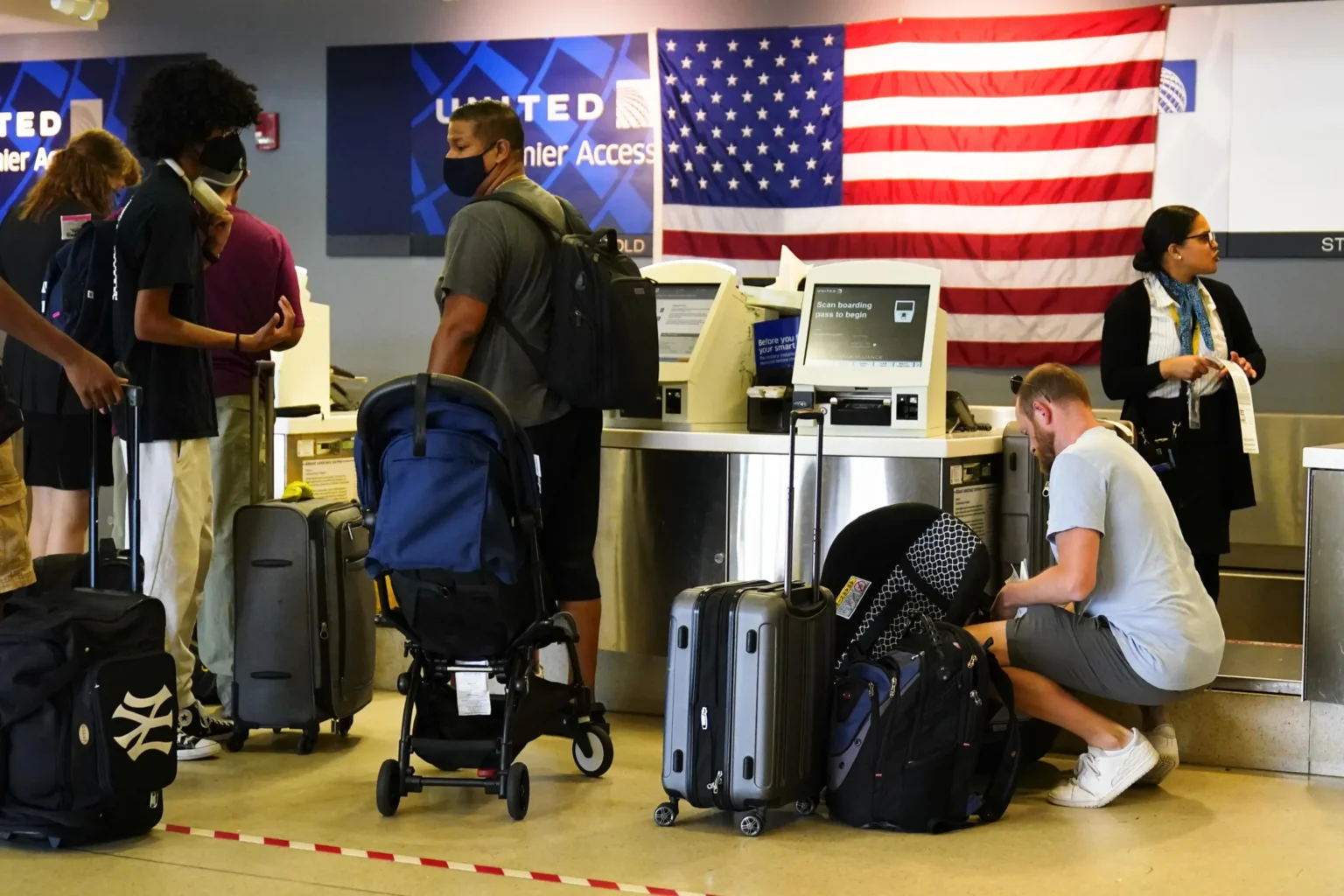
Every year, without fail, the week before Christmas and the days around Thanksgiving produce the same headlines: thousands of flights cancelled, airports packed with stranded families, and social media flooded with footage of luggage piled to the ceiling in terminals. It happened dramatically in December 2022 during the Southwest Airlines meltdown, again during winter storms in subsequent years, and it will almost certainly happen again this year on some route, with some airline, somewhere in the country.
Holiday travel chaos isn’t random bad luck — it’s the predictable result of a system running at maximum capacity, with zero slack, during the exact weeks when winter weather is most likely to cause disruption. The good news is that because the pattern is predictable, so is the defense. This guide breaks down exactly why peak season cancellations happen, which specific dates carry the highest risk, and the concrete, actionable steps that meaningfully reduce your chances of getting stranded — and what to do fast if it happens anyway.
1. Why Holiday Travel Breaks the System (Not Just Bad Luck)
Airlines run their networks close to full capacity almost year-round for financial efficiency — empty seats and idle aircraft cost money. During the holidays, that already-tight system gets pushed further, because demand spikes dramatically over a short, concentrated window while the infrastructure supporting it (aircraft, crews, airport gates, air traffic control capacity) doesn’t expand at all.
The Core Problem: No Slack in the System
In a normal week, if a flight is delayed or an aircraft needs maintenance, the airline typically has some slack — a spare aircraft, an available crew, an open gate — to absorb the disruption without cascading effects. During peak holiday weeks, that slack disappears:
- Aircraft utilization is at its highest — planes are scheduled back-to-back with minimal buffer time between flights
- Crews are scheduled to their legal duty-time limits — there’s little room to absorb a single delay without triggering a crew timeout that cancels a later flight
- Load factors (percentage of seats filled) are near 100% — meaning there’s no room to accommodate displaced passengers on the next available flight, since most flights are already full
- Airports are operating at peak throughput — gate availability, ground crew capacity, and air traffic control slots are all maximized
This combination means that a single disruption — one canceled flight, one aircraft mechanical issue, one crew running out of duty hours — doesn’t stay contained. It cascades through the rest of the day’s schedule with almost no ability to absorb the shock.
Add Winter Weather to an Already-Fragile System
Layer in the fact that the two biggest holiday travel weeks (Thanksgiving and Christmas/New Year’s) fall squarely in the highest-risk window for winter storms across major U.S. hub airports, and you have the exact conditions that produce large-scale meltdowns.
2. The Highest-Risk Travel Dates, Ranked
Not every day during the holiday season carries equal risk. Based on consistent historical patterns tracked by aviation data firms and the DOT’s own delay/cancellation statistics, here’s how the riskiest days typically rank.
Thanksgiving Period
| Date (Relative to Thanksgiving) | Risk Level | Why |
| Wednesday before Thanksgiving | Highest | The single busiest air travel day of the year in the U.S., consistently |
| Sunday after Thanksgiving | Very High | Second-busiest day, concentrated return travel |
| Tuesday before Thanksgiving | Moderate-High | Early travelers avoiding Wednesday, still heavy volume |
| Saturday after Thanksgiving | Lower | Noticeably lighter than Sunday |
Christmas/New Year’s Period
| Date (Relative to Holidays) | Risk Level | Why |
| December 23 | Highest | Peak pre-Christmas travel day, high weather exposure |
| December 22 | Very High | Similar volume, slightly less concentrated |
| December 26 | Very High | Post-Christmas return/vacation departure surge |
| December 30–31 | High | New Year’s travel surge, often overlapping with post-Christmas returns |
| January 2 | High | Post-New Year’s return-to-work travel |
| Christmas Day itself | Lower | Counterintuitively one of the lightest travel days — most people are already at their destination |
The General Pattern
The days immediately before a holiday (as people converge on their destination) and immediately after (as everyone tries to return at once) consistently carry more risk than the holiday date itself. This is a useful, often-overlooked planning principle: flying ON Thanksgiving Day or ON Christmas Day itself is frequently far less crowded and lower-risk than flying the days surrounding it.
3. Why Winter Weather Hits Harder During the Holidays
Winter weather disrupts flights year-round, but its impact during the holidays is disproportionate for a few specific reasons.
Geographic Concentration of Hub Airports
Many of the busiest U.S. hub airports — Chicago O’Hare, Denver, Minneapolis-St. Paul, Detroit, and the New York-area airports — sit directly in the path of the winter storm systems most active in November through January. A single storm system moving through the Midwest or Northeast during a peak travel week can simultaneously affect multiple major hubs at once.
De-Icing Bottlenecks
Aircraft require de-icing before takeoff in freezing precipitation, and de-icing pads at even the largest airports have limited capacity. During heavy snow or ice events, de-icing queues alone can add hours to a normal departure sequence, and this bottleneck compounds when combined with already-tight holiday scheduling.
Ground Crew and Ramp Limitations
Snow and ice removal on runways, taxiways, and ramps slows overall airport throughput, reducing the number of flights that can depart or arrive per hour — directly colliding with the fact that holiday schedules are already running at maximum hourly capacity.
Regional Storms With National Reach
Because hub-and-spoke airline networks route so many connections through a small number of major airports, a storm that’s purely regional (say, affecting only Chicago) can still cause cancellations and delays for passengers connecting through that hub from anywhere in the country — a phenomenon covered in more detail in the next section.
4. The Domino Effect: How One Storm Cancels Flights Nationwide
This is the mechanism that turns a single regional weather event into a nationwide cancellation crisis, and it’s worth understanding in detail because it explains why your flight can be cancelled even if the weather at your own departure airport is clear.
Step 1: The Storm Hits a Major Hub
A snowstorm or ice event grounds flights at a major hub airport — say, Chicago O’Hare or Denver.
Step 2: Aircraft Are Now Out of Position
Airlines operate on a “rotation” system, where a single aircraft flies multiple legs in a single day (for example: Denver → Phoenix → Denver → Seattle → Denver). If that aircraft is grounded in Denver due to weather, it’s not available for its next scheduled leg to Seattle — which means that Seattle flight gets cancelled or delayed, even though Seattle itself has clear skies.
Step 3: Crews Run Out of Legal Duty Hours
Pilots and flight attendants are legally limited in how many consecutive hours they can work. When flights are delayed by weather, crews can “time out” mid-rotation, forcing the airline to cancel a subsequent flight simply because no legal crew is available — regardless of aircraft availability or weather at that specific location.
Step 4: Downstream Cancellations Cascade for Days
Because holiday schedules have essentially no slack (as covered in Section 1), a major weather disruption on one day can take two to four days to fully resolve, as airlines work through a backlog of displaced passengers, out-of-position aircraft, and crew scheduling gaps — which is exactly why holiday meltdowns tend to stretch across nearly a full week rather than resolving the day the weather clears.
Why This Matters for Your Planning
Your own departure city’s forecast is only part of the picture. A clear-weather flight can still be cancelled because of a storm hundreds of miles away, at a hub you’re not even flying through, simply because your aircraft or crew was scheduled through that affected hub earlier in the day.
5. Historical Case Studies: What Actually Went Wrong
Looking at specific, well-documented meltdowns helps illustrate these mechanisms concretely.
Southwest Airlines, December 2022
Southwest’s holiday meltdown remains the most widely cited case study in the industry, and it illustrates several of the mechanisms above simultaneously. A significant winter storm swept across the country right before Christmas, but the disruption was dramatically worsened by Southwest’s point-to-point route network combined with outdated crew-scheduling software that struggled to relocate crews and aircraft efficiently once the network fell out of position. The result was a collapse that took roughly a week to fully resolve, with tens of thousands of flights cancelled and a substantial number of passengers stranded for multiple days. It prompted a Department of Transportation investigation and, later, a formal settlement requiring Southwest to compensate affected customers.
Winter Storm Elliott’s Broader Industry Impact
The same December 2022 storm system affected multiple carriers beyond Southwest, though most other major airlines recovered within a day or two once the weather cleared — a contrast that highlighted how much operational resilience (spare aircraft, crew scheduling flexibility, interline agreements with other carriers) varies between airlines during a major disruption.
Recurring Pattern in Subsequent Years
Similar, if smaller-scale, disruptions have recurred in the years since around both Thanksgiving and Christmas travel weeks, generally tied to specific winter storm systems moving through major hub regions. The pattern is consistent enough that aviation analysts and the DOT itself now treat late-December operational risk as a predictable annual planning consideration rather than a one-off anomaly.
6. Before You Book: Choosing Lower-Risk Flights
The single most effective way to protect a holiday trip is reducing your exposure to risk before you ever book — the choices you make at booking time matter more than anything you can do after a cancellation occurs.
Book the First Flight of the Day
Morning flights have dramatically lower cancellation and delay rates than afternoon or evening flights, for a simple reason: delays compound throughout the day as aircraft and crews fall further behind schedule. A 7 a.m. departure is flying with an aircraft and crew that started the day on time; a 6 p.m. departure is flying with whatever residual delay has accumulated across the entire day’s schedule.
Avoid Tight Connections
During peak season, build in significantly more connection time than you normally would — general guidance suggests a minimum of 90 minutes for domestic connections and considerably more during high-risk weeks, since even a short initial delay can cascade into a missed connection when gate changes, taxi delays, and crowded terminals are all working against you.
Prefer Nonstop Flights When Possible
Every additional connection multiplies your exposure to disruption. A nonstop flight only needs one leg to go right; a one-stop itinerary needs two legs and a connection to all go right, and a two-stop itinerary compounds that risk further.
Choose Airlines With Stronger Interline and Rebooking Agreements
Some airlines have formal agreements with competitors to rebook stranded passengers on another carrier’s flights during a mass disruption event; others do not, or only do so occasionally at their discretion. This becomes highly relevant during a multi-day meltdown, since it directly affects how quickly you can get rebooked if your own airline’s schedule collapses.
Consider Larger Aircraft Over Regional Jets
Flights operated by smaller regional aircraft tend to have fewer rebooking options if cancelled (since fewer seats exist across the remaining schedule to absorb displaced passengers), and regional carriers are sometimes more vulnerable to weather-related operational disruptions than mainline fleets.
7. The Best Airports and Routes to Avoid During Peak Season
While weather itself is unpredictable, certain airports and routes carry structurally higher risk during the holidays based on historical performance data.
Historically High-Delay Hub Airports During Winter Peak Season
- Chicago O’Hare (ORD) — heavy connecting traffic combined with significant winter storm exposure
- Denver (DEN) — high altitude, frequent snow events, and a major connecting hub for multiple carriers
- Newark (EWR), LaGuardia (LGA), JFK — dense Northeast air traffic combined with winter storm systems and limited airport capacity for absorbing delays
- Minneapolis-St. Paul (MSP) and Detroit (DTW) — significant winter weather exposure combined with hub connecting volume
- Dallas-Fort Worth (DFW) — occasionally affected by ice storms that ground operations more severely than snow, since DFW’s infrastructure is less equipped for ice than northern airports
Lower-Risk Alternatives Worth Considering
If your itinerary has flexibility, routing through airports with less winter weather exposure — southern hubs like Atlanta (which, while very busy, has comparatively less winter storm disruption than the airports above) or western hubs with milder winter climates — can meaningfully reduce cascading disruption risk, even if it means a slightly less direct routing.
A Practical Note on Trade-offs
Avoiding high-risk hubs entirely isn’t always realistic, especially if your destination requires connecting through one of them. In those cases, the mitigation strategies in Sections 6, 8, and 9 (buffer time, insurance, flexible booking) become even more important.
8. Building a Buffer Into Your Itinerary
This is arguably the single highest-leverage strategy available to travelers, and it costs nothing beyond planning.
Fly a Day Earlier Than You Need To
If your holiday event is on the 24th, consider flying on the 22nd rather than the 23rd. This gives you an entire extra day of buffer to absorb a cancellation or significant delay without missing the event itself — and since the 23rd is one of the highest-risk days of the entire season (see Section 2), shifting even one day earlier can meaningfully reduce your exposure.
Avoid Same-Day Connections for Critical Events
If you have a non-negotiable commitment (a wedding, a specific holiday gathering), avoid booking a connecting itinerary that arrives the same day as the event. A missed connection with no buffer day means the event happens without you; a missed connection with a buffer day means you simply rebook and still make it.
Build In a “Recovery Day” on the Return Trip Too
The same logic applies in reverse — if you must be back at work on a specific date, consider returning a day earlier than strictly necessary during peak return-travel days, rather than cutting it exactly to the wire.
Consider the Cost-Benefit Honestly
An extra hotel night or an extra vacation day used for buffer travel is a real cost, and it’s reasonable to weigh that against your risk tolerance. But for genuinely important, hard-to-reschedule events, the cost of a buffer day is almost always smaller than the cost (financial and emotional) of missing the event entirely due to a cancellation with no slack left to absorb it.
9. Travel Insurance for Holiday Travel: What to Actually Buy
Not all travel insurance is created equal, and holiday travel has specific coverage needs worth understanding before you buy.
Trip Cancellation/Interruption Coverage
This reimburses prepaid, non-refundable trip costs (hotels, tours, event tickets) if your trip is cancelled or cut short for a covered reason. For holiday travel specifically, confirm whether “airline-caused cancellation” or “severe weather” are covered reasons under the specific policy — this varies significantly between providers and plan tiers.
Trip Delay Coverage
This reimburses reasonable expenses (meals, hotel, incidentals) incurred during a significant delay, typically after a minimum delay threshold (often 6–12 hours, varies by policy) is reached. Given how common multi-hour delays are during peak-season disruptions, this coverage is often more relevant to holiday travel than cancellation coverage itself.
“Cancel for Any Reason” (CFAR) Add-Ons
A premium add-on available on some policies that allows cancellation for reasons outside the standard covered list, typically reimbursing a percentage (often 50–75%) of trip costs rather than the full amount. This is generally more expensive and only worth considering for high-value, hard-to-reschedule holiday trips where standard coverage terms feel too restrictive.
Timing Matters: Buy Early
Most trip cancellation policies require purchase within a specific window after your initial trip deposit (often 14–21 days) to include certain valuable provisions like pre-existing medical condition waivers. Waiting until just before a holiday trip to buy insurance often means missing out on the most valuable coverage terms, even if a basic policy is still available for purchase.
What Travel Insurance Does NOT Typically Cover
- Simply changing your mind about traveling
- Disruptions you were already aware of before purchasing the policy (a storm already in the forecast at the time of purchase, for example)
- Costs already covered by an airline’s own compensation for a covered disruption (insurance generally isn’t meant to duplicate reimbursement)
10. The Credit Card Protections Most People Forget About
Beyond dedicated travel insurance, many premium travel credit cards include built-in trip protections that activate automatically when you book travel with that card — and these benefits often go completely unused simply because cardholders forget they exist.
Trip Delay Reimbursement
Many premium travel cards include automatic trip delay coverage (reimbursing meals, hotel, and incidentals after a qualifying delay threshold, often 6+ hours) at no additional cost beyond the card’s annual fee, as long as the trip was booked using that card.
Trip Cancellation/Interruption Insurance
Similarly, several premium cards include built-in cancellation/interruption coverage comparable to a standalone travel insurance policy, again activated simply by paying for the trip with the card — a benefit worth checking before purchasing a separate paid policy that might be redundant.
Baggage Delay Insurance
Covers reasonable expenses for essential items (clothing, toiletries) if checked baggage is significantly delayed, which becomes especially relevant during holiday chaos when baggage handling systems are often as overwhelmed as the flight schedules themselves.
How to Actually Use These Benefits
Critically, these benefits are rarely automatic in terms of payout — you generally need to file a claim directly with the card’s benefits administrator (a third-party company the issuer contracts with), providing documentation of the delay/cancellation and your related expenses. Before your trip, it’s worth locating your specific card’s benefits guide (usually available through the issuer’s website or benefits portal) so you know exactly what’s covered and how to file, rather than discovering the process for the first time while already stranded.
11. Packing and Documentation Strategy for Disruption-Prone Trips
Practical, pre-trip preparation significantly reduces the pain of a disruption if one occurs.
Pack a “Disruption Kit” in Your Carry-On
Regardless of how well you plan, always carry in your personal item or carry-on (never checked): medications, a phone charger and portable battery, a change of clothes, and any documents you can’t afford to lose. If your checked bag or entire itinerary gets disrupted, this kit keeps you functional for 24–48 hours without needing to buy replacements.
Screenshot Your Confirmations Before You Travel
Save screenshots of your booking confirmation, hotel reservation, and any pre-purchased tickets or reservations directly to your phone, in case you lose connectivity or the airline’s app becomes overwhelmed and slow during a mass disruption event (a common occurrence, since app traffic spikes dramatically during large-scale meltdowns).
Know Your Confirmation and Frequent Flyer Numbers by Memory or Written Backup
During a major meltdown, phone battery life and connectivity can become genuinely limited (crowded terminals strain cell networks, and charging outlets become scarce). Having key numbers written down physically, not just stored digitally, is a small but genuinely useful precaution.
Register for Real-Time Flight Alerts Through Multiple Channels
Set up notifications through the airline’s app, a third-party flight tracker (like FlightAware or Flighty), and SMS alerts if available — redundancy here matters, since a single app crashing under peak-season server load shouldn’t be your only source of information about your flight’s status.
12. What to Do the Moment You Suspect a Delay or Cancellation
Speed matters enormously during a mass disruption event, and the first hour after a cancellation is announced is often the most important window of the entire ordeal.
Don’t Wait in the Airline Counter Line First
The single most important tactical move: call the airline’s phone reservation line, use the airline’s app chat/rebooking feature, or contact them via social media (X/Twitter direct message customer service teams are often faster than phone lines during mass disruptions) simultaneously with, or even before, walking to the physical customer service counter. Phone and digital channels are frequently faster than in-person lines during a mass cancellation event, since everyone at the airport has the same instinct to walk to the counter, creating hours-long physical lines while phone/chat channels may have shorter effective wait times.
Check for International Airline Phone Numbers
A lesser-known tactic: calling a foreign-language or international call center for the same airline (found via the airline’s website, often listed under country-specific contact pages) can sometimes result in dramatically shorter hold times than the main domestic customer service line during a highly publicized U.S. mass-disruption event, since domestic lines get overwhelmed first and most severely.
Screenshot the Cancellation Notice Immediately
This becomes important documentation both for rebooking conversations and for any later insurance or chargeback claim (see Sections 9, 10, and this site’s chargeback guide) — capture the exact time, flight number, and stated reason if the app displays one.
13. Rebooking Strategy: How to Get Ahead of the Line
Once you know you need to rebook, a few tactical approaches consistently outperform simply waiting for the first available option offered.
Have Alternative Flights Already Researched
Before you even contact the airline, use a flight-status app or the airline’s own website to identify 2–3 specific alternative flights (including flight numbers and times) that could work for your itinerary. Proposing a specific flight to a phone agent is generally faster than asking them to search from scratch, and increases the odds they can rebook you immediately rather than placing you on a waitlist.
Ask About Nearby Airport Alternatives
If you’re flexible on departure or arrival airport, ask specifically whether the airline can rebook you through a different regional airport — this is a common but underused option that agents don’t always proactively offer unless asked.
Ask About Rebooking on a Partner or Competing Airline
Especially during a severe, publicized meltdown, some airlines will proactively rebook stranded passengers on a partner carrier’s flights (sometimes even a competitor’s, under emergency interline agreements) — but this typically requires you to specifically ask, rather than being automatically offered.
Don’t Immediately Accept the First Offer If You Have Flexibility
If the first rebooking offer is several days out and your schedule has some flexibility, it’s worth asking whether waitlisting for an earlier flight while holding the confirmed later one is possible — this preserves a guaranteed seat while still giving you a shot at an earlier option.
14. Your Rights When a Holiday Flight Is Cancelled
Note: full detail on DOT passenger rights is covered in a dedicated article on this site; this section summarizes the points most relevant to holiday-season disruptions specifically.
Refund Rights for Airline-Caused Cancellations
When an airline cancels your flight, and you choose not to accept the rebooking offered, you are generally entitled to a full refund of the unused portion of your ticket — this applies regardless of whether you purchased a “non-refundable” fare, since the cancellation was airline-caused, not a voluntary change on your part.
Weather Is Often Treated Differently Than Mechanical/Staffing Issues
This is an important nuance: many airlines’ own contracts of carriage distinguish between cancellations caused by factors within their control (mechanical issues, crew scheduling failures) versus factors considered outside their control (weather, air traffic control restrictions). Compensation for expenses like hotels and meals during a delay is often only guaranteed for controllable disruptions — weather-caused cancellations, even during a holiday meltdown, may not obligate the airline to cover your hotel or meal costs, even though they’re still required to get you to your destination or refund your ticket.
Always Check the Specific Airline’s Contract of Carriage
Because this distinction varies by airline and by the specific cause of a given disruption, it’s worth checking the specific airline’s published contract of carriage (available on their website) for the exact compensation commitments tied to your situation, rather than assuming a blanket standard applies across all airlines.
15. What Airlines Owe You (And What They Don’t) During Weather Events
Generally Owed (Regardless of Cause)
- Rebooking on the next available flight at no additional cost, or a full refund if you decline the rebooking
- Your original baggage, eventually, even if significantly delayed (though compensation for delayed bag expenses may depend on the cause classification above)
Often NOT Owed for Weather-Caused Disruptions
- Hotel or meal vouchers (many airlines explicitly exclude weather-caused disruptions from this commitment, though some offer it anyway as a goodwill gesture, particularly larger carriers with stronger balance sheets)
- Cash compensation beyond a refund (unlike the EU, where EU261 can apply differently, U.S. domestic weather-caused cancellations generally don’t carry a mandatory cash compensation requirement)
The Practical Implication
This is precisely why the pre-trip protections covered in Sections 9 and 10 (travel insurance and credit card benefits) matter so much specifically for holiday travel — because weather is the single most common cause of holiday-season disruption, and it’s also the cause category where airlines have the least mandatory obligation to cover your out-of-pocket costs. Insurance and card benefits are designed to fill exactly this gap.
16. Alternative Transportation: When to Pivot Away From Flying
During a severe, multi-day meltdown, sometimes the fastest path to your destination isn’t waiting for a rebooked flight at all.
Rental Cars
For regional trips (generally under 6–8 hours of driving), renting a car once a cancellation is confirmed can sometimes get you to your destination faster than waiting multiple days for a rebooked flight, particularly during a widely publicized meltdown where rebooking availability across an entire airline’s network is severely constrained.
Trains
Amtrak and regional rail can serve as a viable backup for certain Northeast Corridor and select other regional routes, and rail schedules are generally far less vulnerable to the same cascading operational failures that affect airline networks during winter storms (though trains can still face their own weather-related delays in severe conditions).
Buses
Often overlooked, but intercity bus services can provide a low-cost, reasonably reliable backup option for shorter regional trips when flights are severely disrupted.
When This Trade-off Makes Sense
Pivoting to ground transportation makes the most sense when: the distance is reasonably drivable, the rebooking timeline offered by the airline extends multiple days, and reaching your destination by a specific date genuinely matters more than the sunk cost of your original plane ticket.
17. Special Considerations for Families, Pets, and Connecting Flights
Traveling With Young Children
Build in extra buffer time specifically because navigating a mass disruption with children (managing meltdowns, feeding schedules, and long unpredictable lines) takes meaningfully longer and is more exhausting than the same situation solo — consider this when evaluating whether same-day connections are worth the risk during peak weeks.
Traveling With Pets
Pet policies during long delays or overnight disruptions vary significantly by airline, and cargo-hold pet travel in particular can face additional weather-related restrictions during extreme cold (many airlines have temperature cutoffs below which pet cargo transport isn’t permitted at all) — worth checking your specific airline’s pet policy before booking a holiday trip involving pet travel, given the elevated likelihood of weather disruption during peak season.
Connecting Through High-Risk Hubs With Family or Pets
If your itinerary requires connecting through one of the historically higher-risk hubs listed in Section 7, and you’re traveling with young children, elderly family members, or pets, the case for paying extra for a nonstop routing (or accepting a longer buffer window) becomes considerably stronger than for a solo, flexible traveler.
18. A Sample Pre-Holiday Travel Checklist
3–4 Weeks Before Travel
- Review your specific airline’s contract of carriage for weather-related compensation policies
- Confirm whether your credit card includes trip delay/cancellation benefits, and locate the claims process
- Consider purchasing standalone travel insurance if your card doesn’t provide adequate coverage
- Book the earliest reasonable flight time and avoid tight connections if any flexibility remains
1 Week Before Travel
- Check the extended weather forecast for your departure city, connection city (if any), and destination
- Download the airline’s app and enable push notifications
- Set up a third-party flight tracking app as a backup information source
- Screenshot all confirmation numbers and reservation details
Day Before Travel
- Check in as early as the airline allows
- Pack a disruption kit (medications, charger, change of clothes) in your carry-on, not checked luggage
- Confirm ground transportation to the airport, building in extra time for holiday traffic
Day of Travel
- Arrive at the airport earlier than usual given holiday security line volume
- Monitor flight status proactively rather than waiting for a gate announcement
- Have the airline’s phone number and rebooking app ready before any delay is announced
19. Frequently Asked Questions
Is it actually safer to fly on Christmas Day itself? Generally yes, in terms of crowding and historical disruption volume — Christmas Day itself tends to be one of the lighter travel days of the season, since most people have already reached their destination by then. The days immediately before and after carry substantially higher risk.
Do I get compensation if my flight is delayed, not cancelled, due to weather? Compensation for weather-caused delays is generally limited compared to cancellations, and many airlines don’t guarantee hotel or meal vouchers for weather delays specifically — this is exactly the gap that travel insurance and credit card trip-delay benefits are designed to fill.
Should I buy the airline’s own trip protection add-on at checkout? These add-ons vary significantly in what they actually cover and are often less comprehensive than a standalone travel insurance policy or a premium credit card’s built-in benefits — it’s worth comparing the specific terms rather than assuming the airline’s own add-on is the most complete option.
How much extra connection time should I really build in during peak season? While general non-peak guidance is often 60–90 minutes, many experienced holiday travelers extend this to 2+ hours during the highest-risk weeks specifically, given how easily even minor initial delays cascade during peak-capacity operations.
Is it worth paying more for a nonstop flight during the holidays? Often yes, if the price difference is reasonable relative to the reduced risk — every additional connection during peak season meaningfully increases your exposure to a missed connection or cascading delay.
What’s the fastest way to reach an airline during a mass cancellation event? Phone, app-based chat, and social media direct messages are often faster than in-person counter lines during a highly publicized meltdown, since the physical line receives the most foot traffic while digital channels are comparatively underused by less tech-savvy travelers standing in line instead.
Does travel insurance cover a cancellation I already knew was likely (like a forecasted storm)? No — most policies exclude “known events” that were already publicly forecasted or reported before you purchased the policy, which is part of why buying insurance early (well before a specific storm risk becomes apparent) matters.
20. Final Thoughts
Holiday travel disruption isn’t a random event — it’s the predictable result of an already-strained system colliding with the season’s highest winter storm risk, with almost no operational slack left to absorb the impact. That predictability is actually good news for travelers: because the pattern is consistent year after year, so is the defense against it.
Choosing lower-risk flight times and routings, building genuine buffer days into your itinerary around the highest-risk dates, securing the right combination of travel insurance and credit card protections before you travel, and knowing exactly how to move fast the moment a disruption is announced are the concrete, evidence-based steps that separate travelers who sail through a rough holiday travel season from those who end up sleeping on an airport floor. None of it guarantees a disruption-free trip — but it meaningfully shifts the odds in your favor, and dramatically improves your ability to recover quickly if something does go wrong.