



Introduction: Why Travelers Keep Getting Sick After Flights
You have been there before. You board a flight feeling perfectly fine, spend a few hours in the air, and within 24 to 48 hours of landing, you are reaching for the tissues, nursing a sore throat, or fighting a full-blown cold that derails the first days of your trip or the first days back at work.
It feels like bad luck. But it is not luck at all.
Flying is one of the most physiologically demanding things the average person does regularly. In the span of a few hours, your body is exposed to extreme low humidity, reduced oxygen levels, close contact with hundreds of strangers, significant psychological stress, disrupted sleep, altered eating rhythms, and — for international travelers — the profound biological disruption of crossing multiple time zones at once.
Each of these stressors challenges your immune system independently. Together, they interact and compound in ways that leave your body’s defenses meaningfully weakened at exactly the moment your pathogen exposure is at its highest.
The encouraging truth, however, is that getting sick after flying is not inevitable. It is largely preventable. Travelers who understand what is happening inside their bodies during air travel — and who apply deliberate, evidence-based strategies before, during, and after their flights — get sick significantly less often than those who treat flying as a purely logistical exercise with no biological dimension.
This guide gives you everything you need to be the traveler who lands healthy. We will cover the science of what flying does to your immune system, the micronutrients and lifestyle habits that build resilience before you leave, the in-flight behaviors that minimize exposure and support immune function while you are in the air, and the recovery strategies that restore your immune health after you land.
Whether you fly twice a year or twice a week, the strategies in this guide will meaningfully reduce your risk of travel-related illness and help you get the most out of every journey your travels take you on.
The Science: What Flying Actually Does to Your Immune System
To protect your immune system effectively, you first need to understand exactly how flying challenges it. There are seven distinct biological stressors present in air travel — and most of them interact with each other in ways that significantly multiply their individual effects.
1. Extreme Cabin Dryness and Mucous Membrane Compromise
This is the most significant and least understood immune stressor in air travel. At cruising altitude, commercial aircraft cabins maintain a relative humidity of just 10% to 20%. To put that in perspective, the Sahara Desert averages around 25% relative humidity. The comfortable range for human indoor environments is 40% to 60%.
Your respiratory tract — your nose, throat, sinuses, and upper airways — is lined with a continuous layer of protective mucus. This mucus layer is one of your body’s primary physical defenses against pathogens. It traps bacteria, viruses, dust, and other foreign particles before they can penetrate vulnerable tissue. Microscopic hair-like structures called cilia line the respiratory tract and work in coordinated sweeping motions to move that trapped material up and out of your airways, where it is swallowed or expelled.
When cabin air is extremely dry, this mucus layer desiccates. It dries out, thins, and cracks. Dried, compromised mucus cannot trap pathogens effectively. Impaired cilia cannot sweep them away. The result is a first line of physical immune defense that is dramatically less effective than normal, leaving your respiratory tract far more permeable to whatever viruses or bacteria happen to be circulating in the cabin around you.
This single mechanism explains a large proportion of travel-related respiratory illness. And it is almost entirely addressable through a deliberate hydration strategy.
2. Recirculated Cabin Air and Pathogen Exposure
A widespread belief about airplane air is that it is a fully recirculated cloud of every passenger’s exhaled germs. The reality is more nuanced — but still legitimately concerning.
Modern commercial aircraft use a blended air system. Roughly half of the cabin air is fresh outside air drawn in and compressed through the engines. The other half is recirculated air that passes through High-Efficiency Particulate Air (HEPA) filters before returning to the cabin. HEPA filters are highly effective, capturing approximately 99.97% of particles 0.3 microns or larger — including most bacteria and many viruses.
However, the primary transmission risk on aircraft is not the air itself. It is droplet and direct contact transmission. Respiratory droplets expelled when an infected passenger coughs, sneezes, or even speaks do not all make it into the air recirculation system before they settle on nearby surfaces or are inhaled by nearby passengers.
Studies have consistently shown that passengers seated within two rows of an infected individual face a significantly elevated risk of contracting respiratory illness. Beyond that radius, risk drops substantially — but two rows in either direction on a full aircraft can still mean exposure to a dozen or more people over the course of a long flight.
Aircraft surfaces compound this risk significantly. Tray tables, seat belt buckles, armrests, headrests, overhead bin latches, and lavatory surfaces are touched by hundreds of passengers and are cleaned with widely varying thoroughness between flights. Research has identified pathogens, including rhinovirus, norovirus, and multiple strains of bacteria surviving on aircraft cabin surfaces for hours — and in some cases, days.
3. Reduced Oxygen at Altitude (Hypoxia)
Commercial aircraft cabins at cruising altitude maintain a pressurization equivalent to approximately 6,000 to 8,000 feet above sea level — not sea-level pressure. At this effective altitude, blood oxygen saturation in healthy passengers drops from the normal sea-level range of 97% to 99% down to approximately 92% to 95%.
This mild hypoxia — reduced oxygen availability in the tissues — has direct and measurable effects on immune function. Natural killer cells, which are critical front-line immune defenders responsible for identifying and destroying infected or abnormal cells, demonstrate reduced activity under hypoxic conditions. T-lymphocytes — the adaptive immune cells that recognize specific pathogens and coordinate targeted immune responses — also show impaired function at altitude-equivalent oxygen levels.
This reduction in immune cell activity is not catastrophic in healthy individuals with normal baseline function. But it represents a meaningful reduction in immune competence at precisely the moment when pathogen exposure is elevated — a dangerous combination.
4. Cortisol, Stress, and Immune Suppression
Cortisol is your body’s primary stress hormone — and it is also a potent immunosuppressant. This relationship is well-established in immunology: elevated cortisol actively suppresses immune function as the body prioritizes immediate stress-response systems over longer-term immune surveillance. In the context of genuine short-term physical danger, this trade-off makes evolutionary sense. In the context of modern air travel, it is a physiological liability.
The experience of flying generates sustained cortisol elevation across multiple sources of stress: rushing to the airport, navigating security, managing connections, dealing with delays, sitting in a confined space with strangers, anxiety about turbulence or the flight itself, and worries about what awaits on the other side of the journey. These stressors are rarely dramatic individually, but cumulatively across a travel day, they produce chronically elevated cortisol that meaningfully suppresses immune function.
For frequent business travelers who fly weekly, this cortisol-mediated immune suppression becomes a chronic condition — one of the primary drivers of the elevated rates of respiratory illness, burnout, and fatigue seen in people who travel extensively for work.
5. Sleep Deprivation and Immune Function
Sleep is one of the most critical processes your immune system depends on for maintenance, repair, and response. During sleep, the body produces and releases cytokines — signaling proteins that coordinate immune cell activity, direct defense responses, and regulate inflammation. The levels and activity of key immune cells, including T cells and natural killer cells, are directly tied to sleep quality and duration.
Research consistently demonstrates that people sleeping fewer than six hours per night are significantly more susceptible to viral infection than those sleeping seven or more hours. Even a single night of inadequate sleep produces measurable immune suppression that persists into the following day, reducing the speed and strength of immune response to encountered pathogens.
Air travel disrupts sleep through multiple mechanisms simultaneously: early morning or overnight departure times, the noise and discomfort of cabin seating, the difficulty of sleeping upright, the disruption of crossing time zones, and the psychological activation that comes with being in a stimulating and unfamiliar environment. The cumulative sleep debt of a long travel day or series of connecting flights can represent two to four hours of lost sleep — more than enough to produce clinically meaningful immune impairment.
6. Circadian Disruption and Jet Lag
Your immune system does not operate at a constant level throughout the day. It runs on a circadian rhythm — a 24-hour biological clock that coordinates the timing of different immune processes, with different cell types and immune mediators peaking and declining at predictable times. Natural killer cell activity, inflammatory response, the production of specific cytokines and antibodies — all of these follow circadian patterns that have been refined over millions of years of evolution.
When you cross multiple time zones rapidly, this precisely timed biological orchestra is thrown into disorganization. Your body’s internal clock says one time while the external environment says another, and every biological system that runs on circadian timing — including immune regulation — becomes temporarily dysregulated in the process.
Jet lag is not simply the experience of feeling tired at the wrong time. It is a genuine, measurable disruption of multiple biological systems — and immune function is among the most significantly affected. Research has documented increased vulnerability to infection and impaired vaccine response during the jet-lag recovery period, which takes approximately one day per time zone crossed to fully resolve.
7. Systemic Dehydration
The effects of cabin dryness extend beyond the respiratory mucous membranes. Systemic dehydration — the broader fluid deficit that accumulates over the course of a long flight — has its own distinct immune consequences.
Dehydration reduces lymph volume and viscosity. Lymph is the fluid that circulates immune cells throughout the body, transporting them to sites of infection and carrying waste products from immune activity. When lymphatic fluid is depleted, immune cell transport and surveillance are impaired. Dehydration also reduces the production of saliva — which contains antimicrobial enzymes including lysozyme that contribute to oral and throat immune defense — and impairs kidney function and the clearance of metabolic waste that accumulates during immune activity.
Even mild chronic dehydration across a long travel day represents a meaningful cumulative impairment to multiple dimensions of immune defense.
Before Your Flight: Building Immune Resilience in Advance
The most powerful immune protection strategies begin days before you board the aircraft. Your baseline immune strength at the time of flying is one of the single most important determinants of how well your body handles the compounded stressors of air travel.
Prioritize Sleep in the Days Before Departure
Arriving at your flight already sleep-deprived is one of the most significant mistakes a health-conscious traveler can make. In the three to five days before significant travel, treat seven to nine hours of quality sleep per night as a non-negotiable travel preparation priority — with the same seriousness you give to packing and booking transportation.
Pre-travel anxiety, last-minute packing, and social commitments in the days before a trip conspire to erode sleep in exactly the period when building sleep reserves matters most. Plan deliberately. Pack early. Build the days before travel around adequate rest.
For international travel involving significant time zone crossing, consider beginning to gradually shift your sleep timing in the direction of your destination time zone two to three days before departure — moving your bedtime earlier or later by 30 to 60 minutes per day. This modest advance adjustment can meaningfully ease the circadian disruption of crossing multiple time zones and shorten the jet lag recovery period.
Strengthen Your Gut Microbiome
Approximately 70% to 80% of your immune system is housed in and around your gastrointestinal tract. The gut microbiome — the ecosystem of trillions of bacteria, fungi, and other microorganisms in your digestive system — plays a central role in immune education, regulation, and day-to-day immune response. A healthy, diverse microbiome is one of your most powerful immune assets. A depleted or imbalanced one is a significant immune liability.
In the two to three weeks before significant travel, pay deliberate attention to nurturing your gut microbiome:
Increase dietary fiber: Fiber is the primary food source for beneficial gut bacteria. Vegetables, fruits, legumes, whole grains, and seeds all support microbiome diversity and abundance. Aim for a wide variety of plant foods rather than the same sources repeatedly — microbiome diversity is correlated with immune resilience.
Eat fermented foods regularly: Yogurt, kefir, kimchi, sauerkraut, kombucha, miso, and tempeh all introduce live beneficial microorganisms into the gut. Regular consumption of a variety of fermented foods has been associated with increased microbiome diversity and reduced inflammatory markers.
Minimize ultra-processed foods, added sugar, and alcohol: These disrupt microbiome composition, reduce beneficial bacterial populations, and promote the growth of less desirable microbial species. In the weeks before travel, reducing these categories is one of the highest-leverage nutritional interventions available.
Consider a targeted probiotic supplement: Evidence for specific probiotic strains in reducing upper respiratory infection incidence is accumulating steadily. Strains from the Lactobacillus and Bifidobacterium families have the most robust evidence for respiratory immune support. Quality and strain specificity matter significantly — choose a reputable, independently tested product and begin taking it at least two weeks before travel for a meaningful effect.
Optimize Your Micronutrient Status
Several specific micronutrients are so critical to immune function that a deficiency in any one of them produces measurable impairment of immune response. Identifying and correcting deficiencies before travel is one of the most direct immune protection strategies available.
Vitamin D is perhaps the single most important immune-regulating micronutrient. Vitamin D receptors are present on virtually every immune cell, and vitamin D is essential for the activation and function of both innate and adaptive immunity. The majority of people in northern latitudes are chronically deficient, particularly through the winter months — but deficiency is common globally due to indoor lifestyles, sunscreen use, and limited dietary sources.
Have your vitamin D level measured through a simple blood test if possible. Optimal immune function is generally associated with serum levels of 40 to 60 ng/mL. Correcting a significant deficiency through supplementation takes weeks — another reason to address this well in advance of planned travel.
Vitamin C is a potent antioxidant that accumulates in immune cells and is rapidly depleted during infection and physiological stress. It supports multiple immune cell functions, including the production and activity of white blood cells. While high-dose supplementation has not been consistently shown to prevent illness in the general population, maintaining optimal baseline levels through dietary sources — citrus fruits, bell peppers, kiwi, broccoli, strawberries — and supplementation supports immune readiness.
Zinc is essential for the development, maturation, and function of virtually every category of immune cell — neutrophils, natural killer cells, T and B lymphocytes, and macrophages all depend critically on adequate zinc availability. Even mild zinc deficiency significantly impairs immune response. Dietary sources include meat, shellfish (particularly oysters, which are extraordinarily zinc-rich), legumes, seeds, and nuts.
Magnesium participates in hundreds of enzymatic processes, several of which directly support immune function. It also plays a critical role in sleep quality — magnesium deficiency independently impairs sleep architecture, compounding travel-related sleep challenges. Many adults are mildly deficient without knowing it.
Iron deficiency is one of the most common nutritional deficiencies worldwide and has significant immune consequences. If you know or suspect you are iron-deficient, address this before significant travel — and do not self-supplement without testing, as excess iron also impairs immune function.
Exercise Consistently — But Taper Before the Flight
Regular moderate exercise is one of the most consistently demonstrated immune enhancers available. It mobilizes immune cells, reduces chronic low-grade inflammation, lowers baseline cortisol, improves sleep quality and architecture, and supports virtually every measurable dimension of immune health. If you exercise regularly, maintain that habit in the weeks before travel.
There is one important caveat: intense exercise in the 24 to 48 hours immediately before a flight produces a documented temporary immune suppression called the “open window” effect — a period of elevated infection susceptibility in the hours following high-intensity exertion. In the day or two before your departure, taper your exercise to moderate intensity — walking, light yoga, easy swimming, or stretching — rather than hard training sessions.
Address Stress Proactively
The cortisol response to travel stress begins before you ever reach the airport — in the days of pre-travel preparation, packing, logistics management, and the low-grade anxiety that often accompanies significant travel. Proactively managing this pre-travel stress reduces the baseline cortisol load your immune system is carrying when you actually board the flight.
Evidence-based stress reduction strategies for the pre-travel period include daily mindfulness meditation (even 10 to 15 minutes produces measurable cortisol reduction), regular time outdoors in natural environments, quality social connection with supportive people, and the practical anxiety-reduction of thorough travel preparation — packing early, confirming all logistics, knowing your backup plan for delays. A traveler who has thought through potential problems and has a plan is meaningfully less stressed than one who has not.
During Your Flight: Active Immune Protection in the Cabin
The flight itself is where your immune system faces its most intense challenges — and where deliberate, consistent behavior makes the greatest practical difference.
Hydrate Aggressively and Strategically
Given the extreme dryness of cabin air, deliberate hydration is your most important in-flight immune intervention. The goal is dual: maintain systemic hydration throughout your body, and keep your respiratory mucous membranes functional as a physical barrier against pathogens.
Practical in-flight hydration guidelines:
- Drink approximately 8 ounces (240ml) of water for every hour of flight time
- Begin hydrating several hours before boarding — do not start your flight already in a mild fluid deficit
- Bring a large, empty reusable bottle through security and fill it after the checkpoint
- Accept every water offering from flight attendants and request additional water proactively rather than waiting to feel thirsty — thirst is a lagging indicator of dehydration, not a real-time one
- Add electrolyte tablets or packets to your water for longer flights — electrolytes improve cellular fluid retention and replace minerals lost through respiration in dry cabin air
- Avoid alcohol entirely or minimize consumption dramatically — alcohol is a diuretic that accelerates fluid loss and actively worsens the dehydration that dry cabin air is already producing, while simultaneously impairing sleep quality
- Limit caffeine intake, which has mild diuretic properties, particularly in the hours before you intend to sleep
Use a Saline Nasal Spray Throughout the Flight
A saline nasal spray is one of the most practical, inexpensive, and evidence-supported tools for in-flight immune protection. It directly addresses the most significant immune stressor of flying — the desiccation of respiratory mucous membranes — by rehydrating the nasal and sinus passages directly and continuously throughout the flight.
Use a simple isotonic saline spray — available at any pharmacy without a prescription — every one to two hours during the flight. Tilt your head slightly, spray once into each nostril, and breathe gently through your nose to distribute the moisture. This takes approximately 30 seconds and can meaningfully maintain the effectiveness of your nasal mucous barrier across a long flight.
This strategy is particularly important if you are already traveling during cold and flu season, if you have recently recovered from illness, or if you are immunocompromised in any way.
Practice Rigorous and Consistent Hand Hygiene
Given that contact transmission from contaminated surfaces represents one of the primary infection pathways on aircraft, hand hygiene is a critical and non-negotiable in-flight immune practice.
The protocol:
- Wash hands thoroughly with soap and water for a minimum of 20 seconds after every lavatory visit, before eating or drinking anything, and after touching high-contact surfaces, including tray tables, armrests, and overhead bin latches
- Use hand sanitizer with at least 60% alcohol content when hand washing is not immediately accessible
- Keep your hands away from your face — especially your eyes, nose, and mouth — with unwashed hands. This is the primary pathway through which hand-borne pathogens enter the body, and it is a behavioral habit that requires conscious, deliberate practice to maintain in an environment where touching your face is instinctive
- When you sit down, wipe your tray table, armrests, seatbelt buckle, and any screens or controls with an antibacterial wipe. Studies have identified tray tables as among the most contaminated surfaces in the aircraft cabin, with bacterial loads significantly higher than many surfaces you would find in a public restroom
Consider Wearing a Mask
During cold and flu season, during periods of elevated respiratory illness in the general population, or when you are personally immunocompromised, wearing a well-fitted respirator mask provides meaningful protection against respiratory droplet transmission in the enclosed cabin environment.
An N95 respirator, properly fitted, filters approximately 95% of airborne particles and significantly reduces your exposure to the respiratory droplets that carry influenza, rhinovirus, and other common respiratory pathogens. A standard surgical mask reduces exposure to larger droplets, which are the primary vehicle for most common respiratory viral transmission. Even in non-peak illness periods, many experienced travelers choose to mask on long-haul flights as a routine precaution — the evidence strongly supports this choice.
Move Your Body Regularly Throughout the Flight
Prolonged sitting at altitude impairs circulation in ways that go beyond the well-known risk of deep vein thrombosis. Your lymphatic system — which transports immune cells throughout your body and removes waste from immune activity — is driven by muscle movement rather than the heartbeat. Unlike the cardiovascular system, the lymph has no pump. It moves when your muscles contract and release.
Sitting completely motionless for eight to twelve hours on a long-haul flight meaningfully reduces lymphatic flow and the immune cell circulation that depends on it. Stand up and walk the aircraft aisle for one to two minutes every 60 to 90 minutes. Perform in-seat exercises during periods when movement is not possible: ankle circles, heel raises, leg extensions, seated spinal twists, shoulder rolls, and neck stretches. These movements maintain both cardiovascular and lymphatic circulation, reduce muscle tension, and support the continuous distribution of immune cells throughout your body.
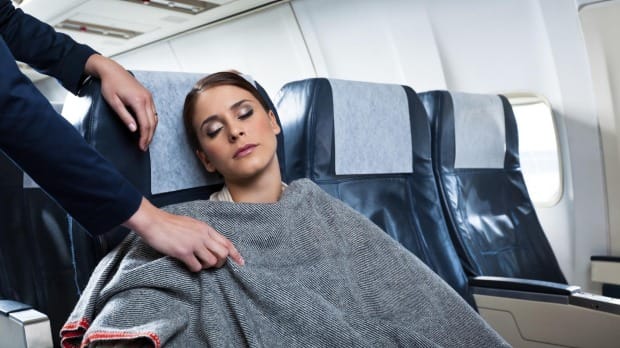
Sleep Intentionally and Strategically
On flights that cross significant time zones or last more than five to six hours, achieving quality sleep is one of the most valuable immune investments you can make during the flight itself. Come prepared: bring a supportive neck pillow, an eye mask to block cabin lighting, earplugs or noise-canceling headphones to reduce ambient noise, and if medically appropriate, discuss a short-acting sleep aid with your physician for very long-haul flights.
Adjust the timing of your in-flight sleep to align with your destination’s nighttime, not your origin’s. This deliberate alignment accelerates the circadian resynchronization that protects immune regulation at your destination. Even three to four hours of quality sleep on a long-haul flight provides meaningfully more immune support than the same time spent restlessly trying to sleep or giving up on sleep entirely.
Eat Strategically — Not Reactively
In-flight meal options are rarely designed with immune optimization in mind. But you can make choices within the available options that support rather than further stress your immune system:
Choose vegetable-rich meal options over heavy, salty, or processed dishes wherever available. Accept fresh fruit offerings — the antioxidants and vitamin C in fresh fruit support immune function and help counteract some of the oxidative stress generated by flying. Avoid high-sugar foods and drinks — excessive sugar intake produces a transient suppression of neutrophil function that can last several hours. Skip or minimize alcohol as already discussed.
If you packed food from home — a strategy covered extensively in our airport dining guide — your in-flight nutritional options are already superior to the standard airline meal tray, and you can bring that nutritional discipline with you all the way into the cabin.
Dress in Comfortable Layers and Stay Warm
Cabin temperatures fluctuate considerably during flights, often becoming uncomfortably cold during overnight journeys as the body’s metabolic rate drops during rest. While cold exposure does not directly cause infection, the folk belief that “getting cold gives you a cold” is not supported by direct evidence — sustained physical discomfort from cold temperatures adds low-level physiological stress that compounds the other immune stressors of flying.
Dress in comfortable, breathable layers you can add or remove as cabin temperature changes. Request a blanket from the flight crew early in the flight, before supplies run out. Keep your extremities covered, particularly on overnight flights. Physical thermal comfort reduces the sympathetic stress response that cold, cramped conditions produce, which supports more stable cortisol levels and better quality rest.
After Your Flight: Immune Recovery and Restoration
The 48 to 72 hours after landing from a significant flight are among the most critical for immune function. Your body is simultaneously managing dehydration recovery, sleep debt, circadian resynchronization, and the metabolic demands of immune surveillance following elevated pathogen exposure. This is the window during which travel-related illness is most likely to manifest — and most likely to be preventable with the right recovery approach.
Rehydrate Immediately and Thoroughly
Landing rehydration should begin immediately. Drink water consistently throughout your arrival day, targeting approximately 2 to 3 liters of fluid across the waking hours. Consider electrolyte-rich beverages — coconut water, an electrolyte drink, or water with an electrolyte tablet — to replenish the mineral balance that dry cabin air has depleted.
Resist using alcohol as a social lubricant or sleep aid on arrival day. It will deepen the dehydration your body is already recovering from, impair the quality of the sleep you need most critically, and impose additional metabolic stress on a system already working hard to reestablish equilibrium.
Eat a Nutrient-Dense Recovery Meal as Your First Priority
Your first substantial meal after landing should be as nutritionally supportive as practical. This is not the moment for airport fast food, heavy processed food, or a meal primarily around alcohol. It is the moment for whole, nourishing food that gives your immune system the raw materials it needs to complete its recovery.
Prioritize lean protein — chicken, fish, eggs, legumes — to support immune cell production and tissue repair. Load the plate with colorful vegetables rich in antioxidants, vitamins, and phytonutrients. Include probiotic-rich foods — yogurt, kefir, kimchi — to support the gut immune system that has been stressed by disrupted eating rhythms. Add omega-3-rich foods — fatty fish, walnuts, flaxseed — which reduce inflammatory response and support the resolution of immune activation. This single meal will not undo the immune challenges of a long flight, but it meaningfully accelerates the recovery process.
Prioritize Sleep Above Almost Everything Else
The sleep debt accumulated during travel must be paid back before full immune function is restored. Depending on the length of your flight and the degree of time zone crossing involved, complete immune recovery may require two to five nights of quality sleep.
For short trips with minimal time zone change, align with local time immediately. Get to bed at a locally appropriate hour, even if you feel wide awake or exhausted at the wrong time. Use morning light exposure — spend time outdoors or near a bright window in the morning hours — to anchor your circadian clock to local time. Avoid long naps that further disrupt your ability to sleep at night.
For longer international trips with significant time zone crossings, a more structured and gradual jet lag recovery approach will serve you better. Apps like Timeshifter — built on peer-reviewed chronobiology research — can provide a personalized light exposure and sleep timing plan for your specific itinerary and time zone crossing, significantly shortening the recovery period and restoring immune rhythm more quickly.
Continue Your Immune-Supporting Supplement Routine
The immune-supporting habits established before travel — vitamin D, vitamin C, zinc, magnesium, probiotic foods — should continue for a minimum of three to five days post-flight. Your immune system remains in a recovery and vulnerability state for 24 to 72 hours after significant air travel, and this is precisely the window during which any pathogen exposure from the flight is most likely to develop into symptomatic illness.
If you begin experiencing the first signs of a respiratory illness — a scratchy throat, mild congestion, unusual fatigue — in the 24 to 72 hours after flying, zinc lozenges initiated at the very onset of symptoms have some peer-reviewed evidence supporting shortened duration and reduced severity of the common cold. The key is to begin immediately at the first symptom, not after the illness has developed fully.
Protect Your Recovery Time — Build It Into Your Schedule
One of the most consistent immune mistakes frequent travelers make is flying from a demanding trip directly into an equally demanding professional or social schedule, with no recovery window built in. The body needs at minimum 24 to 48 hours of reduced physiological demand before it can meaningfully restore immune competence after a long-haul flight.
If your schedule allows any flexibility at all, build at least one lighter day between landing and your most demanding commitments. Even a single day of lower activity, adequate sleep, and good nutrition between your arrival and your first major obligation reduces post-travel illness incidence measurably, and the professional and personal performance you deliver on that subsequent day will be substantially better for the recovery time invested.
Gentle Movement and Outdoor Time
Light physical movement in the hours and days after landing accelerates multiple dimensions of immune recovery simultaneously. A gentle walk outdoors provides morning light exposure for circadian resetting, supports lymphatic circulation, reduces residual cortisol, and begins to restore the normal physical rhythms that air travel disrupts. Gentle yoga or stretching addresses the muscular tension and circulatory stagnation that accumulate during prolonged seating.
Avoid intense exercise for the first 24 to 48 hours after a long-haul flight. The open window of post-exertion immune suppression mentioned earlier in this guide is even more significant when your immune system is already in a post-travel recovery state.
Your Complete In-Flight Immune Protection Kit
Pack these items in your carry-on for every flight to put this entire guide into practical action:
- Large empty reusable water bottle — fill after security
- Electrolyte packets or tablets — add to water for superior hydration
- Saline nasal spray — use every one to two hours in the cabin
- Alcohol-based hand sanitizer (minimum 60% alcohol concentration)
- Antibacterial wipes — wipe down your seating area at boarding
- Well-fitted mask (N95 or surgical) — especially during peak illness season
- Healthy snacks from home — nuts, fruit, protein bars, cut vegetables
- Vitamin C and zinc supplements — for travel-day supplementation
- Zinc lozenges — begin immediately at the very first sign of symptoms
- Eye mask and earplugs or noise-canceling headphones — for quality in-flight sleep
- Supportive neck pillow — for cervical comfort during sleep
- Compression socks — for circulation and lymphatic support on flights over four hours
- Lightweight extra layer or travel scarf — for warmth when cabin temperature drops
- Lip balm and facial moisturizer — to manage skin desiccation in dry cabin air
Special Considerations for High-Risk Travelers
Frequent Business Travelers
Those who fly weekly face cumulative immune suppression from chronic travel stress, repeated pathogen exposure, and ongoing sleep disruption. Research has associated frequent long-haul travel with elevated markers of chronic inflammation and significantly higher rates of respiratory illness. Sustainable immune management for frequent flyers requires treating rest and recovery as a professional priority — building recovery days into travel schedules, maintaining consistent sleep and nutrition habits across time zones, and working proactively with a healthcare provider on a comprehensive long-term immune support plan.
Elderly Travelers
Immune function naturally declines with age through a process called immunosenescence — a gradual reduction in both the number and functional capacity of immune cells. Older travelers are inherently more vulnerable to the immune stressors of flying and require more deliberate preparation and longer post-travel recovery periods than younger adults. Ensuring all age-appropriate vaccinations are current — particularly annual influenza vaccination and pneumococcal vaccination — is especially critical for elderly travelers before significant air travel.
Travelers With Chronic Health Conditions
Individuals managing diabetes, autoimmune conditions, active cancer treatment, chronic respiratory conditions, or any condition that affects immune function should consult their physician before significant travel. Additional precautions, prophylactic medications, or modified protocols may be appropriate, and the timing of travel relative to treatment cycles matters significantly.
Pregnant Travelers
Pregnancy involves deliberate immune modulation — a necessary biological adaptation that prevents the maternal immune system from rejecting the developing fetus. This modulation changes the nature and capacity of immune response in ways that alter vulnerability to specific infections. Pregnant travelers should discuss specific immune protection strategies with their obstetrician before travel, particularly for international destinations or during periods of elevated respiratory illness.
Conclusion: Healthy Travel Is a Decision, Not a Coincidence
Getting sick after flying has become so common that many travelers simply accept it as an inevitable cost of air travel. They pack their ibuprofen and hope for the best. But the travelers who arrive healthy — who land with energy, mental clarity, and a body ready to engage with wherever they have arrived — are not simply lucky. They are prepared.
Every element of the immune challenge of flying is understandable. Every element of the immune protection strategy is actionable. The gap between the traveler who reliably gets sick and the traveler who reliably stays healthy is not genetics or fortune. It is knowledge applied consistently, before, during, and after the journey.
Hydrate deliberately. Sleep as a priority. Eat to nourish rather than just to fill. Practice hygiene with discipline. Manage stress with intention. Give your body time to recover. These are not complicated strategies. They do not require expensive supplements or exotic interventions. They require only the understanding that your body is a biological system traveling through a biologically challenging environment — and that how you care for it during that journey determines how it performs on the other side.
Travel well, arrive healthy, and make every destination something you experience fully — not from behind a box of tissues and a foggy, exhausted head.
Frequently Asked Questions (FAQs)
Q: Is airplane air really full of germs? A: Partially. Modern aircraft use HEPA filtration that captures most airborne particles. However, respiratory droplets from nearby passengers and contaminated cabin surfaces pose genuine transmission risks, particularly within two rows of an infected individual.
Q: What is the single most important thing I can do to avoid getting sick on a plane? A: Stay aggressively hydrated throughout the flight. Dry cabin air is the most significant single immune stressor in flying, and maintaining hydration keeps your respiratory mucous membranes functional as a physical barrier against pathogens. Combine this with rigorous hand hygiene to achieve the highest impact.
Q: Does wearing a mask on a plane actually help? A: Yes, meaningfully. A well-fitting N95 respirator or surgical mask significantly reduces exposure to respiratory droplets, the primary transmission vehicle for most common respiratory viruses, in enclosed spaces.
Q: Should I take supplements before flying? A: Maintaining optimal levels of vitamin D, vitamin C, zinc, and magnesium through diet and supplementation supports strong baseline immune function. Address any deficiencies — particularly vitamin D — well before travel, as correcting a deficiency takes weeks.
Q: How long does immune recovery take after a long-haul flight? A: For most healthy adults, full immune function recovery after significant long-haul travel takes 48 to 72 hours with adequate sleep, hydration, and nutrition. Circadian-linked immune rhythms after major time zone crossing may take somewhat longer to fully resynchronize.
Q: What is the germiest spot on an airplane? A: Research consistently identifies the tray table as the most contaminated surface in aircraft cabins, followed by the seatbelt buckle, armrests, overhead bin latches, and lavatory flush buttons. Wipe down your tray table with an antibacterial wipe immediately when you sit down.
Q: Should I use the overhead air vent? A: Yes. The overhead vents supply HEPA-filtered air. Directing a gentle airflow across your face and body can create a mild barrier against respiratory droplets settling near you — making it a useful, simple, passive protective measure.
Q: How do I manage jet lag to protect my immune system? A: Align with your destination time zone as quickly as possible using morning light exposure to anchor your circadian clock. Use a jet lag app like Timeshifter for structured guidance. Prioritize sleep quality in the first 48 to 72 hours after arrival above most other demands.