



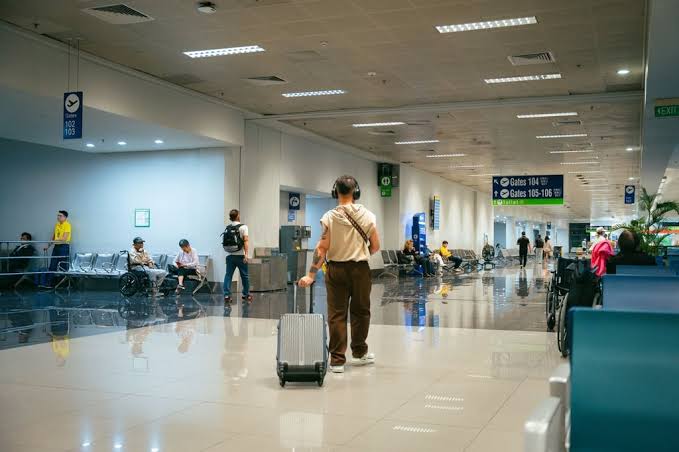
Ask someone over 50 what “flying standby” means, and they’ll picture a stranger camped out at a gate with a duffel bag, hoping a seat opens up on a flight they never actually booked. Ask someone who flew for the first time last year, and they might not even know the option exists.
Both pictures are outdated. Standby flying is alive in 2026, but it’s a narrower, more structured process than it used to be — and it works very differently depending on which airline you’re flying, what fare class you booked, and whether your travel plans changed by accident or by choice.
This guide breaks down exactly what standby flying looks like right now: what it is, what it isn’t, how each major U.S. carrier handles it, what it costs, and how to actually get a seat instead of just a spot on a list.
What Is Standby Flying, Exactly?
At its core, standby means you don’t have a confirmed seat assignment on a specific flight, but you’re waiting to see if one opens up. If a seat becomes available after all confirmed passengers have boarded, standby passengers get called up — typically in a specific priority order — and given that seat.
There are actually several distinct situations that all get lumped under the “standby” umbrella, and mixing them up is where most confusion starts.
The Different Flavors of Standby
Same-day standby. You already have a confirmed ticket for a flight later today, but you want to try for an earlier (or sometimes later) flight on the same route, same day. This is by far the most common type of standby that everyday travelers encounter, and it’s the main focus of this article.
Distressed passenger standby. Your flight was canceled, delayed significantly, or you were involuntarily bumped due to overbooking. In this case, airlines are obligated to get you to your destination and typically place you on standby for the next available flight at no charge and with top priority — ahead of everyone else on the list.
Go-show standby. You show up at the airport without a reservation at all and ask to be added to a flight based on availability. This is rare today because algorithmic pricing means airlines want you to book in advance, and walk-up fares (if even offered) tend to be expensive.
Upgrade standby. You have a confirmed seat in economy, but you’re hoping a first- or business-class seat opens up due to a cancellation, a downgrade, or an elite member not showing up. This is a completely separate list from the coach standby list and usually only matters to elite frequent flyers.
Non-revenue (non-rev) standby. Airline employees and their eligible family members can fly standby, often for free or at a steep discount, as a job benefit. Non-rev passengers board dead last, after every single paying customer and every other type of standby passenger, and they are explicitly told their travel is not guaranteed — some non-rev flyers get stuck at an airport for days during peak travel periods.
This article focuses primarily on same-day standby, since that’s the version almost any traveler with a ticket can actually use.
Does Standby Flying Still Exist in 2026? Short Answer: Yes
Every major U.S. network carrier — American, Delta, United, Alaska, and Southwest — still offers some form of same-day standby in 2026. What’s changed is how airlines gate access to it.
A decade ago, standby was mostly free and mostly open to anyone. Today, most airlines have split the “get on an earlier flight” experience into two separate products:
- Same-day standby — join a waitlist, no guarantee, usually free
- Same-day confirmed change — pay a fee (or use elite status) to lock in a guaranteed seat on a different flight, no waiting required
Same-day standby puts you on a waitlist with no guarantee, and it’s typically free, while a same-day confirmed change guarantees you a seat on the new flight for a fee that’s usually $75, though it’s often waived for elite members. Understanding which of these two products you’re actually looking at is the single biggest source of confusion for travelers trying to change flights at the airport in 2026.
One notable industry shift worth mentioning: Spirit Airlines ceased all operations on May 2, 2026, so any older articles referencing Spirit’s standby policy are now describing a carrier that no longer flies.
Same-Day Standby vs. Same-Day Confirmed Change: The Real Difference
This is the distinction that trips people up more than any other part of standby travel, so it’s worth spelling out plainly.
| Feature | Same-Day Standby | Same-Day Confirmed Change |
| Seat guaranteed? | No — you wait and hope | Yes — locked in immediately |
| Typical cost | Free on most major airlines | Often $75, waived for elite/premium fares |
| When you find out | At the gate, minutes before departure | Immediately upon booking the change |
| Best for | Flexible travelers with no hard deadline | Anyone who needs certainty (connections, events, work) |
| Basic Economy eligible? | Usually no | Usually no |
If getting on that specific earlier or later flight is a nice-to-have, standby is the low-risk option. If missing it would actually derail your day — a wedding, a connecting international flight, a work meeting — the confirmed change is worth paying for, assuming it’s available on your fare.
How Same-Day Standby Actually Works, Step by Step
The mechanics are largely consistent across the major airlines, even though eligibility rules differ. Here’s the general process in 2026:
Step 1: Confirm Your Fare Class Is Eligible
Not every ticket qualifies. Basic Economy fares typically allow standby on most airlines, but Frontier’s Economy fares and JetBlue’s Blue Basic fares do not. On Southwest, switching to another same-day flight with available seats doesn’t carry a fee on Choice Extra, Choice Preferred, and Choice fares or on Getaways by Southwest bookings, though a fare difference can still apply if you move to a pricier flight.
The practical takeaway: check your fare class before you get to the airport. It’s listed on your boarding pass or booking confirmation, and most airline apps will tell you directly whether your ticket qualifies for standby if you try to request it.
Step 2: Add Yourself to the List
You can typically request standby through the airline app, which is the fastest method — Delta, United, American, and Alaska all allow standby requests directly in their apps. If you’d rather do it in person, American Airlines lets you ask a team member at the ticket counter or gate to list you for standby, and you should do this at least 45 minutes before departure.
Some airlines also let you join the list up to 24 hours in advance through the website or app rather than waiting until you’re physically at the airport.
Step 3: Wait for Your Name to Be Called
When the flight boards, agents give any available seats to standby passengers, who wait at the gate to be called, and standby passengers who don’t get seats are rolled into the standby list for the next flight. This is important: a missed standby attempt isn’t necessarily a dead end — you often roll forward to try again on the following flight, assuming there is one.
Step 4: Get Your New Boarding Pass
If a seat opens up, you’ll be issued a new boarding pass at the gate. Your seat assignment is usually whatever’s left — don’t expect to pick your preferred row or aisle when flying standby.
Standby Priority: Who Gets Called First
Standby lists aren’t first-come, first-served in the way a deli counter number system works. Standby passengers typically have priority based on how much they paid for their tickets and their relative status in the airline’s frequent flyer program, with a full-fare passenger getting higher priority than someone who purchased a discounted ticket.
In rough order, most airlines prioritize:
- Distressed passengers (canceled/delayed original flight, involuntary rebooking) — top priority, regardless of status
- Top-tier elite members (Delta Diamond, United 1K/Global Services, American Executive Platinum, Alaska MVP Gold 75K)
- Mid-tier elite members
- Full-fare or premium cabin ticket holders
- Entry-level elite members
- General members with standard fares
- Basic Economy or discount fare holders (if eligible at all)
- Non-revenue / employee travelers — always last
This is why two travelers requesting standby on the same flight can have wildly different odds of clearing the list. Status and fare class matter more than how early you added your name.
Airline-by-Airline Standby Policies in 2026
Policies shift periodically, so always double-check directly with your airline before relying on any of this at the airport. That said, here’s where things currently stand.
American Airlines
American reversed course on a more restrictive standby policy it had rolled out the year before. As of 2026, American reintroduced same-day standby for all flyers regardless of status or class of travel, reversing the more limited policy it had introduced back in 2024 that had excluded travelers without an AAdvantage account or those on discounted tickets.
American Airlines charges a $75 standby fee for confirmed same-day changes, but this fee is waived for first-class, business-class, AAdvantage Elite members, and military personnel. Unconfirmed same-day standby itself — the waitlist version — remains free for eligible fares.
One geographic limit to note: complimentary flight changes and same-day standby on American are available only for travel within and between the U.S. and Puerto Rico. International routes generally don’t qualify.
Delta Air Lines
Delta’s approach nudges travelers toward the paid confirmed change first. Delta only offers standby if same-day confirmed flight changes are not available, and a $75 fee may apply for the confirmed change option. Delta may allow free standby for flights within the U.S., Puerto Rico, and the U.S. Virgin Islands, but Basic Economy tickets and most international routes are not eligible.
Delta offers complimentary standby for Diamond, Platinum, and Gold Medallion members — its three highest elite tiers — while lower-tier and non-elite members may face the fee if a confirmed change is what’s available.
United Airlines
United keeps its same-day standby genuinely free and separate from the paid option. United offers free same-day standby, and you can join the standby list within 24 hours of your original flight, provided the new flight departs the same day.
United charges $75 for the confirmed same-day change, waived for passengers on full-fare tickets, 1K members, Global Services members, and premium cabin passengers.
Alaska Airlines
Alaska’s standby program is more geographically limited than the other network carriers. Alaska offers pre-purchased tickets and free same-day standby, but only on specific nonstop routes: Anchorage–Fairbanks, Seattle–Portland, and Seattle–Spokane. Outside those specific city pairs, standby availability is more restricted, so it’s worth checking Alaska’s own same-day change tool before counting on it.
Southwest Airlines
Southwest doesn’t use the term “standby” in quite the same way, since its open-seating model changes the calculus. Southwest doesn’t charge a fee to switch to another same-day flight with available seats between the same airports on Choice Extra, Choice Preferred, Choice fares, and Getaways by Southwest bookings, though a fare difference can still apply when moving to a pricier flight. Standby specifically is limited to “Anytime” and “Business Select” fare types, and Wanna Get Away or Senior fares may be charged the price difference instead.
JetBlue
JetBlue stands out for being the one major carrier that charges for the waitlist version of standby, not just the confirmed change. JetBlue is the outlier among major carriers, charging $75 just for same-day standby — not a confirmed change, standby itself. Elite status (Mosaic) or certain fare types can offset this fee, but budget-fare JetBlue flyers should expect to pay to even get on the list.
Allegiant Air
Ultra-low-cost carrier Allegiant simply doesn’t participate in this system. Allegiant Air does not offer standby flights and does not offer same-day confirmed flight changes. If your plans change on Allegiant, you’re generally looking at a full rebooking rather than a same-day workaround.
Quick Reference: Standby Fees at a Glance
| Airline | Same-Day Standby Fee | Confirmed Change Fee | Fee Waived For |
| American | Free | $75 | First/business class, AAdvantage Elite, military |
| Delta | Free (if confirmed change unavailable) | $75 | Diamond, Platinum, Gold Medallion |
| United | Free | $75 | Full fare, 1K, Global Services, premium cabin |
| Alaska | Free (limited routes) | Varies | Elite status |
| Southwest | Free (eligible fares) | Fare difference only | Anytime, Business Select fares |
| JetBlue | $75 | $75 | Mosaic elite, premium fares |
| Allegiant | Not offered | Not offered | N/A |
Fees and policies change frequently — always confirm current terms directly with the airline before traveling.
Which Fare Classes Actually Qualify
This is where a lot of standby confusion originates, because “Basic Economy” doesn’t mean the same thing across airlines.
- Eligible on most carriers: Standard Economy, Main Cabin, premium cabin fares, most Basic Economy fares on American, Delta, and United
- Typically excluded: Frontier’s Economy fares and JetBlue’s Blue Basic fares are excluded from same-day standby
- Southwest-specific: Limited to Anytime and Business Select; Wanna Get Away fares face a fare-difference charge rather than free standby
Before you build a same-day change into your travel plans, look up your specific fare class in your airline’s app or on the booking confirmation email. Assuming your ticket qualifies because “Basic Economy usually works” can leave you stranded if you happen to be on the one airline where it doesn’t.
When You Get Free, Top-Priority Standby: Distressed Passenger Status
If your original flight was canceled, significantly delayed, or you were bumped due to overbooking, you’re not just another name on the waitlist. Distressed passengers — those unable to board their original flight due to cancellation, overbooking, or a misconnection, through no fault of their own — get free standby and the highest priority on the list.
This matters because it changes your strategy entirely. If your flight is canceled, don’t just accept the first rebooking option offered — ask specifically to be placed on the priority standby list for earlier flights, since your status as a distressed passenger puts you ahead of elite members and full-fare travelers who are simply trying to move up their own itinerary voluntarily.
Tips to Actually Get on the Flight
Standby is a numbers game, but you can meaningfully improve your odds:
Travel with carry-on only. Checked luggage can complicate a last-minute gate change, since your bag has to be located and rerouted along with you. Sticking to a carry-on removes that friction entirely and speeds up the process if a seat opens.
List as early as possible. Many airlines let you add yourself to the standby list through the app hours — sometimes up to 24 hours — before departure, rather than waiting until you’re at the gate. Earlier listing generally means a better position relative to other standby passengers at your same priority tier.
Avoid peak travel days. Flights around major holidays, Sunday evenings, and Friday afternoons tend to be fuller to begin with, meaning fewer empty seats ever materialize. If you have flexibility in which day you attempt standby, a Tuesday or Wednesday midday flight will almost always have better odds than a holiday-weekend departure.
Check elite status thresholds. If you’re close to earning elite status, or your airline offers a status match or challenge, it may be worth pursuing before a trip where you know you’ll want standby flexibility — even the lowest elite tier typically outranks a general member on the list.
Be at the gate on time. Standby seats get assigned quickly once boarding starts, and being physically present when your name is called matters. Missing the call because you were still at a restaurant can cost you the seat even if one was available.
Consider the confirmed change instead if certainty matters. If missing a specific flight would cause real problems — a missed connection, an event with a hard start time — the guaranteed seat from a same-day confirmed change is worth the fee. Standby is a bet; the confirmed change is a purchase.
Standby Upgrades: A Separate System Worth Understanding
Elite frequent flyers often use a different flavor of standby to try for a first- or business-class seat on a flight they’re already confirmed on in economy. Many airlines, particularly in the United States, offer free space-available domestic upgrades to first class for their elite tier flyers, and if first class sells out or upgrades go to higher-tiered passengers, elite flyers can stand by for a first-class seat that opens due to a cancellation, no-show, misconnection, irregular operations, or an equipment change. Some airlines, including American and United, display gate-side monitors showing the upgrade and general standby lists and will announce when first class is full and no further upgrades are available.
This is a completely separate list from the “get on an earlier flight” standby list, and it only benefits travelers who already have elite status with meaningful upgrade priority — it’s not really an option for the average leisure traveler.
Non-Rev Standby: The Employee Perk Most Travelers Never See
Airline employees, retirees, and eligible family members can often fly standby for free or at steep discounts as part of their employment benefits. Airline employees and some of their family and friends can travel standby, often for free or at a significant discount, known as non-rev or staff travel.
Non-rev travel comes with real tradeoffs: these passengers board dead last, after every paying customer and every other standby category, and can be bumped entirely with no compensation if the flight fills. It’s a genuine perk for airline employees, but it isn’t a system available to the general public, and it shouldn’t be confused with the same-day standby that any ticketed traveler can request.
Common Standby Mistakes to Avoid
Assuming standby is free everywhere. As covered above, JetBlue charges for the waitlist itself, and Allegiant doesn’t offer it at all. Don’t assume your airline’s policy matches what you’ve heard about a different carrier.
Confusing standby with a confirmed change. These are two different products with two different guarantees. If you need certainty, standby is the wrong tool — pay for the confirmed change instead.
Checking a bag when you’re planning to fly standby. This slows down any last-minute gate change and can eliminate the option on tight connections.
Not checking fare class eligibility first. Showing up expecting standby access on a fare that explicitly excludes it — like JetBlue’s Blue Basic or Frontier’s Economy — wastes time and sets up a frustrating airport experience.
Ignoring your status as a distressed passenger. If your original flight was canceled or delayed by the airline, you’re entitled to priority standby placement at no cost — don’t settle for a rebooking three days later without asking about same-day options first.
Assuming international routes work the same way. Complimentary same-day standby on American, for example, applies only within and between the U.S. and Puerto Rico — most international itineraries don’t have the same same-day flexibility as domestic ones.
Is Standby Flying Worth It in 2026?
For flexible travelers with no hard deadline, standby remains one of the few genuinely free ways to get to your destination sooner. There’s no fare difference to pay, and on most major airlines beyond JetBlue, no fee at all for the attempt itself. The worst-case outcome is simply that you fly your originally booked flight as planned.
For travelers with something on the line — a connection, an event, a meeting — the calculus is different. A same-day confirmed change costs money but removes the uncertainty entirely, and given that most fees hover around $75 and are frequently waived for elite members or premium fares, it’s often the more rational choice when the stakes are high.
The version of standby flying that once meant camping at a gate with a duffel bag and no ticket at all has largely disappeared from mainstream U.S. air travel. What’s replaced it is a more structured, app-driven, fare-class-gated system — still called “standby,” but operating on very different rules than the one your parents might remember.
Frequently Asked Questions
Is standby flying still free in 2026? On most major U.S. airlines — American, Delta, United, Southwest, and Alaska — same-day standby itself is free for eligible fares, though a separate paid option (the confirmed change) usually costs around $75. JetBlue is the exception, charging for standby itself.
Can I fly standby on a Basic Economy ticket? It depends on the airline. Basic Economy on most airlines allows standby, but Frontier’s Economy fares and JetBlue’s Blue Basic fares do not. Always confirm your specific fare’s eligibility before counting on it.
How early should I add myself to the standby list? Many airlines allow requests through the app up to 24 hours in advance. If doing it in person, arrive and request standby well before your flight — American recommends at least 45 minutes before departure.
Does elite status guarantee I’ll get a standby seat? No. Elite status improves your priority on the list relative to other standby passengers, but it doesn’t guarantee a seat will actually open up on a full flight.
What’s the difference between standby and a same-day confirmed change? Standby puts you on a waitlist with no guarantee, typically for free. A same-day confirmed change guarantees your seat on the new flight immediately, usually for a fee. If certainty matters, pay for the confirmed change.
Can I fly standby internationally? Generally no. Same-day standby programs on most U.S. carriers are limited to domestic routes and select nearby destinations like Puerto Rico or Canada. International itineraries typically require a full rebooking instead.
What happens if I don’t get a standby seat? You typically roll onto the standby list for the next flight. If you never clear a list, you simply take your originally scheduled, already-confirmed flight — you don’t lose your original seat by attempting standby.
Does checking a bag affect my chances of standby? It can complicate things logistically, since your checked bag needs to be located and transferred if you do clear standby. Traveling with a carry-on only removes this friction and is generally recommended if you’re planning to attempt standby.