



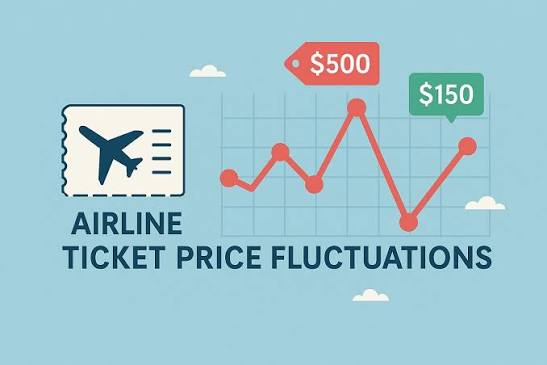
You found a flight for $312 at 9 a.m. By lunch, it’s $349. You check again before bed, and it’s back down to $298. You didn’t imagine it — this happens constantly, and it’s not random. Airlines run some of the most sophisticated pricing systems in any consumer industry, adjusting fares based on hundreds of data points that update in near real time.
This isn’t a conspiracy or a glitch. It’s a deliberate, mathematically-driven system called revenue management, and understanding how it works can save you hundreds of dollars — or at least stop you from panic-buying a ticket the moment you see a “good” price.
This guide breaks down exactly how airline pricing algorithms function, who builds them, what data feeds them, and how you can use that knowledge to book smarter.
1. The Short Answer: What’s Actually Happening
Airlines don’t set one price per flight. They set dozens of prices simultaneously for the same flight, same cabin, same day — and a computer system decides, multiple times per day, which of those prices to show you based on demand, inventory, timing, and competitor behavior.
When you see a price change, one of a few things has happened:
- A fare bucket (a limited allotment of seats at a specific price) sold out, so the system automatically moved to the next-higher bucket
- The airline’s algorithm predicted demand is rising or falling for that date and adjusted prices accordingly
- A competitor changed their price on the same route, and the airline’s system reacted
- The booking window shrank (you’re now closer to departure), which changes the pricing tier
- Random algorithmic testing — some systems intentionally vary prices slightly to gauge demand elasticity
None of this is personal. It’s not because you searched five times (more on that myth later). It’s a supply-and-demand engine running continuously in the background.
2. A Brief History of Airline Pricing (Why It Wasn’t Always Like This)
To understand why pricing is so complex today, it helps to know it wasn’t always this way.
Before 1978, the U.S. airline industry was federally regulated. The Civil Aeronautics Board set fares, routes, and schedules — airlines couldn’t compete on price at all. When the Airline Deregulation Act of 1978 passed, airlines were suddenly free to set their own prices, and chaos (and innovation) followed.
American Airlines is widely credited with pioneering modern revenue management in the early 1980s. Facing low-cost competitors like PeopleExpress that undercut fares across the board, American needed a way to offer cheap seats without discounting every seat on every flight. Their solution was to sell a limited number of seats at deep discounts (to compete on the low end) while protecting the remaining seats for business travelers who would pay full fare closer to departure.
This system — selling the same flight at many different prices depending on when you buy and how many seats are left — became the foundation for the entire industry. It’s called Revenue Management, and it’s still the backbone of every price you see today, just far more sophisticated.
3. The Core System: Revenue Management Explained
Revenue management is the practice of predicting demand and adjusting price and inventory to maximize total revenue on a fixed number of seats. It rests on a few key principles.
Perishable Inventory
A seat that flies empty generates zero revenue — it can never be sold again after departure. This makes airline seats similar to hotel rooms or event tickets: a “perishable” product. This creates enormous pressure to price seats in a way that fills the plane, but not so cheaply that revenue is left on the table.
Fixed Capacity
Unlike most products, an airline can’t simply produce more inventory to meet unexpected demand. A 180-seat aircraft has 180 seats, period (barring an equipment swap, which is a separate scenario covered in another article). This forces airlines to allocate that fixed capacity across multiple price points strategically.
Demand Segmentation
Not all travelers are the same. A business traveler booking three days before a Monday meeting will pay far more than a leisure traveler who booked eight weeks in advance. Revenue management systems are built to capture the maximum amount each segment is willing to pay — a pricing strategy economists call price discrimination (in the legal, standard economic sense, not a discriminatory-treatment sense).
The Goal: Maximize “RASM”
Airlines track a metric called RASM — Revenue per Available Seat Mile. This is the north star of pricing decisions. Every price change, every fare bucket adjustment, every algorithmic tweak exists to push RASM higher without leaving seats empty.
4. How Fare Classes Work Inside a Single Flight
This is the part most travelers never see, but it’s the mechanical core of why prices change so often.
A single flight — say, Delta 1234 from Atlanta to Chicago — isn’t sold at one price. It’s divided into fare buckets (also called booking classes), each represented by a letter code, each with a limited number of seats and a fixed price.
Example Fare Bucket Structure (Simplified)
| Fare Class Code | Cabin | Typical Price | Seats Allocated | Refundable? |
| Y | Economy (full fare) | $410 | 4 | Yes |
| B | Economy (flexible) | $340 | 6 | Yes |
| M | Economy (discount) | $275 | 10 | No |
| H | Economy (discount) | $240 | 12 | No |
| Q | Economy (deep discount) | $195 | 15 | No |
| V | Economy (deep discount) | $160 | 8 | No |
| Basic Economy | Restricted | $99 | 20 | No |
(Note: exact letter codes and allocations vary by airline and are proprietary — this table illustrates the structure, not a specific airline’s actual chart.)
Here’s the critical part: when the cheapest bucket sells out, the system doesn’t lower a price — it simply stops offering that bucket and defaults to the next one up. So if all 20 Basic Economy seats sell, the next customer who searches sees $160, not $99. To that customer, the price “went up” — but really, a tier of inventory was exhausted.
This is why prices can jump significantly overnight after a viral deal, a holiday rush, or even a single group booking (like a wedding party or sports team) that buys a block of seats in the cheap bucket.
Why This Matters for You
The price isn’t dropping and rising on a smooth curve. It’s stepping up and down between fixed tiers as inventory in each bucket depletes or gets released back into the system (which happens if a group cancels, or if the airline decides to “re-optimize” and open more discount seats because demand forecasts came in lower than expected).
5. The Data Points That Move Prices in Real Time
Modern airline revenue management systems — built by companies like Sabre, Amadeus, PROS, and in-house teams at major carriers — ingest an enormous number of variables. Here’s what typically feeds the algorithm:
Booking Pace
How quickly seats on this specific flight are selling compared to historical patterns for the same route, day of week, and season. If a flight is booking faster than expected, the system raises prices to slow demand and protect inventory for late-booking, high-fare passengers.
Days Until Departure
Pricing tiers are heavily tied to the booking window. Generally:
- 60+ days out: Lower average prices, more discount buckets open
- 21–60 days out: Prices begin climbing as buckets fill
- 14–21 days out: Noticeable price increases begin
- 7–14 days out: Sharpest average price increases
- 0–7 days out: Prices are typically highest (aside from rare last-minute drops on unsold seats)
Historical Demand Data
Airlines keep years of data on specific routes. If Chicago–Orlando always spikes the week of Presidents’ Day due to family travel, the system will start restricting cheap fares on that route weeks in advance, even if current bookings look normal.
Day of Week and Time of Day
Flights departing Friday afternoon or Sunday evening (the most common business and leisure return windows) are priced higher than midweek, midday flights on the same route.
Competitor Pricing
Airlines use automated tools to monitor what competing carriers charge on overlapping routes. If a competitor drops their price on a shared route, algorithms may automatically match or undercut it — or hold firm if the airline believes its schedule or product (nonstop vs. connection, better departure time) justifies a premium.
Seasonality and Events
Major events — the Super Bowl, a large convention, a holiday, a solar eclipse — trigger manual and automatic price adjustments on flights into the host city.
Fuel Costs and Operating Costs
While fuel prices don’t move fares minute-to-minute, sustained increases in operating costs do get baked into overall fare floors over weeks and months.
Aircraft Type and Seat Map
A flight operated by a smaller regional jet with fewer seats will price more aggressively than the same route flown on a larger mainline aircraft, simply because there’s less inventory to sell.
Group Bookings and Block Releases
When a travel agency, tour operator, or corporate account holds a block of seats and releases them back (or fails to pick them up by a deadline), inventory shifts, which can cause a visible price change with no obvious external trigger.
Currency and International Demand (for international routes)
For international flights, currency fluctuations and demand from origin markets abroad can shift pricing, since airlines often price the same route differently depending on the point of sale country.
6. How Often Prices Actually Change (With Real Numbers)
Airlines don’t publish exact update frequencies, but industry data and independent tracking studies give a strong picture.
| Price Change Trigger | Approximate Frequency |
| Automated fare bucket re-evaluation | Every few hours to real-time |
| Full system-wide repricing runs | 3–6 times per day for major carriers |
| Competitor-triggered price matching | Within minutes to a few hours of a competitor’s change |
| Manual analyst intervention (event-driven) | As needed, often daily during high-demand periods |
| Seat map/inventory-triggered bucket changes | Instantaneous, as soon as a bucket sells out |
Independent fare-tracking research (from sites like Hopper and Google Flights’ internal data teams) has found that the same seat, on the same flight, can be offered at anywhere from 3 to 15+ different price points over the life of the booking window — from the day the flight opens for sale (usually 330–365 days out) to departure.
A Realistic Timeline Example
Route: New York (JFK) to Los Angeles (LAX), a popular transcontinental route.
| Days Before Departure | Typical Price Range | What’s Happening |
| 330 days out | 198–248 | Schedule just opened, deep discount buckets active |
| 180 days out | 210–270 | Normal booking pace, seasonal buckets adjusting |
| 90 days out | 225–310 | Mid-tier buckets filling, some discount buckets closing |
| 45 days out | 260–380 | Business booking window begins overlapping |
| 21 days out | 310–450 | Discount buckets mostly closed |
| 7 days out | 410–620 | Primarily business fare buckets remain |
| 1–3 days out | 450–800+ | Highest-tier fares, occasional last-minute drops if seats remain unsold |
This is illustrative and will vary by carrier, competition on the route, and demand — but it reflects the general upward-stepping pattern that revenue management systems are built to produce.
7. The Role of Booking Curves and Historical Demand
Every route an airline flies has what’s called a booking curve — a historical pattern showing what percentage of seats are typically sold at each point before departure.
Analysts compare the current booking pace for a specific flight against the historical booking curve for that route. If today’s Tuesday, June 9 flight from Denver to Phoenix is booking 15% faster than the historical average for that same route and date, the system interprets this as high demand and starts closing cheaper fare buckets earlier than usual — even if the flight is still 60 days away.
Conversely, if a flight is booking slower than its historical curve, the system may release additional discount inventory to stimulate demand, which is one of the few scenarios where prices genuinely drop as departure approaches.
This is also why the same route can have wildly different pricing behavior in different seasons. A flight to Denver in ski season books along an entirely different curve than the same flight in April.
8. Competitor Pricing and the “Price War” Effect
On routes served by multiple airlines — say, Dallas to Houston, flown by both Southwest and American — pricing becomes a real-time feedback loop.
Airlines use fare-matching software that scans competitor pricing across shared routes multiple times per day. If American drops its lowest bucket from $89 to $79 to stimulate demand, Southwest’s system may detect this within hours and respond by opening its own discount bucket to stay competitive, even if Southwest’s internal demand forecast didn’t call for a price cut.
This is especially visible on:
- Duopoly or triopoly routes (routes served by only 2–3 carriers), where price wars can escalate quickly
- New route launches, where a new entrant airline often prices aggressively low to build market share, forcing incumbents to respond
- Routes with a strong low-cost carrier presence (Spirit, Frontier, Southwest), which tend to have more volatile pricing than routes dominated by legacy carriers alone
On monopoly routes — where only one airline serves the market, common on smaller regional routes — prices tend to be both higher on average and less volatile, since there’s no competitive trigger forcing reactive price changes.
9. Third-Party Booking Sites vs. Airline Websites: Does It Matter?
A common question is whether booking through Expedia, Kayak, Google Flights, or a travel agent shows a different price than booking directly with the airline.
The Reality
Third-party sites pull pricing from the same Global Distribution Systems (GDS) — primarily Sabre, Amadeus, and Travelport — that airlines use to distribute their fare buckets. In most cases, the base fare you see on a third-party site matches what’s available directly through the airline, because they’re pulling from the same inventory feed.
However, a few things can create discrepancies:
- Airline-exclusive fares: Some airlines (particularly low-cost carriers like Southwest) don’t distribute all their fares through GDS systems, meaning some prices are only visible on the airline’s own website
- Booking fees: Some third-party sites add a service fee on top of the base fare, making the displayed total higher
- Bundled fares: Sites like Expedia sometimes bundle a flight with baggage or seat selection add-ons that change the displayed total
- Timing lag: There can be a short delay (minutes, sometimes longer) between when an airline updates a fare bucket and when that update propagates to third-party search engines
For most full-service airlines (Delta, American, United, and their international counterparts), the underlying algorithmic pricing is consistent across booking channels. The exception is Southwest, which is not sold through most major online travel agencies and must generally be booked directly.
10. Dynamic Pricing vs. Fare Class Pricing: What’s the Difference in 2026
This is one of the more important — and least understood — shifts happening in the industry right now.
Traditional Fare Class Pricing (Legacy System)
The bucket system described in Section 4: a fixed number of seats at fixed price points, with the system moving between buckets as they sell out. This has been the standard for over 40 years.
Continuous (Dynamic) Pricing
Several major airlines, most notably American Airlines, have moved toward a “continuous pricing” model in recent years. Instead of a small number of fixed fare buckets, algorithms — including machine learning models — calculate a price in real time based on dozens of variables, generating what’s effectively a near-infinite range of possible prices rather than a handful of discrete tiers.
American Airlines has publicly discussed transitioning away from traditional GDS-distributed fare classes toward this model, aiming for pricing that adjusts far more granularly than the old bucket system allowed. This has been a point of tension with travel agencies and corporate travel managers, since it makes fares harder to predict, compare, and audit.
Why This Matters to You
Under continuous pricing, the “step” pattern described earlier (price jumps only when a bucket sells out) becomes smoother and less predictable. Prices can shift by small increments constantly, rather than jumping in discrete tiers. This makes fare-tracking tools and historical pricing patterns somewhat less reliable predictors than they were a decade ago, and it’s part of why price-tracking behavior (covered in Section 12) has become more valuable, not less.
11. Myths About Airline Pricing (Cookies, Incognito Mode, and More)
Let’s address the most persistent myths directly.
Myth 1: “Airlines raise prices because they see you searching repeatedly”
This is the most widely believed airline pricing myth, and it’s largely false for the reason most people think. Airlines are not tracking your personal browser cookies and specifically raising your price out of spite or manipulation in the way this myth suggests.
What’s actually happening: prices change because of inventory and demand shifts happening at the aggregate level — many people searching and booking that route, not your individual search history. If you search a route five times in one day and the price rises, it’s coincidental timing (a bucket sold out, or a scheduled repricing run occurred) far more often than it’s a targeted reaction to you.
That said, it’s worth noting: some airlines and online travel agencies have experimented with showing dynamic messaging like “prices tend to rise for this route” or “X people are looking at this flight” — these are marketing/urgency tactics, not necessarily proof of personalized price manipulation. There is limited public evidence of true individualized price discrimination based on browsing history in the U.S. airline industry, partly because it would carry legal and reputational risk.
Myth 2: “Incognito mode gets you lower prices”
Following from the above: if cookie-tracking isn’t meaningfully driving individual price increases, incognito mode doesn’t meaningfully prevent them either. Any price difference you see between a regular and incognito search is far more likely due to the natural price fluctuation happening across that time window, not your browser’s tracking status. It doesn’t hurt to use incognito mode, but treat it as a placebo, not a strategy.
Myth 3: “Tuesday afternoon is the cheapest time to book”
This was arguably true over a decade ago, when airlines tended to release sales and respond to competitor fare changes on a weekly cycle that clustered around Tuesdays. With real-time, algorithm-driven pricing now standard across the industry, this pattern has largely dissolved. Modern fare studies show minimal meaningful difference in average prices by day of week for the purchase itself. What still holds some truth is that domestic flights are often modestly cheaper when the travel date itself falls midweek (Tuesday/Wednesday), not the day you buy the ticket.
Myth 4: “Clearing your cookies resets the price to the original low fare”
Clearing cookies has no effect on airline backend pricing systems. The price is stored on the airline’s server and tied to the fare bucket and search parameters (route, date, cabin), not to your local browser data.
Myth 5: “Booking through an incognito VPN in another country gets cheaper fares”
For domestic point of sale (like booking a U.S. domestic flight from within the U.S.), this doesn’t apply. It can occasionally apply to certain international routes, where airlines price differently by country of sale due to currency, local competition, or local market strategy — but this is a narrow, route-specific phenomenon, not a reliable domestic hack, and can also violate the fare rules or terms of the ticket, risking cancellation.
12. How to Use This System to Your Advantage
Understanding the mechanics above translates into a few genuinely useful, evidence-based strategies.
Book Within the “Sweet Spot” Window
Data from multiple fare-tracking studies (including analyses published by Expedia and CheapAir over several years) consistently points to a general booking window of 3 weeks to 3–4 months before domestic travel as the period with the best average balance of price and availability. International long-haul fares generally benefit from booking further out — often 2–8 months ahead — since those routes have fewer flights per day and less flexible inventory.
Watch for the “Bucket Reopen” Effect
If a flight you’re watching suddenly drops in price close to departure, it often means the airline released additional discount inventory because bookings came in below forecast. This is more common on:
- Midweek flights
- Off-peak seasons
- Routes with high competition
It’s a smaller but real phenomenon worth checking for if your travel dates are flexible.
Use Price Alerts, Not Manual Checking
Since prices can change several times a day based on inventory and algorithmic recalculation, checking manually once and booking (or not booking) based on that single snapshot means you’re relying on incomplete information. Automated price tracking (covered next) removes the guesswork.
Search in Incognito Anyway — For a Different Reason
While incognito mode won’t lower your price, it does prevent a real issue: some booking sites show inflated “reference” prices based on your prior searches to make a deal look better than it is (a dark pattern, not true dynamic pricing). Clearing cookies avoids this kind of visual manipulation, even if it doesn’t affect the actual algorithm.
Consider Flying Into or Out of a Secondary Airport
Routes with more competing airlines and more overall capacity tend to have more volatile — and often lower — average pricing due to the competitor-matching behavior described in Section 8. Comparing a nearby secondary airport can sometimes reveal a meaningfully cheaper fare bucket structure on the same overall trip.
Set a Target Price and Stick to It
Because pricing algorithms are designed to nudge you toward urgency (“only 2 seats left at this price!”), the most effective consumer counter-strategy is simple: decide your maximum acceptable price before you start shopping, and book as soon as you see a fare at or below that number, rather than chasing a theoretical lower price that may never come.
13. Tools That Track Price Changes For You
Because manual tracking is inefficient given how often prices move, several tools exist specifically to monitor fares and alert you to drops:
| Tool | What It Does |
| Google Flights | Free price tracking with historical price graphs and “price is currently low/typical/high” indicators |
| Hopper (app) | Predictive price forecasting using historical data, tells you whether to buy now or wait |
| Skyscanner | Price alerts for specific routes, plus a “whole month” view to spot cheap days |
| Airfarewatchdog | Human-curated fare deal alerts, useful for catching genuine sales/errors |
| Kayak Price Forecast | Predicts likely price direction over the following 7 days |
None of these tools have access to the airline’s actual internal algorithm — they’re observing and analyzing publicly visible price data, the same way you could if you checked manually multiple times a day. But they automate that process far more efficiently than a human can.
14. Real-World Example: Tracking One Route for 30 Days
To make this concrete, here’s a simulated but realistic breakdown of how a single route’s price might move over a 30-day tracking window, based on the kinds of patterns fare-tracking studies commonly observe. Route: Chicago (ORD) to Denver (DEN), a highly competitive route flown by United, Southwest, Frontier, and American.
| Day | Lowest Fare Observed | Likely Cause of Change |
| Day 1 | $148 | Baseline discount bucket active |
| Day 3 | $148 | No change — stable inventory |
| Day 6 | $162 | Discount bucket partially sold |
| Day 9 | $139 | Competitor (Frontier) dropped fare, others matched |
| Day 12 | $139 | Stable |
| Day 15 | $171 | Lowest bucket sold out, system moved to next tier |
| Day 18 | $165 | Slight pullback — demand forecast revised down |
| Day 21 | $188 | Booking pace ahead of historical curve, buckets tightening |
| Day 24 | $199 | Continued bucket closures approaching 1-week-out window |
| Day 27 | $224 | Primarily mid-tier fares remaining |
| Day 30 (departure week) | $265 | Only higher fare buckets remain |
Notice the pattern: it’s not a smooth, predictable climb. There are dips at Day 9 and Day 18 caused by competitive repricing and demand forecast adjustments — exactly the kind of movement that makes manual single-check searching unreliable, and automated tracking valuable.
15. Frequently Asked Questions
Does the time of day I search affect the price I see? Not directly. Prices change based on backend inventory and algorithmic recalculation, which can happen at various points throughout the day — not because of what time you personally opened the search.
Is it true that prices are always highest on weekends? Not for the purchase date — that pattern has weakened significantly with real-time pricing. What still tends to hold is that specific travel dates around weekends (Friday departures, Sunday returns) are typically pricier than midweek travel dates.
Why did the price go up right after I searched? Most likely coincidence — a fare bucket sold out, a scheduled repricing run occurred, or a competitor changed their price, all independent of your specific search.
Can travel agents get lower prices than what I see online? Generally, no — travel agents pull from the same GDS inventory as most online sites. Their value is typically in navigating complex itineraries, corporate rates, or specific negotiated fares (like consolidator fares for international travel), not in accessing secretly lower leisure fares.
Do prices ever go down the closer it gets to departure? Occasionally, yes — if a flight is undersold relative to the airline’s forecast, additional discount inventory may be released close to departure to fill the plane. This is inconsistent and shouldn’t be relied upon as a strategy, especially for popular routes or peak travel dates, where the far more common pattern is steadily rising prices as departure approaches.
Does booking directly with the airline ever guarantee a better price than third-party sites? Not automatically, but airline direct booking does typically offer better protections (easier rebooking, more consistent access to the airline’s own reaccommodation policies during disruptions) even when prices are similar.
Are budget airlines like Spirit and Frontier priced the same way? Yes, the same fundamental principles apply, though ultra-low-cost carriers tend to advertise a very low base fare and rely more heavily on unbundled add-on fees (seats, bags, etc.) as a separate revenue stream, layered on top of the same dynamic/fare-bucket pricing engine.
16. Final Thoughts
Airline pricing isn’t arbitrary, and it isn’t personally targeting you — but it is engineered, continuously and deliberately, to extract the maximum revenue from every flight based on demand forecasting, competitor behavior, and historical booking patterns. Prices move because inventory buckets fill and empty, because competitors react to each other in near real time, and because increasingly sophisticated algorithms are replacing the older, more predictable fixed-tier system with continuous, granular repricing.
The upside for travelers who understand this system is real: booking within the optimal window, using price-tracking tools instead of manual one-off checks, staying flexible on secondary airports and midweek travel dates, and setting a firm target price before you start shopping are all evidence-based strategies that work because they align with how the algorithm actually behaves — not because of myths about cookies or incognito browsing.